

Ethiopian firefighters, thanks to training and equipment from Poland, extinguished a deadly chemical plant fire
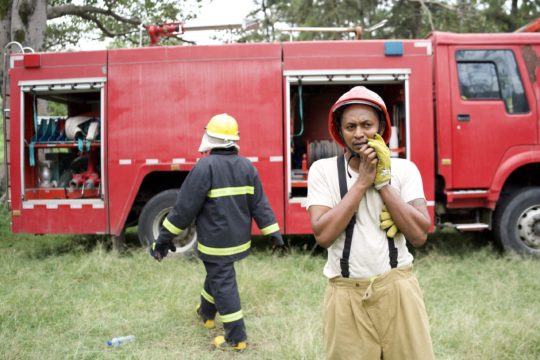
“If it weren’t for PCPM, we wouldn’t even have attempted the rescue operation,” say firefighters from the Ethiopian city of Awassa. Local responders receive equipment and training from Poland through a program coordinated by the Polish Center for International Aid (PCPM).
Thanks to training conducted by Polish specialists, firefighters from the Ethiopian city of Awassa managed to prevent a major tragedy during a fire at a chemical factory.
“We received information about a fire at a chemical plant in the village of Iralon. The blaze was caused by a faulty electrical installation. As soon as we were notified, we rushed to the scene. We arrived quickly and were able to begin our operation,” says Tadele Denebo, a 42-year-old firefighter from Awassa, a city of 400,000 located 150 km southwest of Ethiopia’s capital, Addis Ababa.
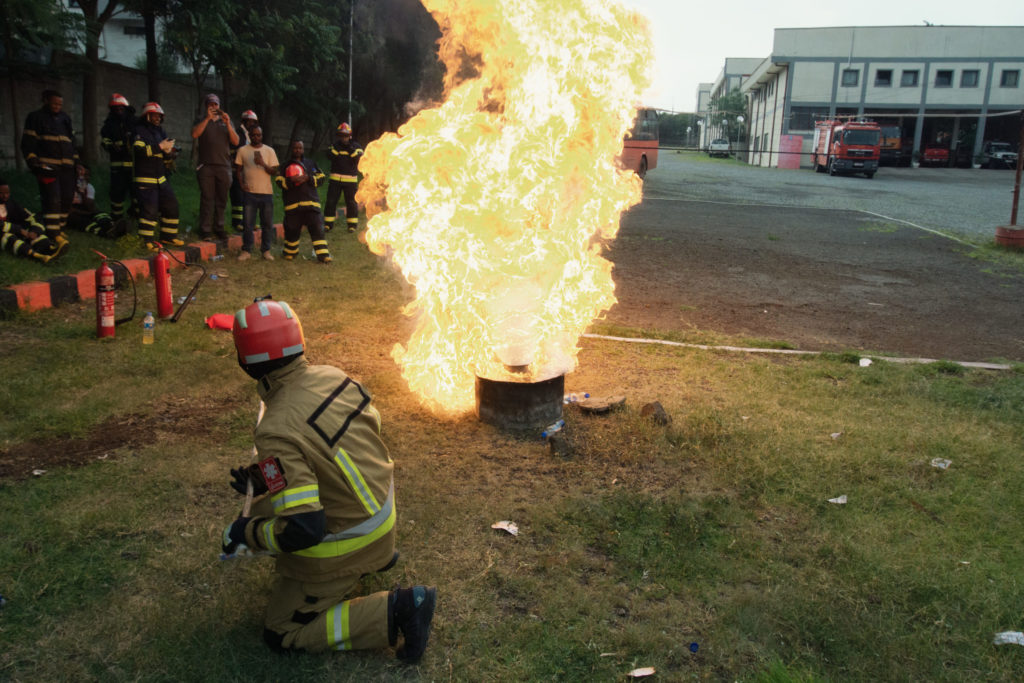
“Thanks to the knowledge I gained during the training organized by the Poles, I knew exactly how to act. I decided to extinguish the flames using foam. I was also fully equipped with protective gear — gloves, helmet and boots — allowing me to move around the factory grounds without fear or unnecessary risk,” Denebo recounts.
A shortage of equipment — even the most basic
Tadele Denebo has worked at the Awassa fire station for nine years. He chose this job to serve and help his local community. However, good intentions and ambition are not enough to effectively fight fires and other dangers Ethiopian firefighters face daily.
Ethiopia’s public services — including fire departments — are severely underfunded. There is a shortage of equipment for firefighting as well as for technical, medical and chemical rescue. Many firefighters are forced to respond to emergencies without fire-resistant suits, gloves or boots, and with malfunctioning water pumps and hoses. They also lack basic tools such as rescue ropes, chainsaws, cutters or hydraulic spreaders and lifting gear.
Fortunately, the situation is gradually improving thanks to support from Poland. The Polish Center for International Aid (PCPM) conducts comprehensive activities in Ethiopia to strengthen local emergency services — especially fire brigades and medical rescue teams.
By 2026, PCPM will implement 10 projects in this country of 130 million people, with a total value of 17.4 million PLN (cca. 4,7 million USD). Most of these projects are financed through the Polish Aid program of the Polish Ministry of Foreign Affairs.
PCPM’s support for the Ethiopian fire service
In terms of equipment, PCPM provides personal protective gear, rescue tools and modern technical equipment. Ethiopian firefighters have received helmets with visors, full fire- and heat-resistant uniforms, Kevlar gloves, rubber boots, as well as tools such as glass-breaking hammers and elevator keys.
Additionally, firefighters received rescue backpacks with medical supplies and fabric evacuation chairs.
The project also includes plans to modernize the training center and to supply specialized equipment such as sludge pumps and thermal imaging cameras. Such support enables local rescuers to respond more effectively to fires, landslides and other disasters.
Not only equipment, but training
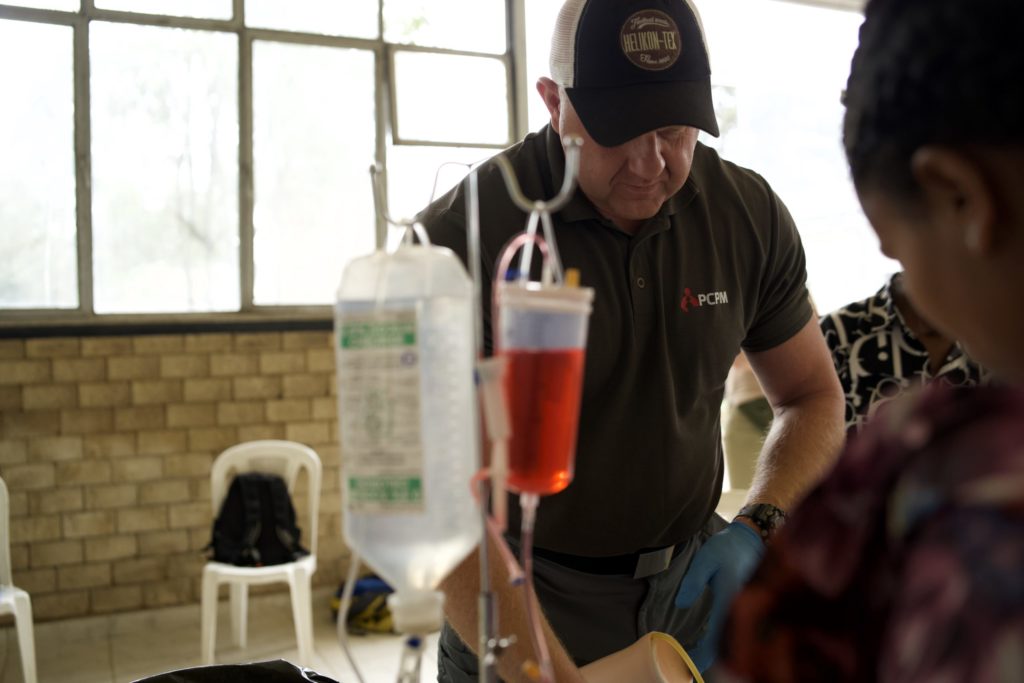
PCPM also provides Ethiopian emergency services with a full training package — Polish instructors, firefighters and paramedics are present on-site. Basic training lasts 10 days and is divided into two five-day sessions. Each course concludes with an exam.
“We teach our Ethiopian colleagues the basics of firefighting in buildings, using PPE (personal protective equipment), operating hydraulic tools and principles of fire prevention,” says instructor Janusz Majtyka, who is conducting training in Ethiopia for the fourth time. He previously completed two similar missions in Kenya, where he shared his knowledge with Kenyan firefighters.
“Here in Ethiopia, we also have instructors from Kenya, because the idea behind this project is to train trainers. Once we return to Poland, they will continue sharing their newly acquired knowledge with future units and new firefighters,” he explains.
He adds that the commitment shown by Ethiopian trainees is impressive, and they absorb firefighting knowledge quickly.
“They are professional firefighters and have solid theoretical knowledge, but they lack practice and hands-on training. Thanks to our sessions, they see—often for the first time—how fire and smoke behave in enclosed spaces or during extinguishing attempts. This experience is invaluable and will help them react better during real emergencies,” emphasizes Janusz Majtyka.
“If it weren’t for PCPM, we wouldn’t even have attempted the rescue operation…”
The value of lives and property saved thanks to Polish equipment and training is immeasurable. In Awassa, a city of 400,000, there are only two fire stations and four fire trucks — far too few to ensure an efficient emergency response.
The firefighters themselves stress the importance of the practical training and the equipment they received from Poland.
“If it weren’t for the training and equipment provided by PCPM, we wouldn’t even have attempted the rescue operation at that factory,” Denebo admits honestly, referring to the fire at the chemical plant in Iralon.
“I don’t know how the story would have ended. An explosion of the chemicals could have resulted in a major tragedy,” he adds.
PCPM’s development activities in East Africa — Ethiopia, and Kenya — are made possible thanks to financial support from the Polish Ministry of Foreign Affairs as part of the Polish Aid program.


