

An oasis between Ukraine and Poland. “We really want to go back home, but it is unlivable.”
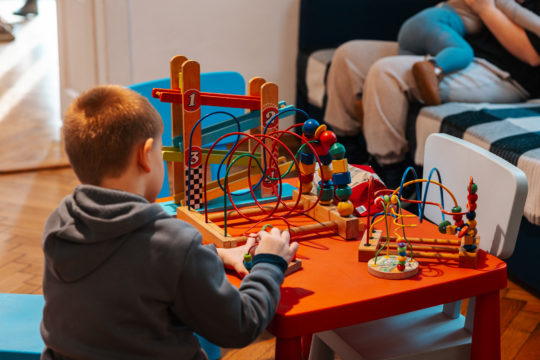
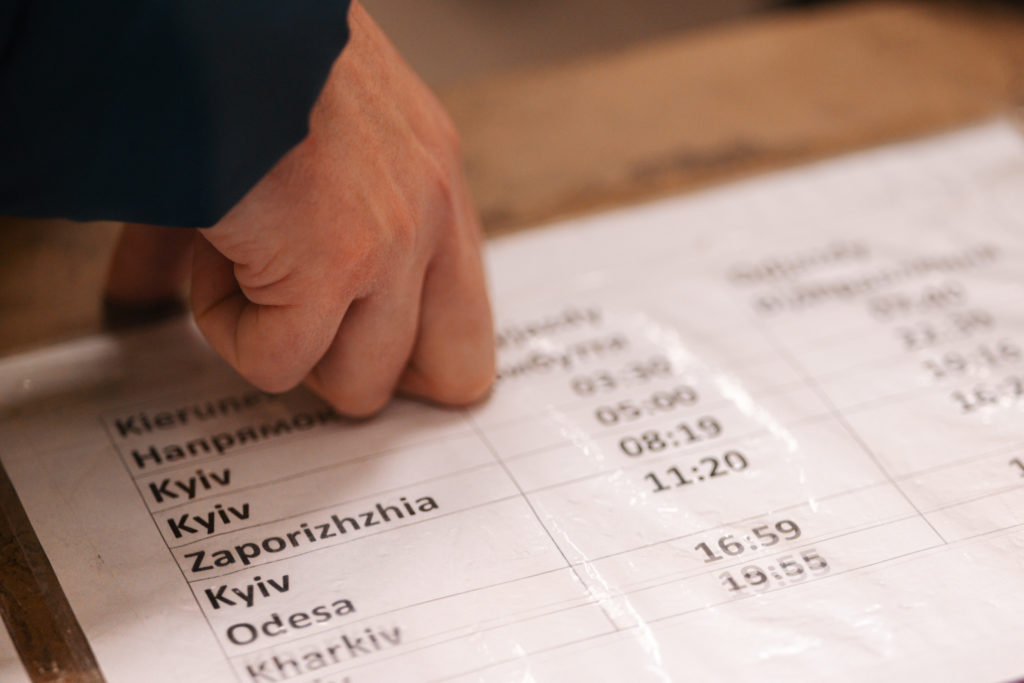
Platform five at the Przemyśl Główny train station is set apart from the rest. This is where trains from Ukraine depart and arrive. On the Polish side, after leaving the building where passport control is located, visitors are greeted by employees of the station’s Mother and Child Room. “Can we help you?”
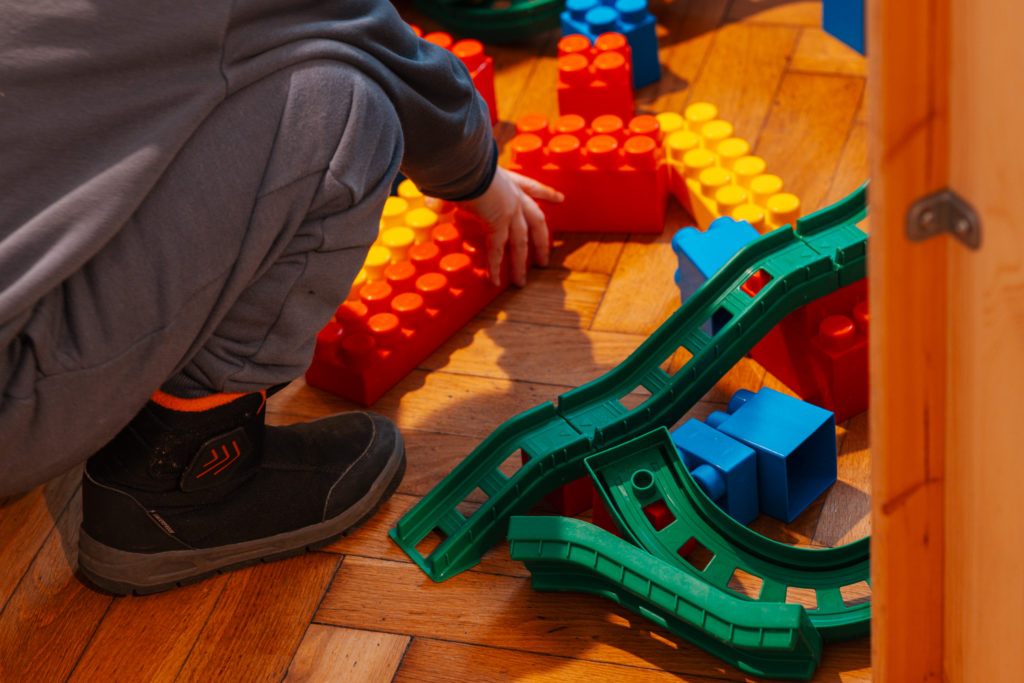
The centre is located on the corner of Stefana Czarnieckiego and Mikołaja Kopernika Streets and is open daily from 7:00 a.m. to 11:00 p.m. It consists of three rooms – a quiet waiting room with luggage racks, a waiting room/playroom for children, and a kitchen where travellers can heat up food and prepare hot drinks. In 2025, more than 25,000 people used its services, including nearly 13,000 children.On this day, psychologist Oksana and coordinator Polina are on duty.
Everything was happening so quickly, a lot depended on me
Oksana: I am from Kyiv. I came to Poland, to Przemyśl, with my children on the 1st of March 2022. We did not travel further into the country because we hoped that the war would last no longer than a month. I immediately got involved in volunteering at the railway station. Helping other people allowed me to take my mind off my own problems and brought me great satisfaction and relief. Later, I got a job at the Humanitarian Aid Centre, where I provided consultations on various matters – job searching, accommodation, purchasing travel tickets, etc.
After two years of living here and working with people, I wanted to learn how to help at a higher level, professionally, in an informed way. I only had technical education, and I decided to pursue a degree in psychology.
Ministry of Education and Science of Ukraine reports that in 2024, 54,400 people applied to study psychology in Ukraine. Due to the high demand for mental health services, interest in this course of education has increased by more than 60% compared to the level before the full-scale war.
This is how I ended up at the Ukrainian House in Przemyśl, which implements projects financed by the Polish Center for International Aid. I run psychological consultations at the Mother and Child Room.
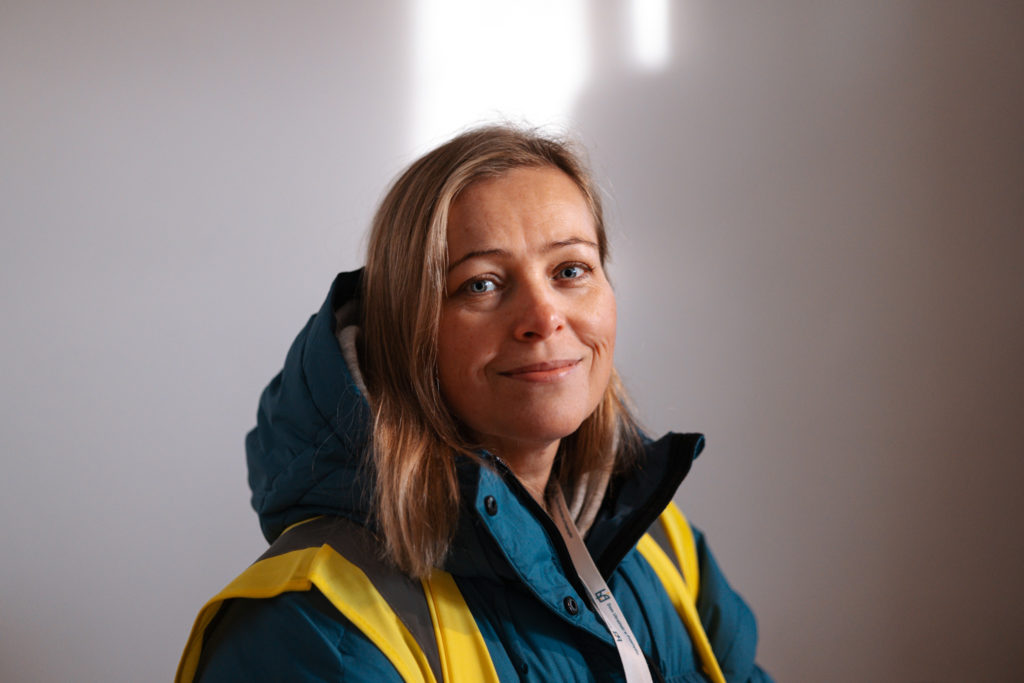
Every personal story is different, but everyone is nervous
People who cross the border for the first time are convinced in advance that they will not understand anything here and that no one will understand them either. Some are so stressed out that, for example, when they see a sign written in Ukrainian, they do not understand what it says. They do not see that it’s in Ukrainian. They come to us for a short time, for a few hours, an hour, even 20 minutes. The atmosphere itself calms them down. It’s the place, the comfort and warmth of our room. We try to spot people who might need a conversation.
At the end of November, an elderly woman arrived. She and her family were our first clients from Ternopil after the recent shelling. Missiles destroyed three buildings and many people were killed. The woman stood in the doorway and only said, ‘We are from Ternopil.’ After a moment, she repeated, ‘We are from Ternopil.’ Then I realised that she had a great need to talk about what happened and about her pain. She calmed down a lot thanks to the fact that she could open up and unburden herself of her experiences.
Another time, a woman whose husband had been killed came to us, and she didn’t even have time to mourn. She was travelling with her daughter and granddaughter – she didn’t want to cry in front of them or show in any way that she was suffering. People are often surprised when we encourage them to talk and seek help. All their lives, they have been taught that they have to keep everything to themselves.
My responsibilities include literally everything
Polina: I am responsible for organisational matters. If there is a problem that needs to be solved, you can reach out to me. I arrived in 2022 with my son. I was travelling to the Czech Republic, someone was waiting for me there, but it so happened that we settled permanently in Przemyśl. My child went to school, and I started volunteering at the Ukrainian House. For me it was not about money, but about adaptation, about contact with people who were in the same position as I was, and with people of Ukrainian origin who understood and supported me. And now I work here. It’s a room for families with children, but we help anyone who needs help.
Once, three elderly people got off the train, one in her eighties and two in their late seventies. They needed someone younger to guide them and help them with basic things, such as withdrawing money from an ATM, because they didn’t even know how to do that. They didn’t know that they couldn’t pay with hryvnias in Poland.
We often provide advice on crossing the border. Many people do not know how to do it properly so as not to lose their protection in other countries. We provide official information and share our personal experience. There is a lot of outdated and false information on the internet. More and more often, people come with expired passports, and with such passports, the border guards do not allow them to enter Ukraine. You have to go to the consulate. In December, a vice-consulate was opened in Rzeszów; previously, people had to travel all the way to Cracow. Each such trip involves additional costs and time. A white passport costs PLN 100, which not everyone can afford. Especially if, for example, they have three children. In addition, consulates are closed on Saturdays and Sundays.
We are trying to create an oasis, something between Ukraine and Poland,
so that especially those who come here for the first time do not feel like strangers. Foreigners can simply rest here between trains and take care of their basic needs – use the free toilet, drink coffee or tea, or just sit in peace and warmth on comfortable sofas. Currently, the journey from eastern Ukraine, for example from Kharkiv, to Germany takes two days.
Halina, who is travelling with two children with disabilities, has been using the room since the morning.
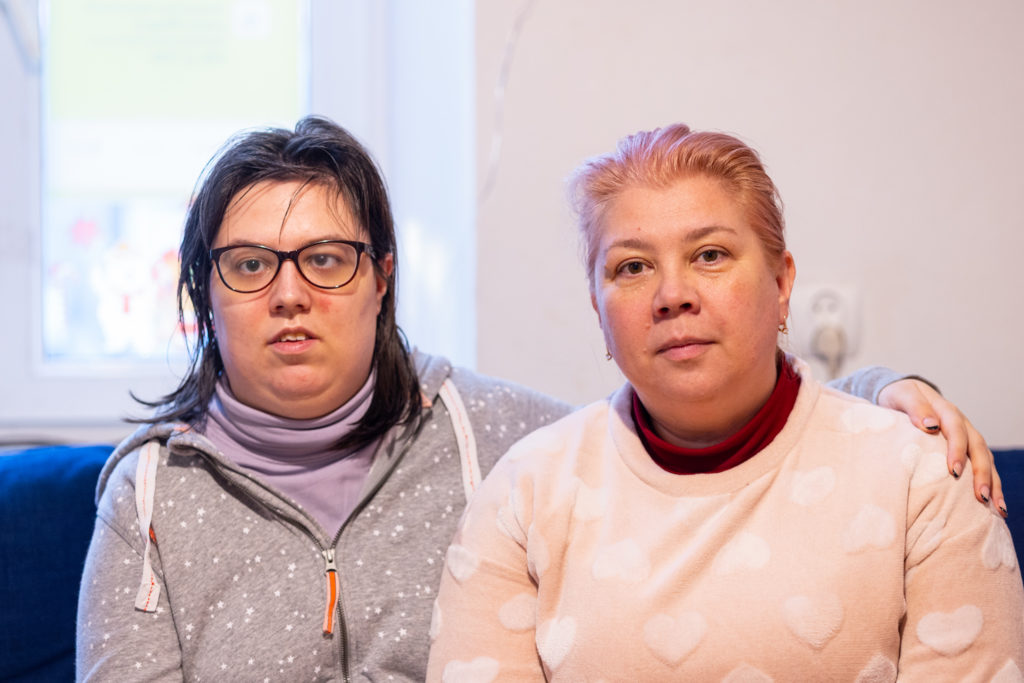
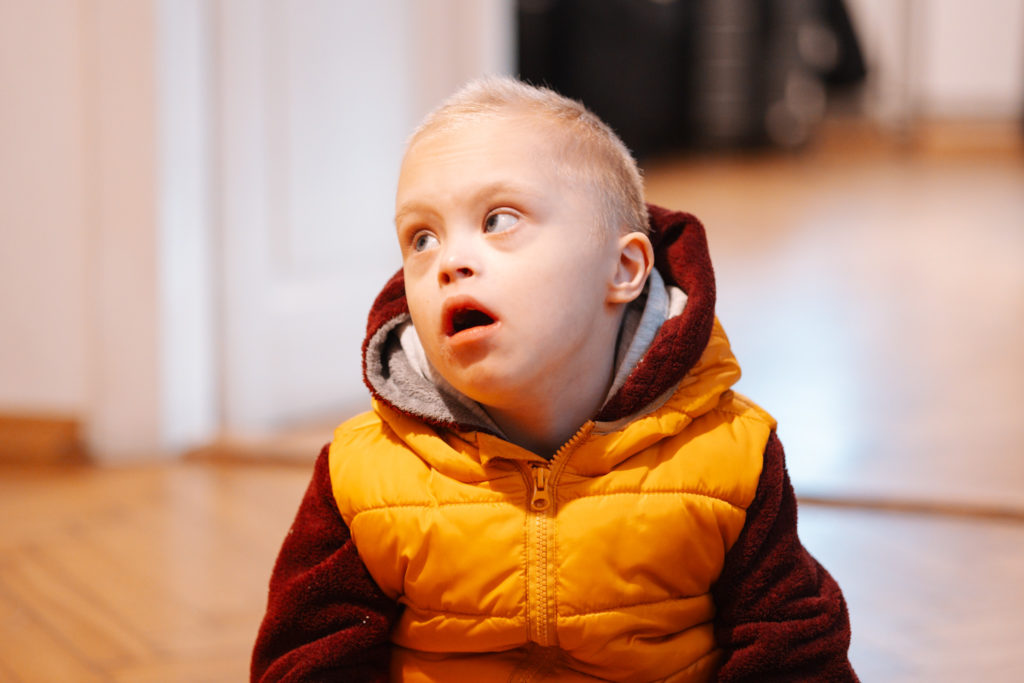
Halina: We have been in this room several times, both in winter and summer. This room is a great help for parents, children and the elderly. Travelling with a child is always challenging, but with a child with a disability it is twice as difficult. Sasha is 8 years old. He cannot speak, he cannot say what causes him pain, he has an eating disorder, unstable hip joints and wears a diaper. He is completely dependent on external help. We used to take a wheelchair with us, but it is very problematic when travelling. It’s already difficult – as a family of three, we have two suitcases, a bag of food and a backpack. I carry my son in one arm and pull the suitcase with the other. My daughter takes the backpack and the second suitcase.
The journey from Regensburg to Odesa takes two days. It is very difficult and very tiring. Regensburg is located near the Czech border. We travel from there to Prague, from Prague to Przemyśl, and then from Przemyśl to Odesa. We board the train in Prague at 10 p.m. and arrive here early in the morning, around half past six. This room is open from 7 a.m., which is very convenient.
We arrived in Germany in May of 2022 as part of an organised evacuation from Odesa. We discussed whether to go or not, but when the bombing of residential buildings began and civilian casualties appeared, we made up our minds. We came to Regensburg, which is Odesa’s twin city. I hoped that, due to the needs of my children, we would be given accommodation in a hotel until we were allocated a flat, but when we arrived, there were only places in refugee camps. We ended up in a camp. My mother and two younger children live with me in Germany, my husband and two older children stayed in Ukraine.
We didn’t go back at all during the first year. We came home for the first time in the winter of 2023. We wanted to return permanently, but that’s when the chronic power outages started. Now we go home once a year to spend time with our family and to get medical treatment. In Germany, our insurance only covers essential, urgent care and family medicine. We can only afford everything else in Ukraine, such as dental care or rehabilitation for our son.
We really want to go back home, but it’s unlivable.
We’ve tried many times. We bought tickets for this trip well in advance, and recently Odesa was heavily bombed. The entire infrastructure suffered. We thought about returning the tickets and leaving later, when things settle down a bit, but in the end we decided to go. There has been no electricity in Odesa for five days now. We cannot afford a generator. Their price has risen by 10,000 hryvnia (approx. USD 230) overnight. Someone earning the national average wage cannot afford to buy one, even if they really need it.
The price of a home generator is, depending on the type, USD 450-1,700. The monthly cost of fuel for household use of moderate intensity (lighting, heating, charging electronic devices) is approximately USD 450. In Ukraine, the average salary is approximately USD 650 per month.
The Mother and Child Room and the psychological assistance provided there are run by the Ukrainian House in Przemyśl as part of the Prevention of UA Refugees’ Homelessness in Poland Project of the Polish Center for International Aid. The project is financed by the Citi Foundation and supported by the Kronenberg Foundation.
PCPM’s work in Ukraine can be supported through financial donations


