

“Our priority is to make sure that all children feel safe. Only after that does learning come into focus.”
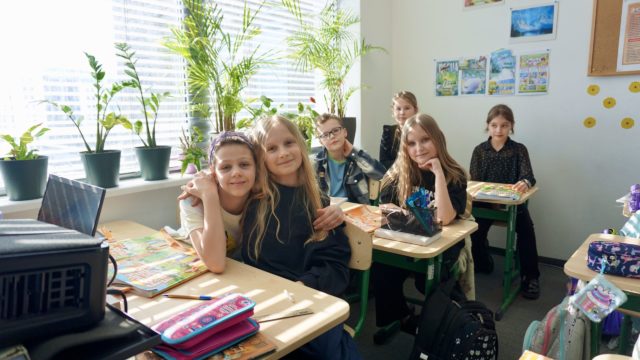
Education is a means, but the goal of preparatory centers for children from Ukraine is to help them settle into a new reality.
Since 2022, the PCPM Education Center has been operating in Warsaw – yet it is much more than its name might suggest. It is not merely a school, but above all a place that has become a vital source of stability and support for many children from the Ukrainian community in Poland. Here, they find safety and build friendships. It is also a space where – at their own pace and with the support of educators – they can gradually return to a school routine and navigate what is often a challenging adaptation to an entirely new reality. However, the Center will soon have to face new operational constraints.
ONE STEP FORWARD, TWO STEPS BACK
By decision of the President of Poland in 2026, systemic support for children – established under the special act on assistance to Ukrainian citizens in Poland – will be reduced. As provisions phasing out some of the solutions introduced in 2022 come into force, preparatory units and additional educational programs that previously operated under refugee support measures will only be able to function within the standard Polish education system.
For children from newly arrived families, this means having to adapt quickly to a completely new educational system, without the gradual transition previously offered by programs such as the PCPM Education Center. It is also a major shift for teachers and educators who have been supporting children within the expanded model of education. While NGOs will still be able to run their programs, in the 2026/2027 school year they will need to align them with the new legal framework, which may limit the scope of support.
This is a serious blow to a system that, in the spirit of integration and support, enabled families with refugee experience from Ukraine to adapt gradually and return to schooling at their own pace. Many children who lived in war-affected areas struggle with symptoms of PTSD, which hinder learning and peer relationships. For them, a sudden change of environment – a new home, a new language, a new school, and the accompanying sense of alienation – can intensify trauma. It is difficult to imagine how, under such circumstances, children could successfully navigate Polish schools without any buffer or support – and this is precisely what may happen starting next year. The experiences shared by my interviewees clearly highlight how crucial these supportive institutions are.
WAR AS THE BACKDROP OF EVERYDAY LIFE
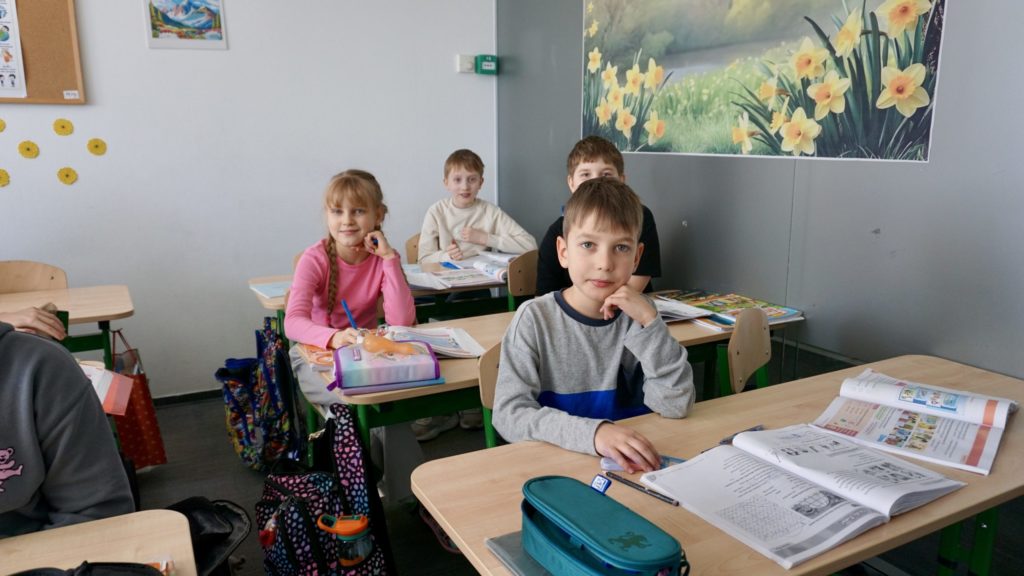
I visited the PCPM Education Center to speak with mothers who had recently arrived in Poland with their children, who have just joined the classes. These conversations were not easy. The stories I heard cannot be framed as simple narratives of positive change – experiences of war remain with people even after leaving Ukraine. These memories resurface during New Year’s fireworks or when sirens sound during Polish national holidays.
It is also important to note that both women I spoke with live in separated families. Their husbands, brothers, or other loved ones have remained in Ukraine and are serving in the military. The children are aware of this as well. A school counselor told me that one of the most important places in the Center is the psychologist’s room. Children feel safe there – it is a space where they can talk about their experiences, both with each other and in confidence with adults. For most, the war has become an inseparable part of everyday life. In a way, it has been normalized – not in the sense that it no longer affects them, but as part of their survival mechanisms.
Viktoria
My first interviewee, Viktoria, arrived – or rather evacuated – with her daughter and son to Poland in July 2025. They had lived near Kramatorsk, in the Donbas region. Her husband, a soldier, remained in Ukraine. She agreed to speak about relocating her life to Poland and the role the PCPM Education Center plays in their daily lives. She learned about it through a recommendation, and her children joined shortly after arriving, at the start of the school year in September.
“What made you decide to leave for Poland?”
“Missiles and drones. Shahed drones were flying over us all the time. At night, when we had to run to shelters, the children would panic. They were shaking – we couldn’t calm them down. Sometimes the only option was to call an ambulance.”
“Were your children attending school in Ukraine before that?”
“Classes were online, and often even that wasn’t possible. Without electricity, there’s no internet, and without internet, there’s no learning.”
“So now the most important thing is that learning happens in person?”
“Yes. Online learning wasn’t effective. Here, the children not only study, but also have friends. They can be together, talk, play. They feel good.”
“Structure is important for children. Do you feel that school provides that?”
“Yes. The most important thing is a sense of safety. When children come from places where there is war, they first need to feel calm.”
“So first stability, then learning?”
“Exactly. When a child is under intense stress, the brain doesn’t function normally. That’s why we give them time. Sometimes three months, sometimes half a year. And then they begin to learn on their own.”
– adds Svitlana, who is helping translate. She also works at the Center as a project coordinator. Before joining, she worked as a translator, but her role here goes far beyond that.
“Do the children have classes in Polish?”
“Yes. They have six to eight hours of Polish per week. Three of those are taught by Polish teachers so the children can get used to the language and accent. There are also bilingual lessons where terminology, for example mathematical, is explained.”
“How do they cope with learning the language?”
“At first, it’s difficult – especially for children coming from highly stressful environments. They are withdrawn and shy. But later they start learning faster. Younger children are less afraid of making mistakes.”
“Does interaction with other children help?”
“Yes. Classes include children at different language levels. Those who speak better motivate others. A healthy sense of competition also emerges.”
I turn to Anastasia:
“What matters most to you as a mother about this place?”
“That my children are safe. The school is closed – no outsiders can enter. I know they spend the whole day here and nothing will happen to them.”
“Does that allow you to work?”
“Yes. I work 12 hours a day.”
“Do you feel at home in Poland?”
“No. I feel like a guest. Home is there.”
“But does your apartment give you a sense of safety?”
“Yes. I feel calm there, but it’s not home.”
“Do you think about what’s happening in Ukraine?”
“All the time. My parents and my husband are there. He lost his arm in the war. Now doctors are fighting to save his leg.”
“If the war ends, would you like to return?”
“I don’t know. There’s no economy there now, everything is destroyed. Home is home, but I don’t know if there will be anything to return to.”
Her concerns are justified. Kramatorsk, a frontline city in Donbas, is regularly shelled by Russian forces. The front line lies just a dozen or so kilometers away. While the city is not entirely destroyed, the scale of damage is significant – residential buildings, schools, and public infrastructure have been hit by bombs, drones, and artillery. Life continues under constant threat.
Maria
Further north, near the Russian border, lies the city of Sumy. In the summer of 2025, the front line was less than 20 kilometers away, and shelling and drone attacks were part of everyday life. Maria, the mother of a fourth-grade girl who joined the Center in 2025, came from there.
“Do you remember the moment you decided to leave?”
“My daughter was playing outside when we heard a drone. I called her to come home immediately. Moments later, there was a powerful explosion. All the children ran into our apartment and cried in the hallway.”
“That was the moment you decided?”
“Yes. My daughter said: ‘Mom, let’s leave.’”
“Do people get used to war?”
“Unfortunately, yes. You start to normalize it. You think: ‘A Shahed is flying, but not toward me.’”
“What was your daughter’s schooling like in Ukraine?”
“Basically, it didn’t exist. Either online learning or sitting in shelters.”
She recalls a moment when, shortly after dropping her daughter at school, air raid sirens sounded. Cars broke all traffic rules, turning around and rushing back toward the school.
“How did your daughter adapt in Poland?”
“She first went to a Polish school, but it was very difficult because of the language. Then we found the Education Center.”
“How does she feel here?”
“Very good. She often says: ‘Thank you for finding this school.’”
Before the war, Maria ran her own dance studio – her passion. After arriving in Poland, she retrained and now works in IT.
“Do you still love dancing?”
“It’s like therapy for me. Our lives changed so drastically. Everything changed. Sport was what saved me – it was the only thing that helped me when you don’t understand where you are, who you are, what’s around you.”
AGAINST PREJUDICE
Both women and their children challenge common stereotypes about Ukrainian refugees. Children learn Polish – often faster and more easily than adults – understanding that it is part of building a new life. Mothers go to work after dropping their children off at school, striving to support their families independently.
Home will always be Ukraine, but pragmatism prevails. Returning to a war-torn country with damaged infrastructure and economy is another difficult, potentially retraumatizing decision. For now, what matters most is the children’s safety and sense of normalcy – the ability to build relationships and pursue ambitions.
When asked about their dream careers, two boys say they want to attend film school – one to become a director, the other a screenwriter (or actor). Many children who joined the Center in 2022 have since completed exams and continued their education in Poland.
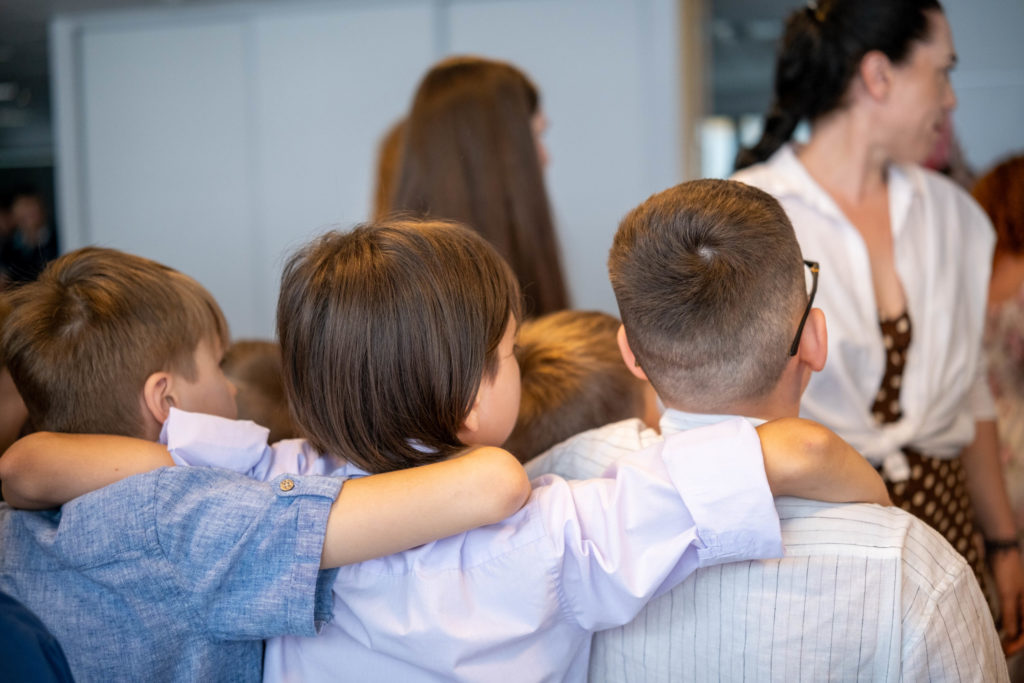
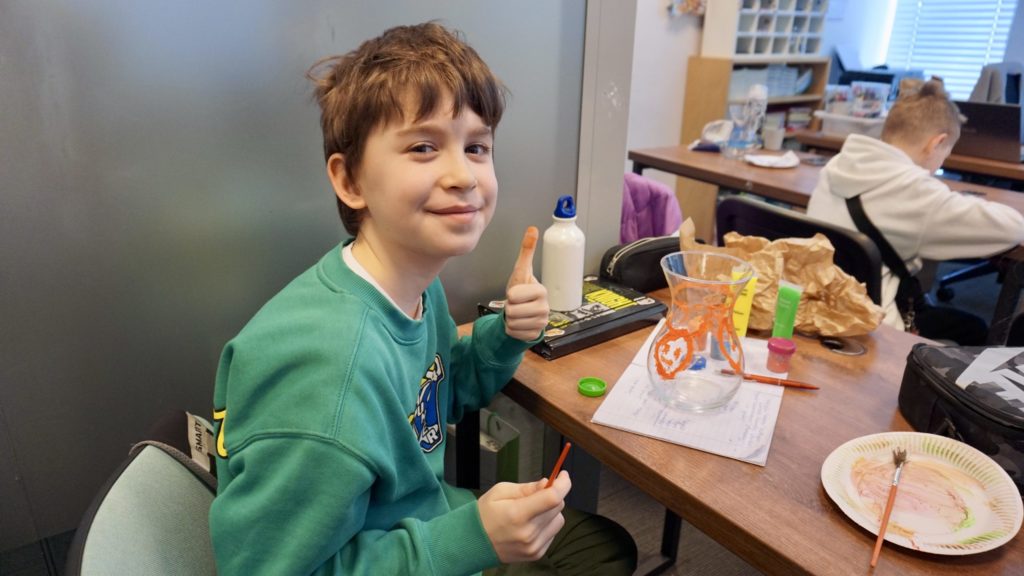
This space is invaluable – it provides structure, stability, and the opportunity to build relationships, which are especially important in a foreign country. When I ask a group of boys if they are best friends, they reply: “We are family.” Not by blood, but through shared experience.
Parents from Ukraine often face accusatory questions about why their children do not attend Polish schools. This reflects a deep misunderstanding of the psychological burden these children carry. At the same time, attempts to provide transitional support are sometimes dismissed as entitlement – creating an impasse where no option is fully accepted.
WHY IT MATTERS
To build a society without divisions – where people from Ukraine and Poland can truly integrate – intercultural solutions are essential. These include preparatory classes, psychological support, language education, and intercultural assistants who help both children and teachers navigate differences.
Such solutions enable gradual, safe adaptation, foster a sense of belonging, and level educational opportunities instead of deepening exclusion.
The PCPM Education Center is a powerful example of this approach. In a safe environment, children can once again feel at ease, play, and – perhaps most importantlystart thinking about their future. In a country engulfed in a war that was supposed to last weeks but has now lasted years, the ability to believe in a future again is a profound change.
And the gratitude for being able to build that future in Poland resonates in every conversation I had.


