

20 Years of the PCPM Foundation. 2025 Annual Report
On 23 June 2026, the Polish Center for International Aid Foundation will mark exactly 20 years since the beginning of its mission.
June 23, 2026, will mark exactly 20 years since the Polish Center for International Aid
Foundation began its mission. At the beginning, the organization consisted of three
people and started modestly by constructing two classrooms at a school and a well in a village in Sudan. It was a drop in the ocean of needs, barely perceptible amid global events. Today, we know that this was the beginning of efforts that, over time, have reached hundreds of thousands of people around the world.
Twenty years later, the village is no longer in Sudan but in South Sudan. And the PCPM is no longer composed of three people but of several hundred. This symbolic change reflects how the world has evolvedover these 20 years, as well as how the Polish Center for International Aid has transformed.
Today, it is one of the largest and most experienced Polish non-governmental organizations operating in humanitarian, development, and emergency aid. PCPM has five offices in Poland: Białystok, Kraków, Sosnowiec, Poznań, and Warsaw, and is expanding its organizational structures across three continents. The Foundation focuses its activities on three key areas: resilience and crisis response, humanitarian aid, and development cooperation.
Over the course of its 20-year history, the Polish Center for International Aid
has implemented over 200 projects in 28 countries, of which approximately 120 are
humanitarian projects focused on providing immediate assistance in emergency situations such as wars, natural disasters, and refugee crises. The remaining 80 projects are development initiatives aimed at long-term improvements in the quality of life for local communities—including access to education, water and sanitation infrastructure, emergency response systems, and vocational and agricultural support.
Humanitarian projects were carried out in South Sudan, Ukraine, Nepal, Syria,
and Lebanon, among other places, where PCPM provided food, water, medicine, and
medical and psychological support. In turn, development activities focused on systemic improvements to infrastructure and services in regions such as Lebanon, Kenya, and Ethiopia, thereby contributing to increased security, self-sufficiency, and stability in local communities.
The total value of all projects exceeded PLN 600 million, demonstrating the scale and
consistency of PCPM’s activities. The organization not only responds to crises but also builds lasting foundations for development, combining emergency readiness with a long-term perspective.
The Foundation has grown into an organization capable of delivering aid worldwide.
Unfortunately, the world has not become any simpler. The largest armed conflict in
Europe, since World War II has entered its fifth year with no clear end in sight. The
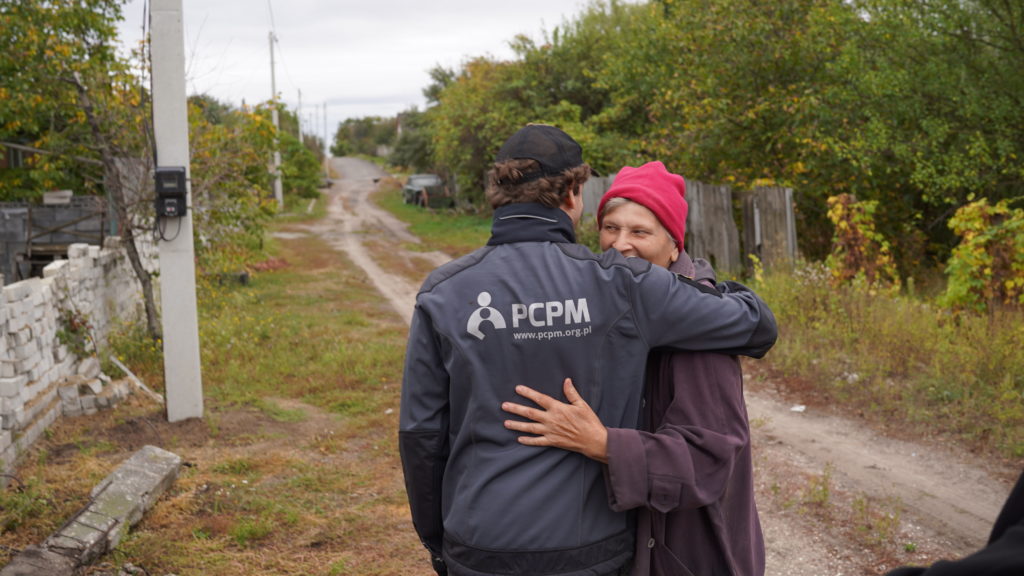
war in Ukraine has redefined security in our region and put us all to the test. For PCPM, 2022 was a watershed year, a test of readiness, effectiveness, and responsibility. Foundation successfully met this challenge. PCPM assisted in Ukraine and Poland, supporting refugees, rebuilding local emergency response systems, and strengthening the resilience of institutions and communities. The experience gained over more than 15 years, and now 20, has enabled PCPM to act quickly, professionally, and on a large scale.
After 20 years, the Polish Center for International Aid is an organization capable of
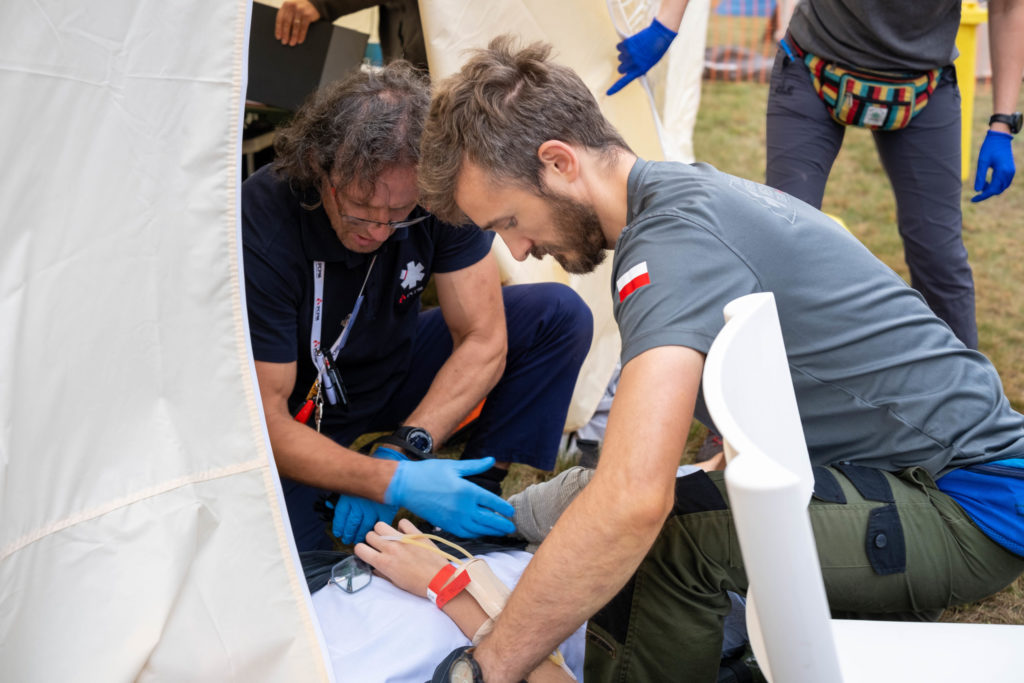
responding at every stage of a humanitarian crisis. PCPM’s strength lies in combining immediate emergency aid with long-term development support .In resilience and crisis response, PCPM operatesa WHO-certified Medical Rescue Team and participates in the European Civil Protection Mechanism, providing professional support during major crises. The Foundation also actively cooperates with Poland’s civil protection system, building the foundations of security and strengthening national response capabilities.
We have Poland’s only WHO-certified medical rescue team, which has assisted in
over 10 countries throughout its existence. Just a few months after its establishment,
the PCPM Medical Rescue Team faced its first real test. On April 25, 2015, Nepal was
struck by an earthquake measuring 7.9 on the Richter scale. Before noon that same
day, the Nepalese authorities officially appealed to the international community
for help, and the next day, at noon on April 26, the first group from the Medical Rescue Team was ready to depart. By April 27, the first group of PCPM rescuers was already on site. They were the first medical team to arrive in the most devastated region.
The war in Ukraine also transformed how all of Poland thinks about security. The international situation changed, but so did the legislation. A law on Civil Protection and Civil Defense was introduced in Poland. PCPM’s years of experience in this field aligned perfectly with the objectives of this law. The Foundation in the Małopolskie Voivodeship became a Civil Protection entity and a member of the INKA task force. As part of the POP FUND grant competition, PCPM supported organizations across Poland, emphasizing resilience in times of crisis. Also, since September 2022, PCPM has been operating a Medical Hub in Jasionka near the Rzeszów airport, which is the longest-running initiative of its kind in the history of the EU.
These efforts are complemented by extensive training programs. PCPM trains fire
departments and rescue services in Ethiopia, Kenya, and Tanzania, and, through partnerships, supports the development of civil protection in the Philippines, Taiwan, and Japan. As a result, emergency aid transforms into sustainable safety systems that effectively prepare communities for future threats.
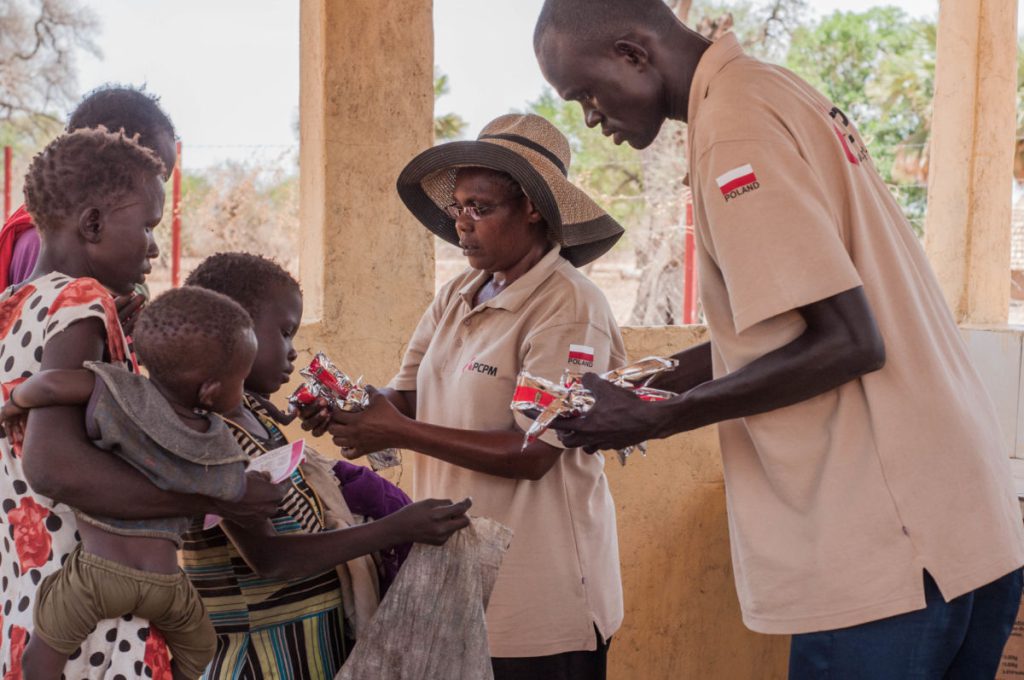
Humanitarian aid remains the foundation of PCPM’s work. These are efforts aimed at saving the lives, health, and dignity of people affected by crises, including armed conflicts, natural disasters, and poverty. For 20 years, PCPM has actively responded to these challenges, bringing support where it is most needed. The Foundation has helped Syrian refugees by providing food and assisting them in finding shelter, and today it continues these activities in Ukraine. It responds to successive crises, which, unfortunately, are becoming increasingly frequent, by providing aid to malnourished children in Sudan and funding school meals in Ethiopia. These are actions that save lives here and now, but also restore people’s sense of security and dignity.
Currently, the Foundation’s aid efforts also include comprehensive support for people affected by forced displacement and the consequences of armed conflicts in Poland, Ukraine, and the Middle East, specifically in Lebanon, Syria, and Palestine. The Foundation ensures decent living conditions for refugees through relocation from collective accommodation, rent subsidies, and multi-purpose financial support (cash assistance).
Assistance also includes distributing food and hygiene items (NFI) and ensuring access to medical care. PCPM places particular emphasis on helping refugees become self-reliant and integrate. It runs temporary employment projects, organizing vocational training and language courses, and supporting the recognition of diplomas, while also addressing the needs of host communities.
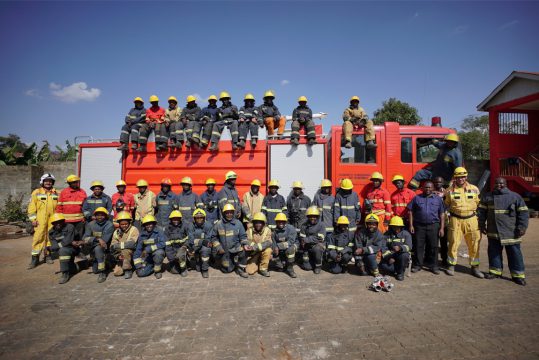
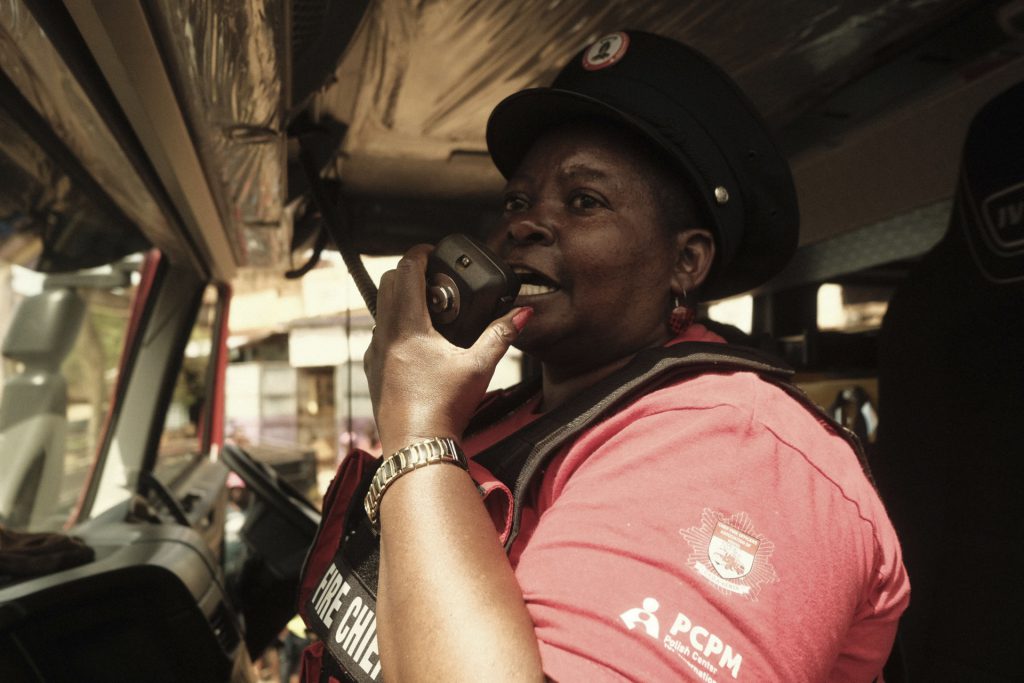
Development cooperation is the third pillar of PCPM’s activities and focuses on systematically strengthening local communities and state structures, in close cooperation with central and local authorities. These activities include developing standardsfor emergency services in Kenya, supporting spatial planning and infrastructure reconstruction in Ukraine and Lebanon, and initiatives to integrate people with refugee backgrounds in Poland. PCPM promotes long-term self-sufficiency, enabling partner regions to achieve stable development independent of external aid. Over the past 20 years, even small changes have transformed into systemic solutions with a real impact on millions of people. In the Akkar region of Lebanon PCPM has been modernizing infrastructure for nearly 15 years. Thanks to the foundation, residents have access to clean water; thanks to a wastewater treatment plant, they have sewer connections; farmers can benefit from irrigation canals; and residents can use a renovated road and a new fire station. In Kenya, when PCPM began its work, half the counties had no fire stations. After 10 years, there is one in every administrative unit, and the number of firefighters has tripled.
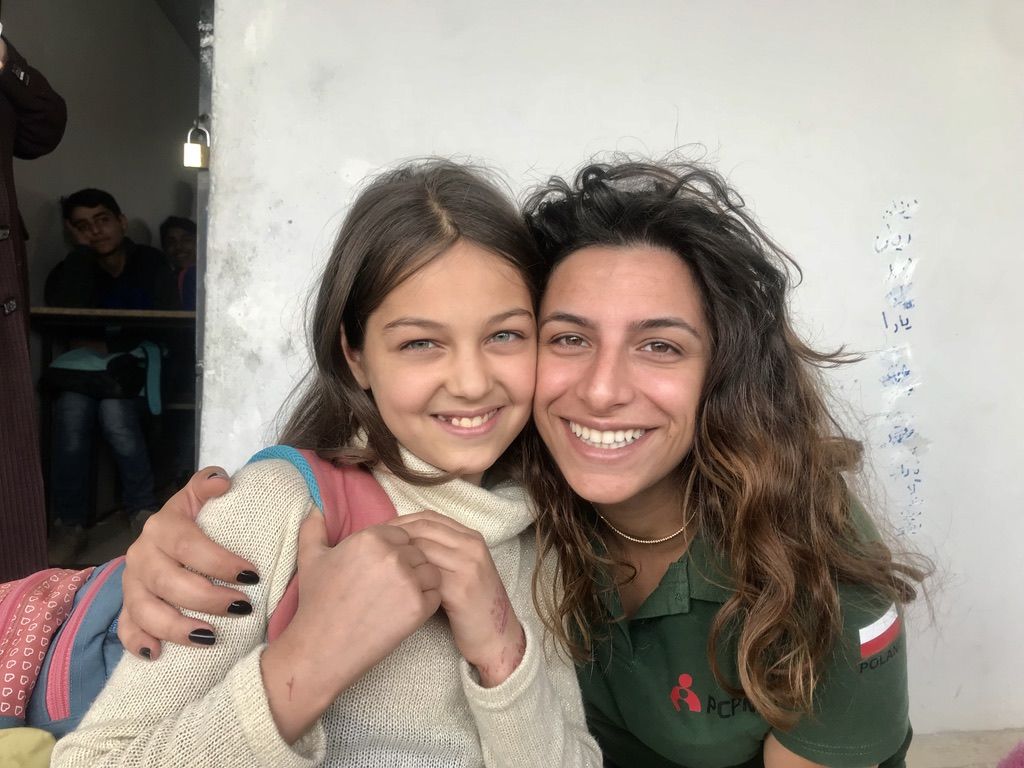
These are just a few examples that illustrate the importance of the work done by PCPM. Behind all of this, however, are real people. Mukhtar from Syria, who received food aid after fleeing to Lebanon. Ms. Yana, who, thanks to the Foundation’s help, was able to return to her profession in Poland. Ermias, a firefighter from Ethiopia, is now an instructor training the next generation of rescuers. It is these stories that show what 20 years of PCPM’s work truly represent: a journey from a local initiative to an organization that is making a real difference in people’s lives around the world.


