Aid for 582 children held back as therapeutic food runs out
Due to severe shortages of therapeutic food (RUTF), we have been forced to suspend treatment for 582 children. Their condition is deteriorating by the day. Just one centimetre can determine whether a child is moving towards health or slipping into life-threatening malnutrition. That same single centimetre, shown by the colour scale on a MUAC tape, tells us which child is on the edge of survival.
The Nutrition Centre in Gordhim is the only facility within hundreds of kilometres where young children can receive help free of charge. Supplies of therapeutic food are running out, and the number of patients continues to rise – which is why we urgently ask for your help. Without new deliveries of therapeutic food children face death from severe famishment.
A centimeter between life or health
In South Sudan a tape doesn’t serve as a tool for measuring material. MUAC, which is short for mid-upper arm circumference, is a measuring tape used to determine the level of a child’s malnutrition. The Nutrition Centre staff place the tape on the child’s arm and check for the color shown on a scale.
- Red means severe acute malnutrition, a life-threatening emergency
- Yellow signals moderate acute malnutrition, demanding urgent care
- Green shows a healthy nutritional status
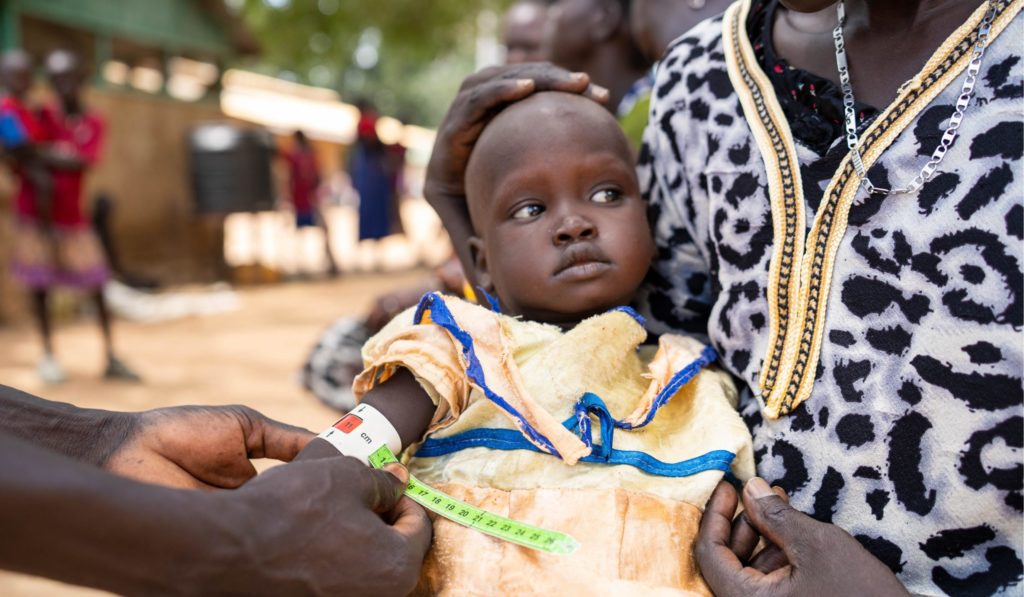
Children measured in the red or yellow zones should receive therapeutic food immediately. This is the lifesaving standard of care – one we’re struggling to maintain due to critical shortages. Right now, our supplies only allow us to support the most urgent cases.
The story of Abuk and her son John
When John arrived at our Nutrition Centre in Gordhim, South Sudan, he was just 18 months old. His arm measured only 7.8 cm on the MUAC tape – deep in the red zone – signaling an immediate risk of death from hunger. He weighed a mere 3 kilograms, when a child his age should weigh at least three times that much.
For John, the Gordhim Centre was his only hope. Thanks to generous donations, children like him receive therapeutic food, medicines, and therapeutic milk to fight starvation. Within one month of treatment, John nearly doubled his weight and began to sit up on his own – a powerful sign of recovery.
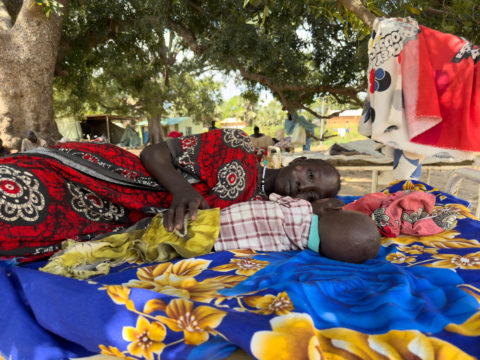
We met Abuk Mamer Macuac under the shade of a tree, sitting quietly on a hospital bed. Inside the stifling ward, heat made the air heavy and hard to breathe.
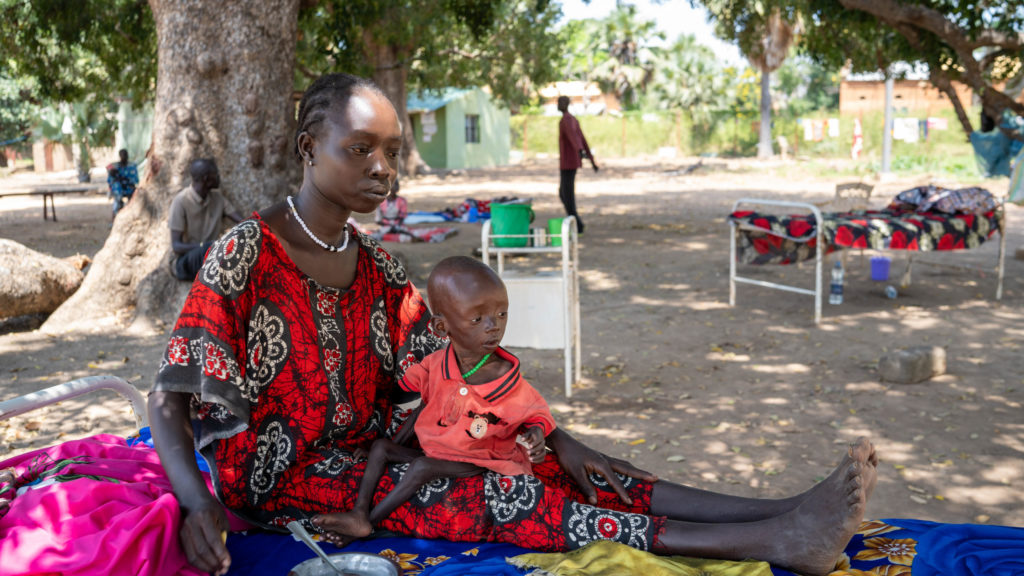
John cried constantly, pain forcing him awake throughout the night.
Abuk supports her family by embroidering pink bedsheets. It is a painstaking job that takes a month and a half per sheet. She begins work before dawn, hoping to finish before John’s cries begin. Each sheet sells just enough to buy materials for the next, leaving little margin for anything else.
Her face was stoic, shaped by hardship and the weight of helplessness. But on the third day, for a fleeting moment, she embraced John and smiled – a glimmer of hope amid the struggle.
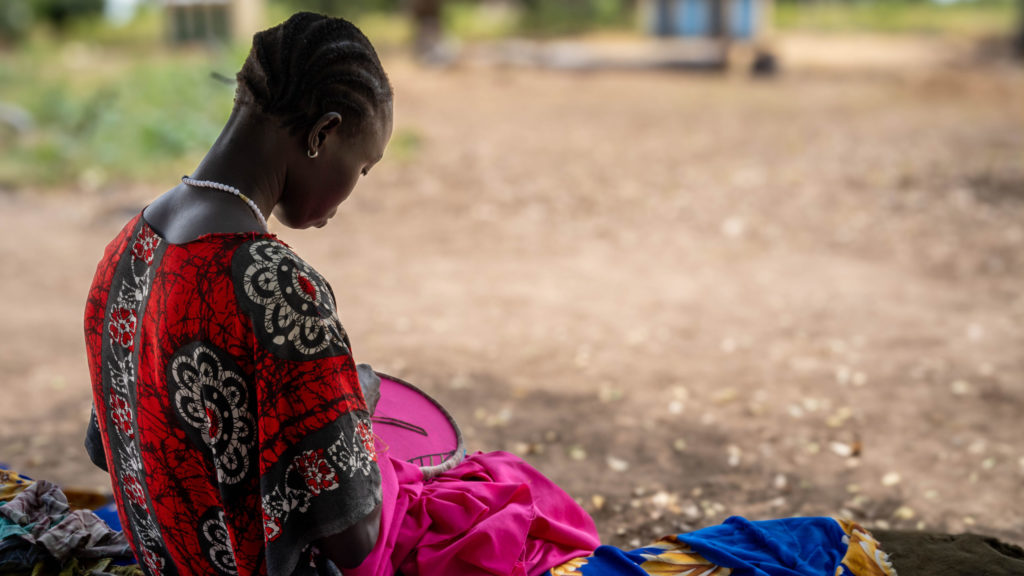
This crisis is happening now
Across Gordhim and nearby border areas, thousands of refugees fleeing conflict seek safety and relief. Their journeys are filled with nights spent running, hunger so severe it causes fainting, a complete lack of food, medicine, water, and sanitation. The threat of disease outbreaks looms dangerously close.
In response, our PCPM mobile clinic reaches these vulnerable communities with medicines and basic healthcare. Often it’s the only help available. This vital work depends on compassionate support from people like You.
Help now. You can change the life of a child in South Sudan
Your donation today can bring life-saving therapeutic food to children like John in Gordhim.
For your convenience, these USD values are approximate equivalents of the corresponding PLN donation amounts listed below: $15 USD $25 USD $40 USD