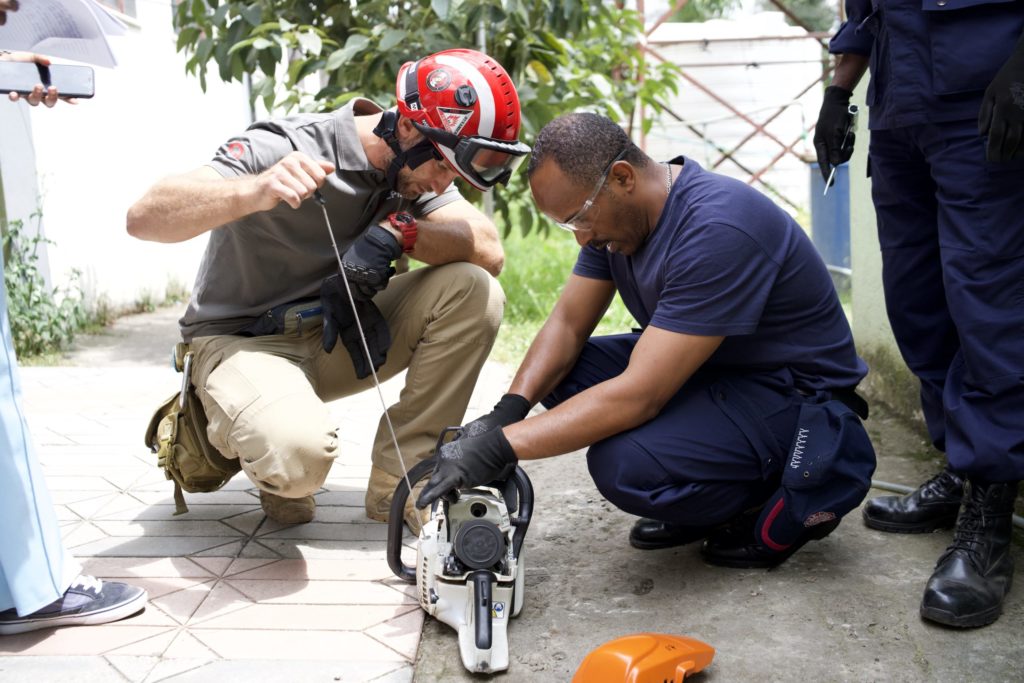
Equipment must be in good working order to save lives. PCPM teaches firefighters in Ethiopia how to repair their equipment
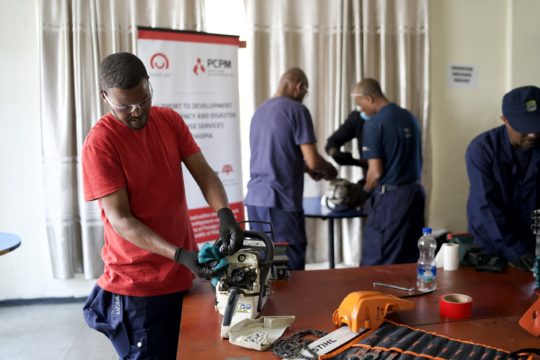
Effective development aid does not end with the delivery of equipment. In Ethiopia, PCPM is developing an initiative in which Polish specialists support local services in the regular maintenance and servicing of pumps, chainsaws, and power generators – so that they are always ready to save lives.
Chainsaws, sludge pumps, water pumps, hydraulic tools such as spreaders and lifting devices, as well as cutters, fire hoses and power generators — these are examples of equipment that can be continuously brought back into service in Ethiopia thanks to the support of the Polish Center for International Aid Foundation (PCPM). PCPM has been engaged in humanitarian and development assistance in this country of 130 million people for over 13 years.
Rescued equipment worth tens of thousands of dollars
At the training center in the Akaki Akliti district of the capital Addis Ababa, PCPM has created a “hospital” for rescue equipment which, for various reasons, ends up gathering dust in storage instead of serving local responders. It is here that broken, damaged or maintenance-requiring rescue devices from all 11 fire stations in Addis Ababa are brought. The value of the equipment restored to working condition each month is estimated at tens of thousands of dollars.
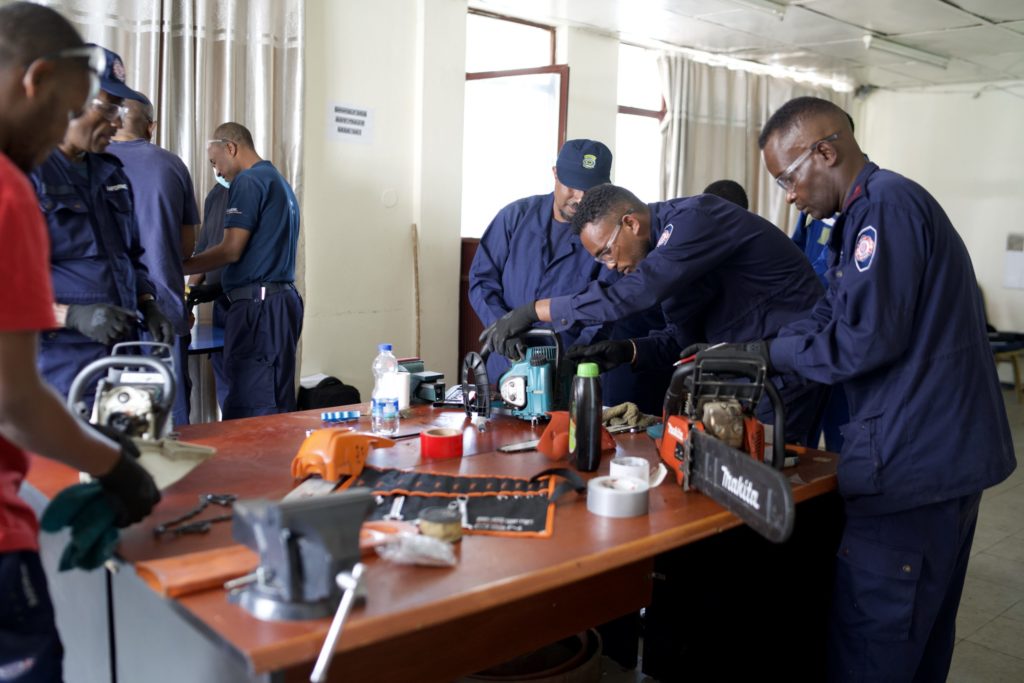
“Local firefighters receive a lot of modern equipment from wealthy countries in Europe, the USA and Japan. But they lack the knowledge of how to correctly use this equipment, and they lack spare parts or even basic repair skills,” explains Kamil Nadolski, one of the specialists assisting Ethiopian responders at PCPM’s invitation.
Another problem is the low-quality fuel, which clogs filters and seals, causing generators to break down. Thanks to assistance from Poland, Ethiopians are learning how to restore equipment to working order in a simple and low-cost way.
Support from Poland is thoughtful and comprehensive
Poland’s support is appreciated by local authorities in Addis Ababa. As Mihiretu Desalegn, Deputy Head of the Fire and Disaster Risk Management Commission in Addis Ababa, points out, aid from Poland is not only extensive but also well-thought-out.
“Polish assistance is a model for others. It is the most comprehensive of all the help we receive. I would like to express my deep gratitude to Poland and the Polish government for this,” Desalegn says.
The PCPM Foundation has been carrying out development and relief activities in Ethiopia since 2012. By 2026, PCPM will have completed 10 projects here worth a total of 17.4 million PLN (cca. 4.7 million USD), mostly funded through the Polish Aid program run by the Ministry of Foreign Affairs.
Ethiopians emphasize that although emergency services in the country receive support from many international organizations and foundations, the Polish Center for International Aid — thanks to its long-term experience — knows how to help effectively. Creating a workshop where rescue equipment can be restored to service at relatively low cost significantly improves the capacity of Ethiopian responders to provide assistance.
A symbol of failed aid can be seen in an old ambulance donated to Ethiopia from Canada. Keeping the vehicle running proved too expensive due to the lack of spare parts and high fuel consumption. Moreover, the ambulance, adapted for Canadian and American conditions, was unable to navigate the potholed, narrow and muddy roads of Addis Ababa. As a result, the ambulance donated by Canadian services has been rusting for years in the parking lot of ALERT Hospital in Addis Ababa.
A similar fate could have awaited much of the rescue equipment. Thanks to the engagement of PCPM and Polish specialists, along with the eagerness to learn shown by Ethiopian firefighters and rescuers, this can be prevented.
“We are pleased that our colleagues in Ethiopia are highly committed and want to learn as much as possible about the equipment that serves them in saving the lives and health of Ethiopia’s residents. Even after our return to Poland, they contacted us many times through online communicators to clarify certain issues related to equipment repair,” says Kamil Nadolski.