Vaccinating cows builds peace in Ethiopian tribes
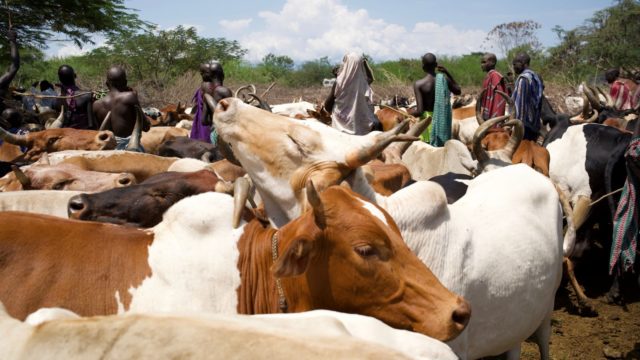
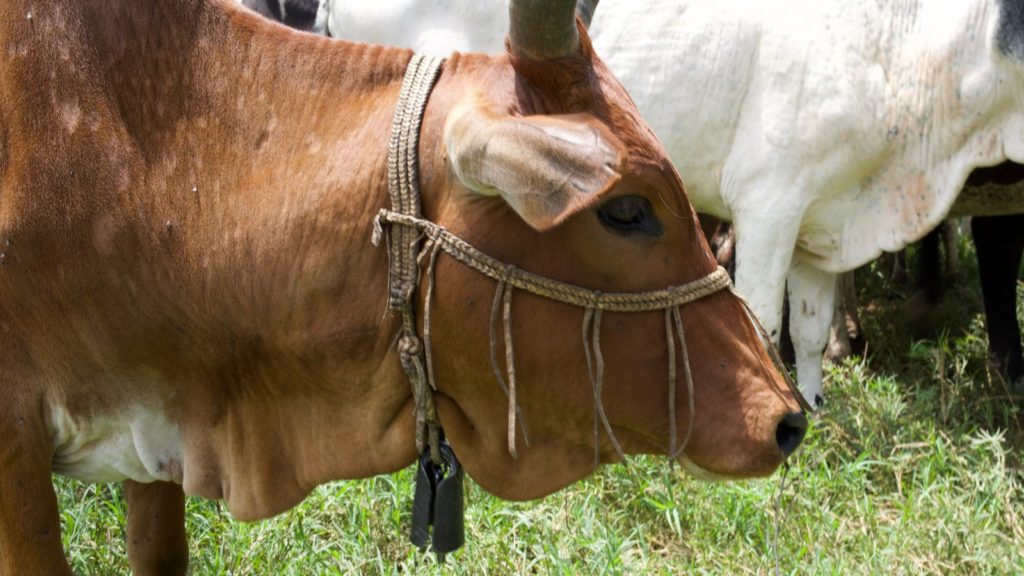
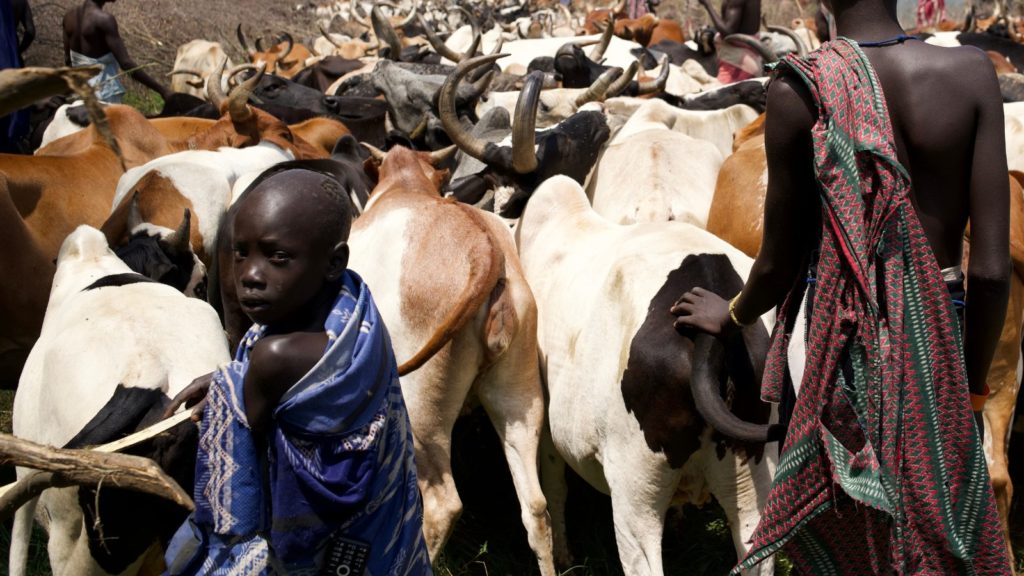
Money and conflict have gone hand in hand for centuries. People fight over what holds the greatest value in their world. In southern Ethiopia, that currency is… cattle. It is not only a source of food. Cattle represent social status, family security, and a rite of passage into adulthood. In the Omo Valley, counting livestock is a ceremony, stealing it can be a ritual of transition, and the size of a herd indicates social standing.
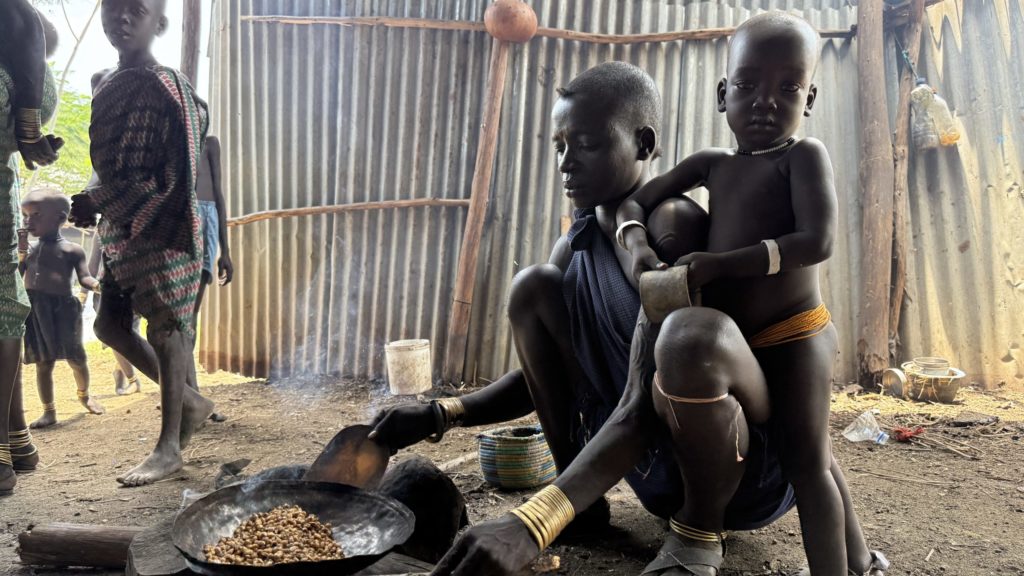
“We are an agricultural community, and livestock farming is the foundation of our way of life. Cattle mean everything to us – they are our resource and investment, allowing us to feed our children and cultivate the land every day,” explains one of the herders we spoke with.
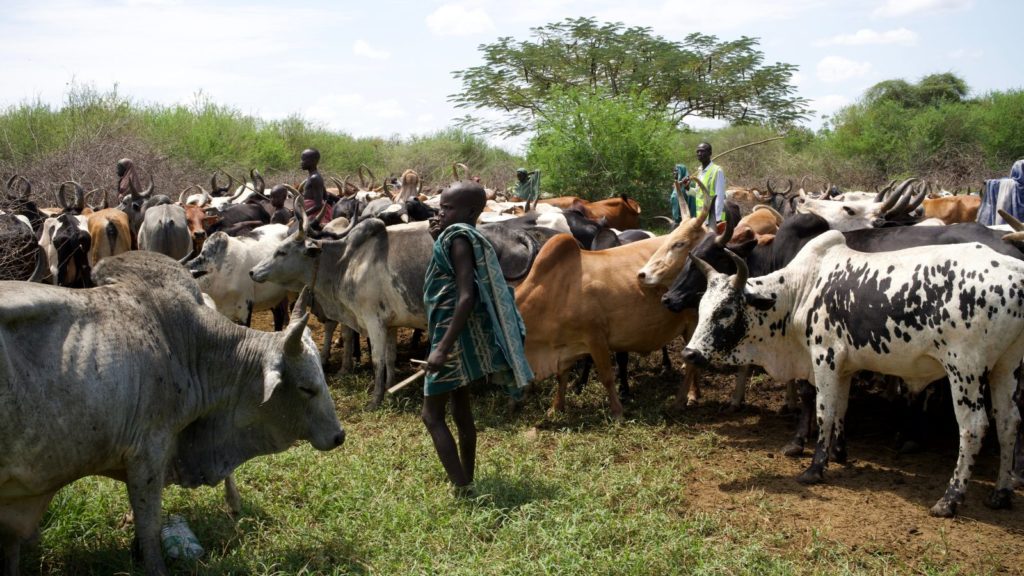
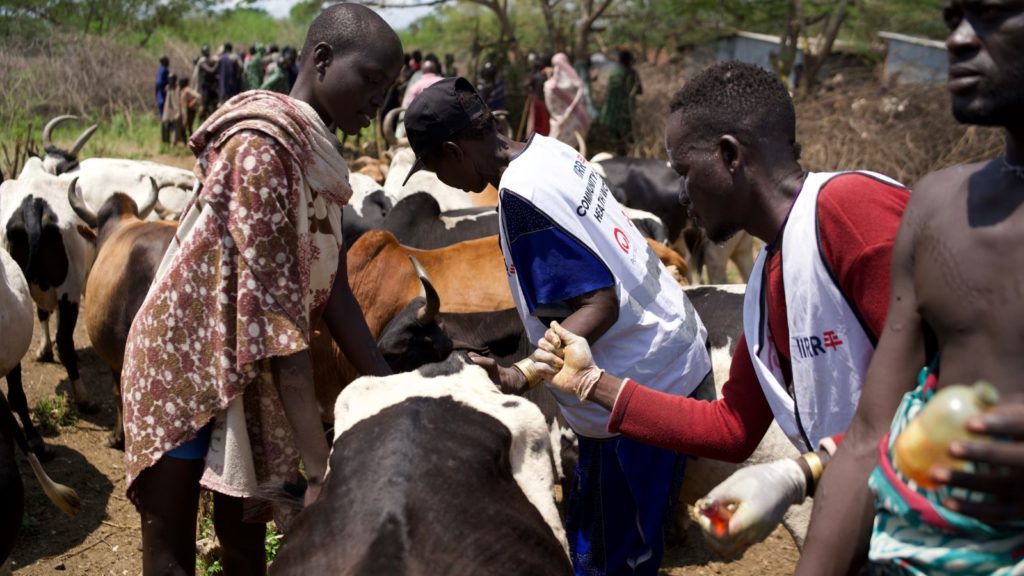
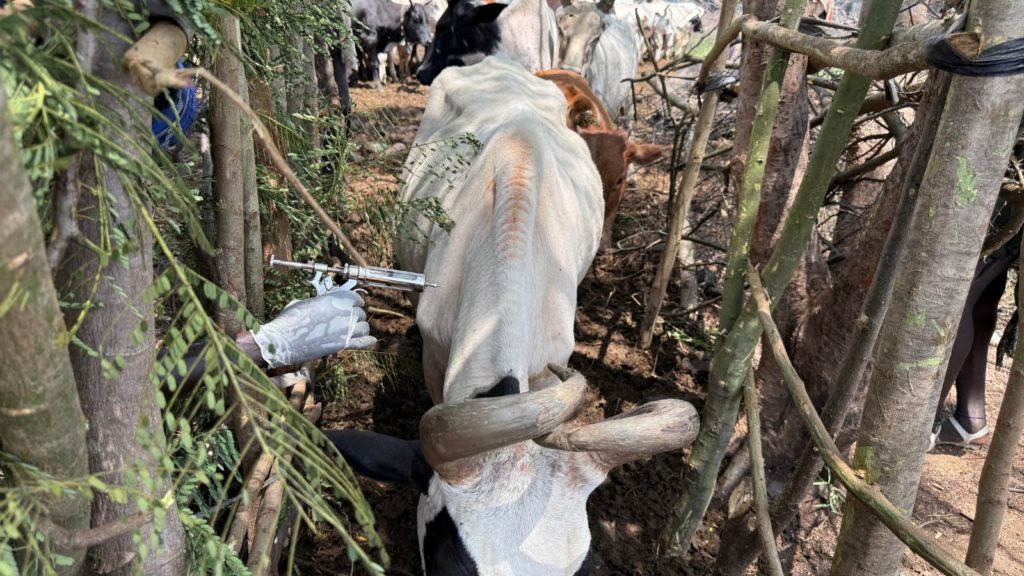
Since early 2025, we have been training personnel to vaccinate cattle in the Omo National Park area. In this region, our local partner – the International Institute of Rural Reconstruction (IIRR) – has also been active for years. A key part of the project is identifying community needs. Through collaboration with local partners and conversations with tribal representatives, these needs are clearly defined. This approach allows us to understand that epidemics of diseases are only one element of a network of dependencies exacerbating the regional crisis.
Thanks to funding from the Polish Aid program at the Ministry of Foreign Affairs, we can continue working to promote peace and security in this area.
Complex Sources of Tension
Escalating conflicts between tribes do not stem solely from competition over property. A complex web of causes and effects underlies the issue. At the core lies a deepening climate crisis, causing droughts and, consequently, food insecurity. Violence is further fueled by the widespread availability of firearms and, of course, competition over cattle, which are sometimes decimated by disease.
“We have no other means for fieldwork except oxen. We rely on them even in difficult situations, such as illness or migration. Some animals may die, but if we care for the herd, it grows and allows us to survive. It provides milk for our children and more animals for the future,” says one of the 40 herders trained by PCPM to carry out vaccinations.
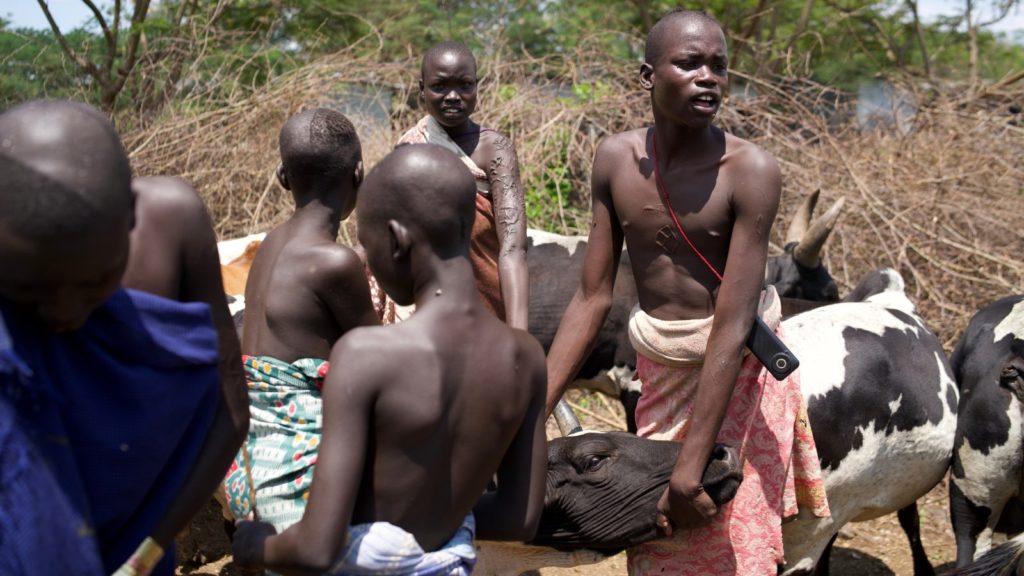
His words carry a simple truth: the cow is life. It helps in fieldwork, during migrations, and in times of illness. It is a source of livelihood and a part of ceremonies – for example, in marriage. Among local tribes, a common practice is to draw a small amount of blood from cows, mix it with milk, and consume it. This supplements iron in the diet without killing the animals. Their approach shows deep respect, even tenderness, toward their livestock. Sometimes, to calm an animal before vaccination, they gently stroke its neck. Losing cattle is a true tragedy for them.
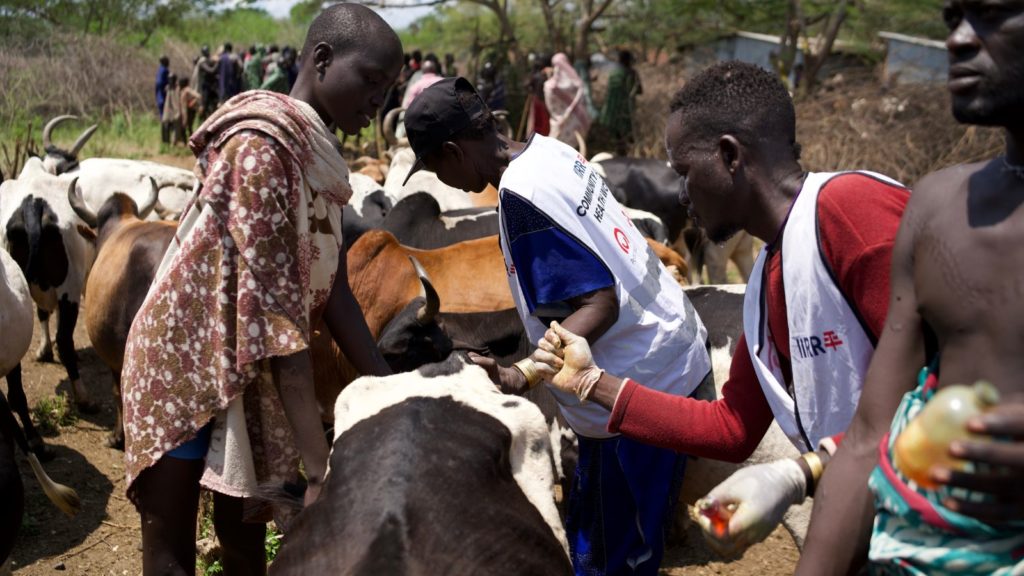
The threat becomes real when disease spreads within the herd, sometimes decimating it and depriving people of their livelihood while alternatives for food are scarce. Insect-borne diseases affecting humans add another serious risk to life and health.
“Last year we planted our fields, but the rain did not come when it should have. We lost the entire harvest,” says Nangachcole Cochoi, leader of a visited Bodi community.
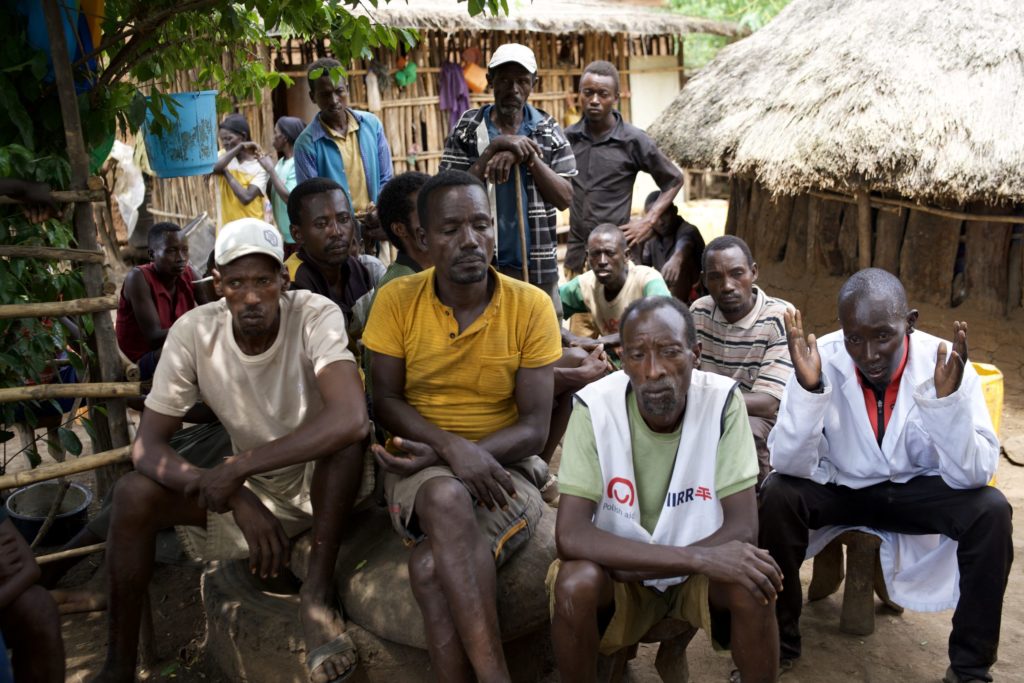
In Ethiopia, agriculture heavily depends on two seasons – dry and rainy. Sudden climate changes have made the dry season longer and the rainy season increasingly irregular or absent. Crops perish, leaving both people and livestock without food. Where harvests should be, hunger appears, forcing communities to fight for survival, sometimes violently.
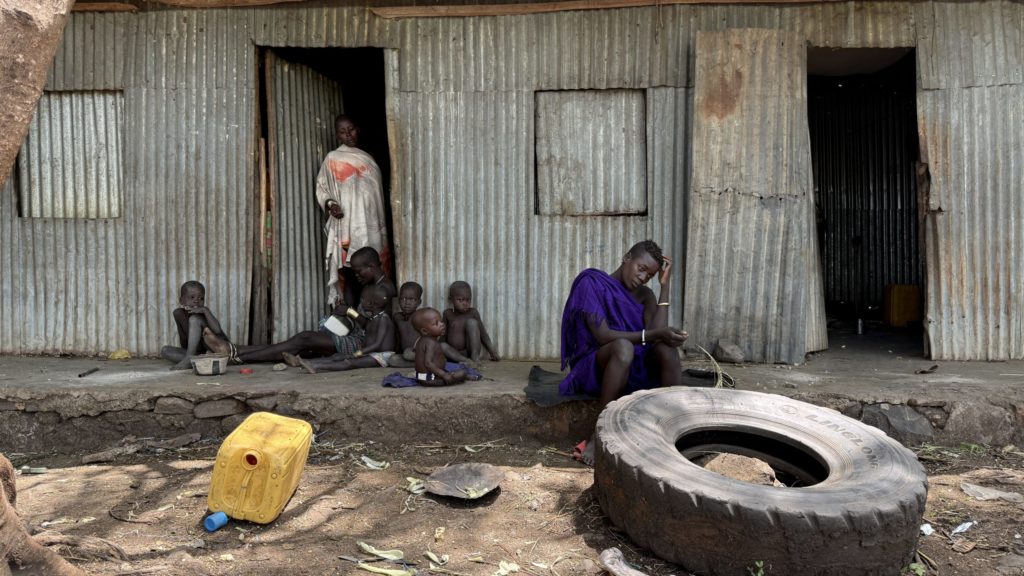
“Tribal members noticed at one point that marked cattle had higher value as animals that do not get sick. For this reason, they were regularly stolen from other tribes’ herds,” reports Adam Kukliński, project coordinator.
Such raids often lead to escalations of violence and bloodshed. Therefore, although marking cattle could have increased the vaccination program’s efficiency, it was decided to leave the livestock unmarked. This example illustrates that project work often involves adapting to emerging challenges and flexibly seeking solutions.
Does Peace Have a Price?
It turns out that a shared concern for animal health can unite communities rather than divide them. For this reason, we conduct vaccination programs and veterinary training with local tribes to simultaneously reduce tensions. Sometimes the simplest intervention – a vaccine costing less than a penny – can contribute to building peace. It not only protects cows from disease but also creates a platform for cooperation among communities that are otherwise in conflict.
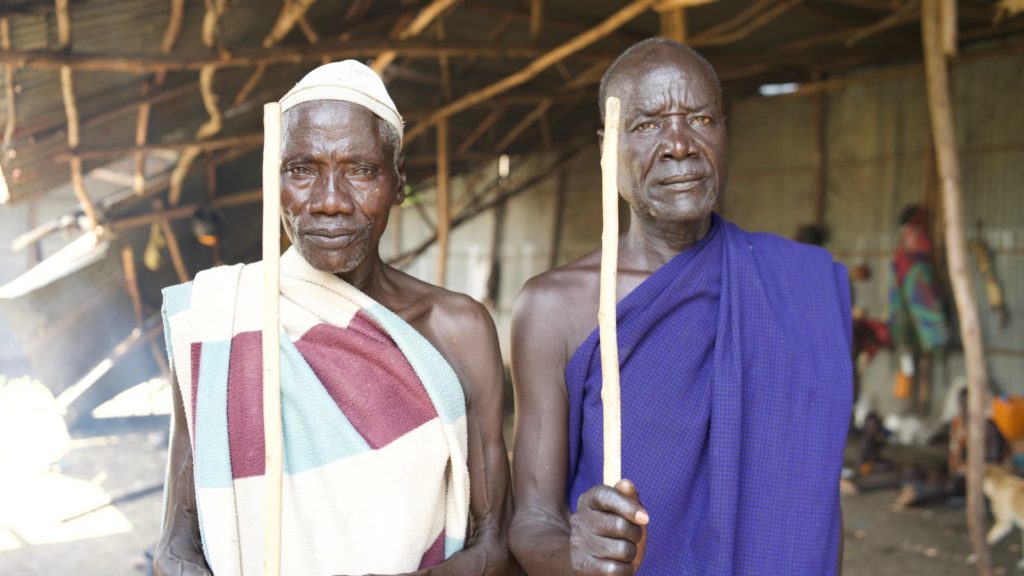
Cattle vaccinations are carried out by a group of 40 people selected by the local partner with the agreement of representatives from the Mursi, Bodi, and Konso tribes. Before meetings where major decisions are made, the elders prepare a communal meal, symbolically reducing distance within the group.
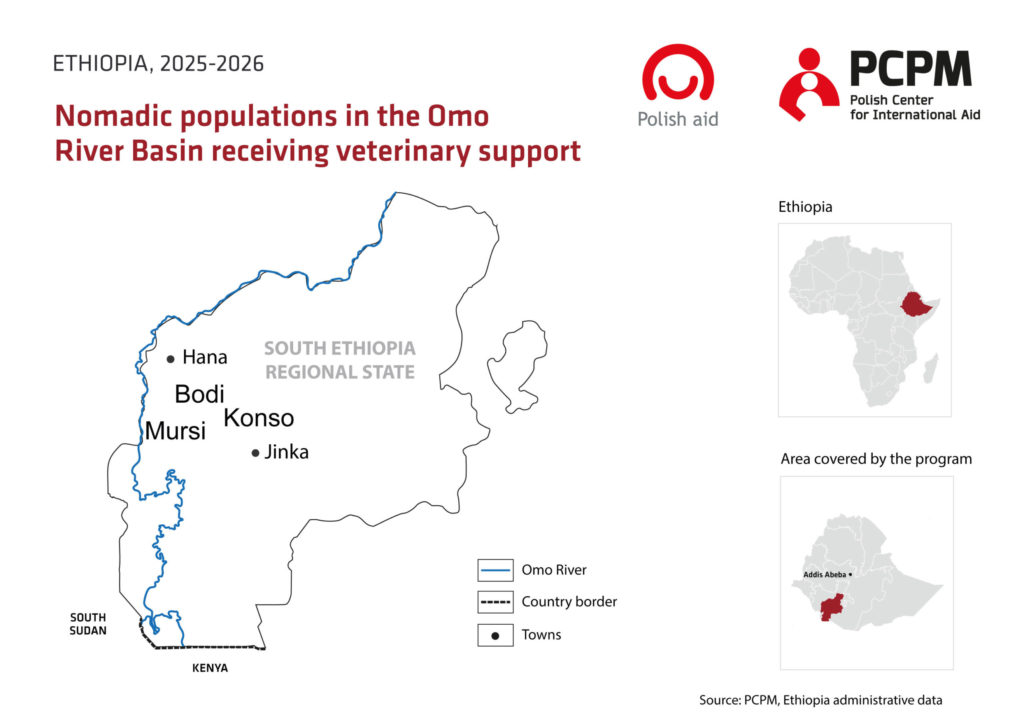
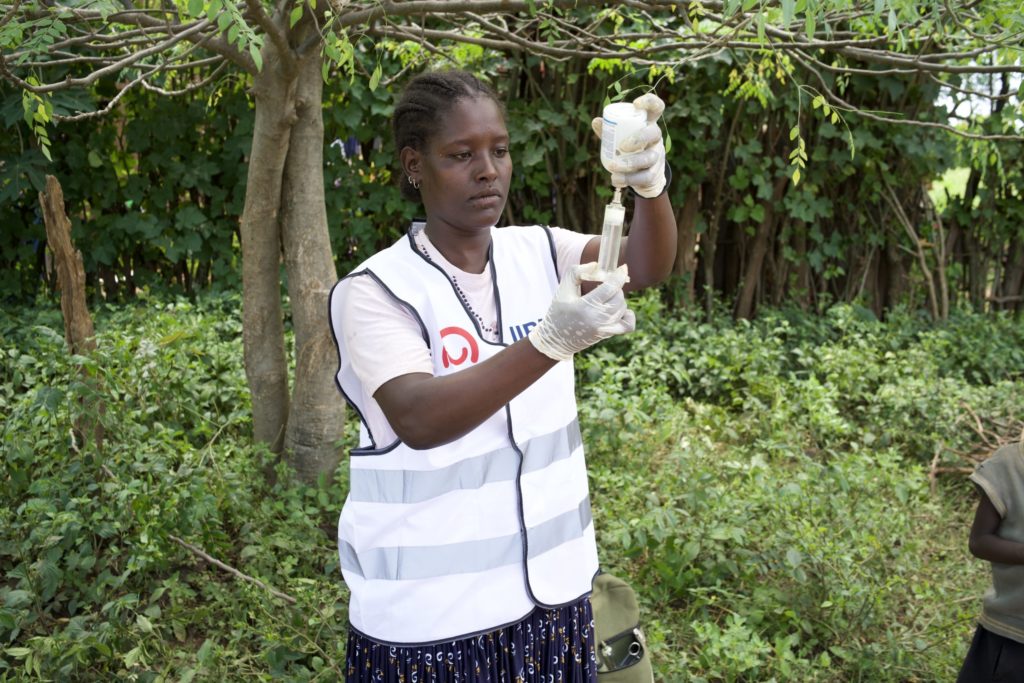
The project focuses not on PCPM staff carrying out activities, but on cooperating with the local community, training the group to operate independently while respecting local norms and traditions. Vaccination and epidemiological prevention trainings are practical and instructional – showing how to vaccinate animals, teaching anatomy, and methods for identifying specific diseases through observation rather than advanced laboratory testing. However, some positive departures from traditional tribal practices have been observed.
A Small Revolution in Tribal Roles
Literacy skills can be useful – for example, reading medication labels and dosage instructions. “Sometimes women are better educated – they can read and write,” notes Adam Kukliński.
Their involvement is invaluable – supporting the team with knowledge and skills while challenging the prevailing image of women as solely household caregivers.
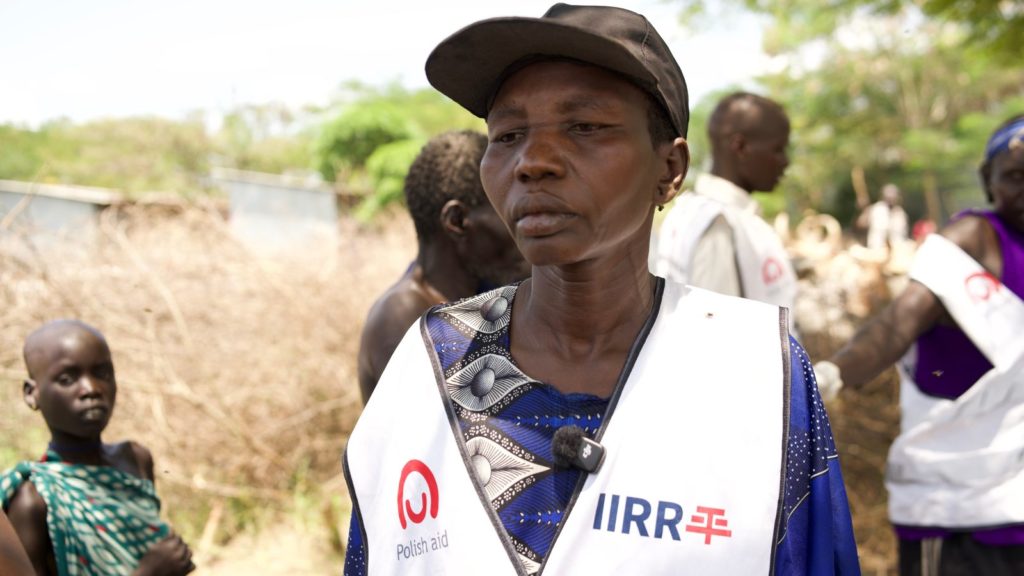
Goleghn Beholi, one of the 40 individuals chosen by the elders to be responsible for vaccinations, emphasizes that her role is not merely symbolic, as evidenced by her active participation in meetings.
“The most important thing is ensuring peace and security. I am happy to be part of this change,” she says.
Having even one woman in this group represents a kind of revolution. In Ethiopia, women largely care for livestock, a major component of running a household. However, their duties typically involve smaller animals, such as poultry or sometimes goats. Cattle have traditionally been a male domain. Changes in gender roles within social structures do not occur overnight; it is a gradual process. While parity is not yet achieved, this is an important step forward. Elders and men in the tribes are beginning to recognize that women’s knowledge and skills contribute to the well-being of the entire community – not only through household duties but also through work outside the home.
A Step Toward Lasting Change
Community response has been very positive. The indicators are not only numerical but also reflected in the direct reactions of groups. Residents notice not only fewer cases of disease in cattle but also relief from reduced tensions.
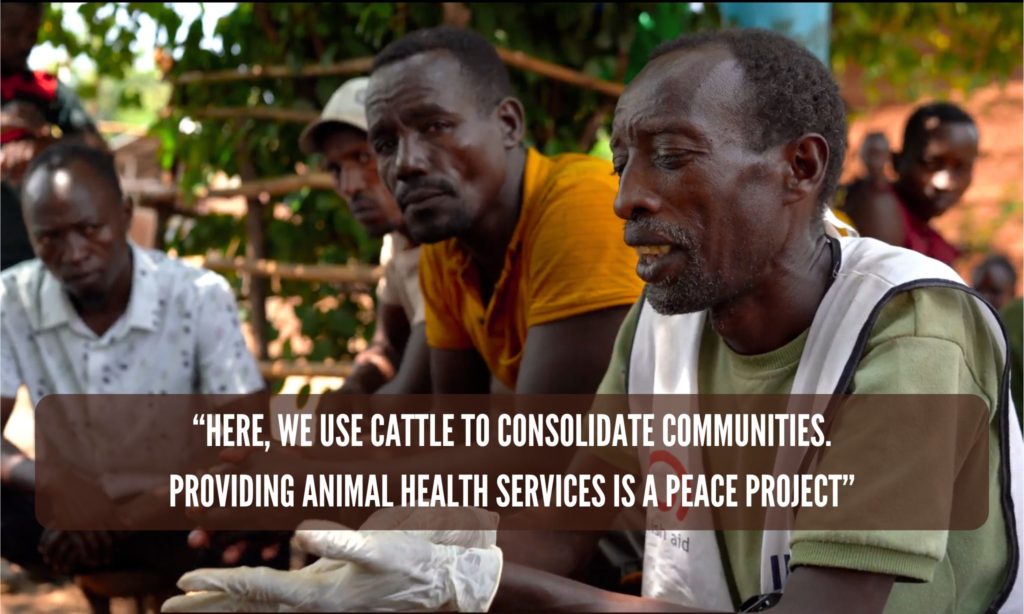
Tribes mobilize to act, and skepticism toward vaccines and the project itself is visibly decreasing. Entire villages get involved indirectly – helping herd cattle, observing the process, and wanting to participate.
This represents a significant transformation and a step toward long-term improvement. Increasingly, entrepreneurial members express interest in continuing these activities in the future – for example, by establishing cooperatives of animal health workers and providing services commercially. This is a positive and highly desired outcome for aid organizations, as it ensures continuity even after the project ends.
Support for the development of emergency response and rescue services in Ethiopia 2024–2026 is a project co-financed from the state budget under the Polish development cooperation program of the Ministry of Foreign Affairs. The total value of the project amounts to PLN 6,396,073.