Refugees continue to flee to Lebanon. PCPM does not leave them in need
The humanitarian situation in Lebanon remains critical. The country, which has been grappling for years with economic collapse, political instability, and overburdened public services, must address the immense needs of both its own population and refugees. Food security, access to healthcare, education, and drinking water are severely limited, and the underfunding of humanitarian aid significantly hampers responses to the needs of the most vulnerable groups. Lebanon continues to host a significant number of Syrian and Palestinian refugees, and the pressure on local communities and infrastructure is enormous amid the complex regional situation.
In 2025, there were both inflows of new refugees from Syria and mass returns to their homeland. According to UNICEF, around 120,000 people fleeing violence and instability in Syria arrived in Lebanon that year, many heading to the northern provinces and the Bekaa Valley. At the same time, UNHCR data indicate that hundreds of thousands of Syrians left Lebanon over the course of the year, returning to their country, with estimates reaching up to about 400,000 people since the beginning of 2025. These parallel population movements illustrate how ambiguous and dynamic the situation is: Lebanon remains a place of refuge for refugees, but the profile and dynamics of their presence in the country are changing.
Behind each of these figures are concrete families who had to make decisions between fleeing and returning into uncertainty.
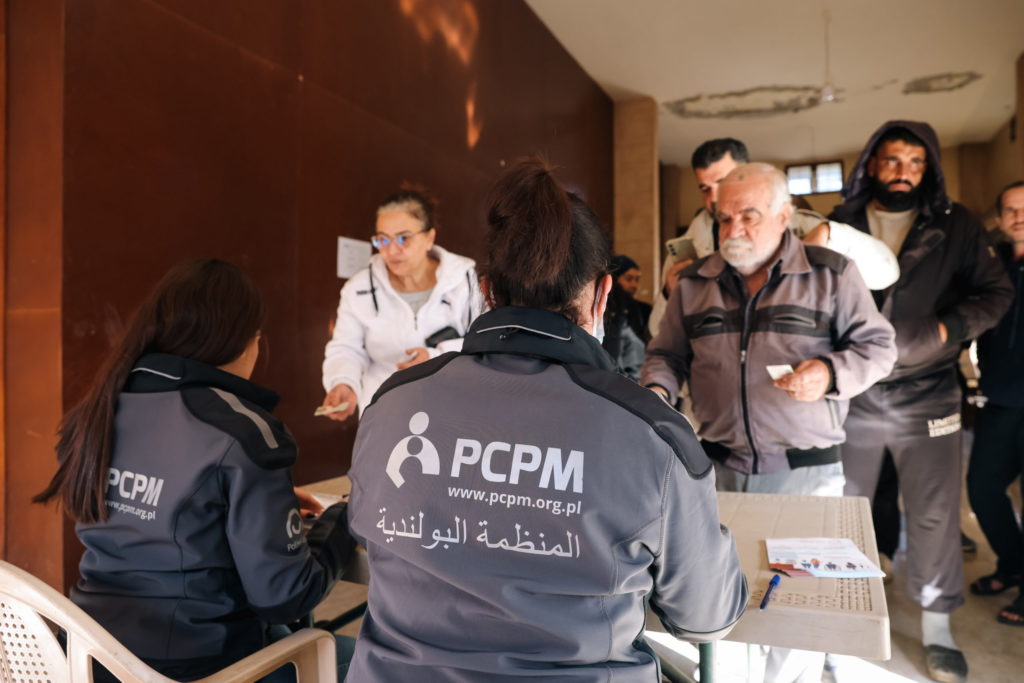
The Polish Center for International Aid Foundation (PCPM) has been providing uninterrupted assistance in the Akkar region in northern Lebanon since 2012. This area has particularly felt the consequences of the conflict in Syria as well as the growing economic crisis that has plagued Lebanon for years.
The Akkar region has become a refuge for both numerous Syrian refugees and Lebanese families struggling with harsh living conditions. In many towns, long-standing poverty has intersected with a new wave of needs triggered by the crisis and migrations.
When PCPM began operations in this region, the Foundation focused primarily on responding to the wave of refugees caused by the Syrian civil war. Over time, however, the scope of aid expanded to include needy Lebanese people and infrastructure projects, improving living conditions for entire communities. Despite this, thousands of people still live day to day, and a food parcel from humanitarian organizations is often their only chance to get a meal.
For some families, it’s their only steady source of support in a month.
New refugees
In 2025, population movements between Syria and Lebanon intensified once again. While 400,000 people returned to Syria, over 120,000—mainly Alawites who fled repression—arrived in Lebanon. They are primarily the recipients of food parcels prepared by PCPM.
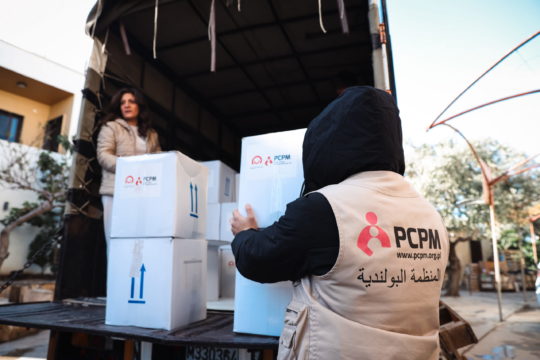
“We have prepared food parcels containing long-shelf-life products such as bulgur wheat, pasta, oil, beans, and many other essential items,” says Antouan from PCPM.
The Foundation delivers this food to Syrians in the Hermel region. Many people have fled to this area out of fear for their lives. Most of them have no means of subsistence and no opportunity to find any work.
“In total, over 20,000 families live in the area, and in the Hermel region, we provide food parcels weighing about 21 kilograms each to 3,300 families,” says Ellie Keldany, a PCPM employee in Lebanon.
Importantly, as Keldany emphasizes, the composition of the food parcels was designed by a dietitian to ensure the products are as varied as possible and provide maximum nutritional value. Additionally, all the food was purchased in Lebanon, which also provides extra support for local suppliers.
They escape on foot
“As soon as they came, they beat people and looted property. We decided to flee immediately. I lost my husband, and we had no car or donkey. So we walked from Hims in Syria to Hermel in Lebanon,” says one of the newly arrived refugees. Hims is about 60 km from their destination. The woman fled to Lebanon with her three children.
Their journey lasted several days. “The children cried; they were tired and didn’t understand why we left our home. They kept asking me, ‘Why do we have to walk?’” the woman recalls.
“This aid we receive gives some hope, a sense that someone remembers us. At least for this short period, we don’t have to worry about what to put in the pot,” says Mukhtar, a Syrian refugee.
Medicine
In the town of Bire, a clinic operates that is extremely important not only for Lebanese people but also for Syrians who have been there for years. This place is vital for the local community, and the team also runs a mobile clinic. The bus with the medical team travels to areas where Syrian refugees live. On-site, doctors can handle less-serious cases and, crucially, vaccinate children. Unfortunately, by mid-2025, both the mobile clinic and the stationary clinic were due to close due to a lack of funds.
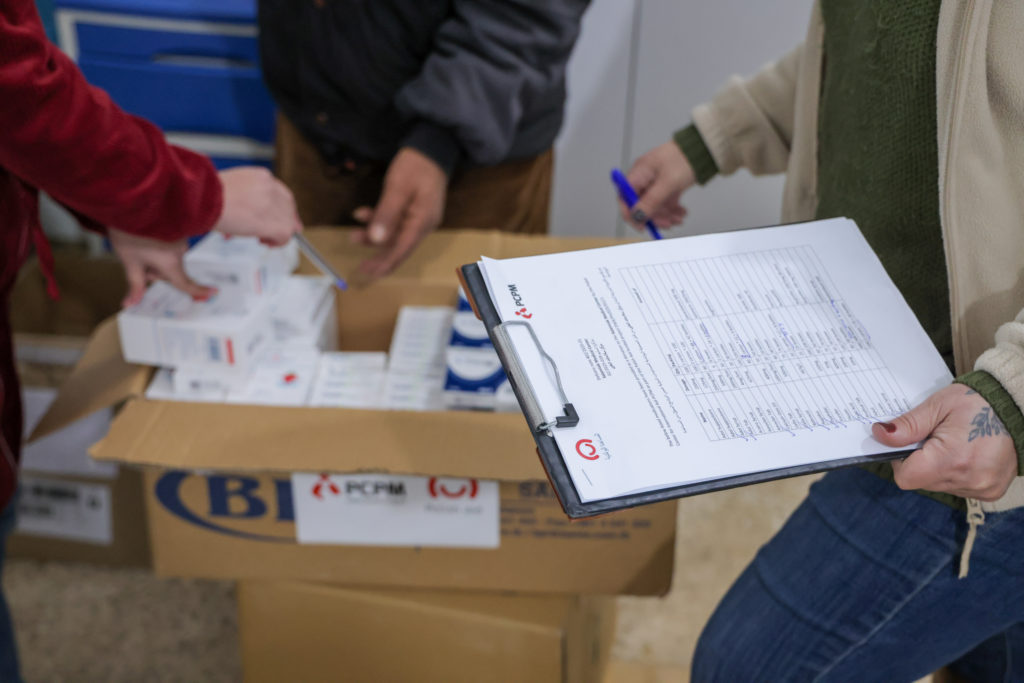
PCPM has been supporting this facility since 2011, funding most of the equipment. This year, thanks to the Polish Aid program of the Polish Ministry of Foreign Affairs, the clinic’s operations were funded, and the local community regained access to medical care.
Additionally, 8 other medical facilities in the area were equipped with daily-use equipment and supplies. Bandages, basic medications, diapers, plasters, and many other items make doctors’ work in Lebanon easier.
For many residents of the region, this is the only available form of medical assistance.
Would you like me to refine the translation for a specific style, such as more journalistic or formal, or translate additional sections?