The “Polish school” of rescue
Tanzania, Ethiopia, Kenya, formerly South Sudan, and now also Nigeria are countries with enormous demographic and economic potential. Together they are home to more than 515 million people. Nairobi is East Africa’s business and technology hub; Lagos is one of the largest and most dynamic cities in the world; Addis Ababa, the seat of the African Union, is another; and Dar es Salaam is one of the fastest-growing ports on the continent. These are states with their own services, institutions, and ambitions, but also with challenges that stem directly from the pace of their development.
The rapid urbanization of cities in sub-Saharan Africa, which are growing by 4-5 percent annually, is outpacing the ability to expand safety infrastructure. Millions of people are moving to cities faster than roads, power grids, and emergency response systems can be built. In informal settlements, where more than half of the population of large cities often lives, buildings are erected without engineering oversight, open hearths and makeshift electrical connections are the norm, and smoke detectors are practically nonexistent. The number of vehicles on the roads is growing rapidly, at a pace that neither infrastructure nor law enforcement can keep up with.
The consequences are visible in the data. Ethiopia records 28 deaths per 100,000 inhabitants annually in road accidents, while in Poland, this rate is about 5.7. Nigeria loses more than 40,000 people annually in traffic accidents. Tanzania and Kenya face a serious problem with road accidents and fires, especially in urban areas. Across sub-Saharan Africa, fire mortality stands at 6.1 per 100,000 inhabitants annually nearly seven times higher than in Western Europe.
The challenge, however, lies not only in the scale of the threats but in the capacity to respond to them. Local fire departments and medical rescue units operate under conditions of chronic resource shortages; there is a lack of vehicles, equipment, and personal protective gear. Equally serious is the lack of standardized training: rescuers gain their knowledge mainly through practice, without access to structured educational programs. As a result, response times to incidents are often many times longer than in countries with developed rescue systems, and the quality of on-site action varies greatly.
It is precisely this gap between the pace of development and the scale of threats on one hand, and the capabilities of local services on the other, that is the starting point for the work of the PCPM Foundation. It does not bring ready-made solutions from outside. It works together with local firefighters and paramedics, passing on knowledge and skills that remain in place long after the project ends.
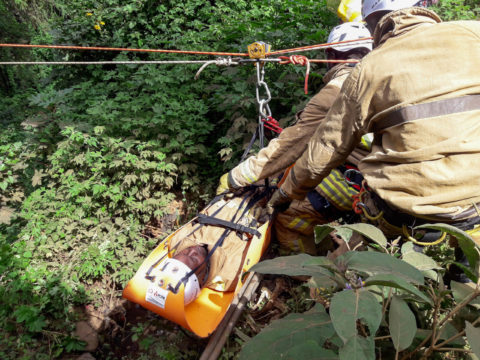
For several years now, the PCPM Foundation has been changing this picture, running training programs directly in Tanzania, Ethiopia, Kenya, and Nigeria. The organization passes on rescue knowledge and skills to thousands of firefighters and paramedics. It provides training in road rescue, operations in rubble/collapsed structures, firefighting, and medical first aid under conditions of limited resources.
The “Polish school” of rescue services in East Africa
When Polish instructors first came to train firefighters in Kenya more than a decade ago, they found a system reminiscent of Polish firefighting in the 1970s: scattered, poorly equipped units, low public trust, and even attacks on firefighters themselves. Today, thanks to the consistent work of the Polish Center for International Aid Foundation (PCPM), the picture looks completely different. As the Foundation’s president, Dr. Wojtek Wilk, emphasizes, PCPM has become “a brand that represents Poland in East Africa.”
Kenya: from chaos to a system
The results of more than ten years of work in Kenya are measurable. The number of fire departments has grown from several dozen to more than seventy, and the number of firefighters from a few hundred to more than sixteen hundred. The Foundation has delivered thousands of kilograms of equipment, but its greatest achievement is something more lasting than equipment: the creation of a system. The firefighting profession has been officially recognized in Kenya, a certification path has been established, and training has been incorporated into the national vocational education curriculum. Between 2018 and 2020, with Polish support, the FIRETRACK Training Center was built in Kiambu, which today serves as the national firefighter training center.
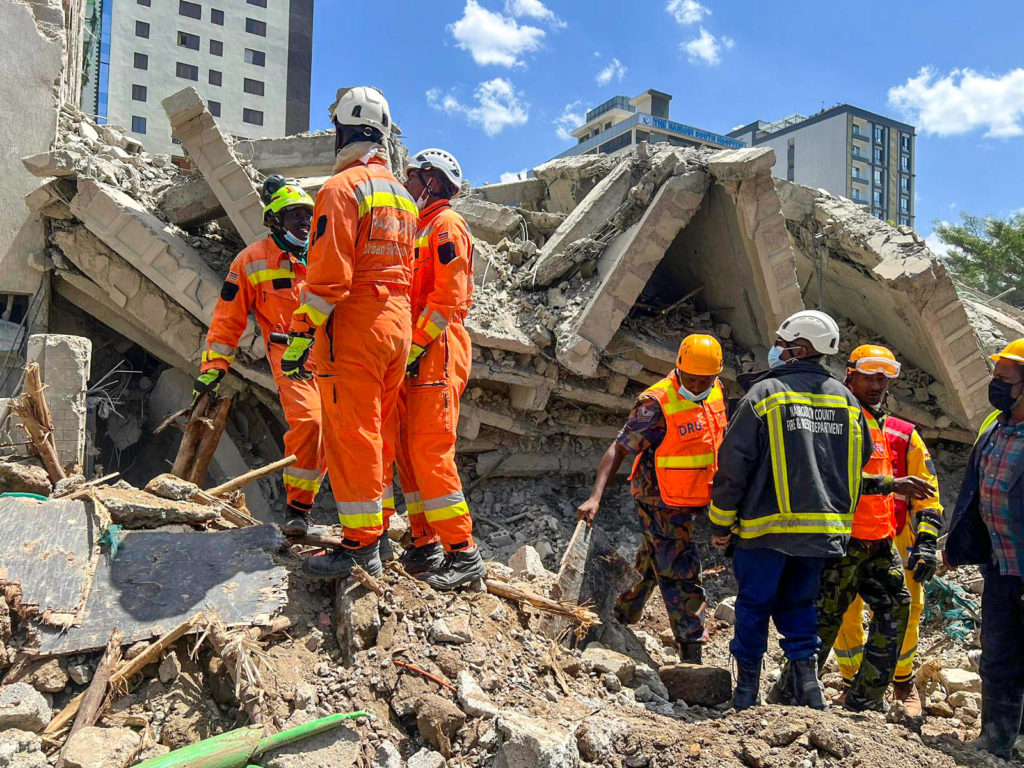
The crowning achievement of this cooperation is the first specialized USAR (Urban Search and Rescue) team in Kenya and in this part of Africa, intended for operations in rubble following building collapses – the only one of its kind from Algeria to South Africa.
Ethiopia: passing on Polish experience
The knowledge developed in Kenya is now being transferred to Ethiopia, a country facing similar challenges, but on an even larger scale. In Addis Ababa, home to more than 3.7 million people, only about 1,200 firefighters are active (by comparison, Warsaw, half the size, has about 1,800), and a medical rescue system practically does not exist. What makes this undertaking unique is that Kenyan firefighters trained by the Poles have themselves become instructors, and now, alongside Polish trainers, are helping to professionalize the services in the neighboring country. “The challenges Ethiopia faces are similar to those in Kenya, so it’s easier for us to talk about certain things,” explains one of the instructors.
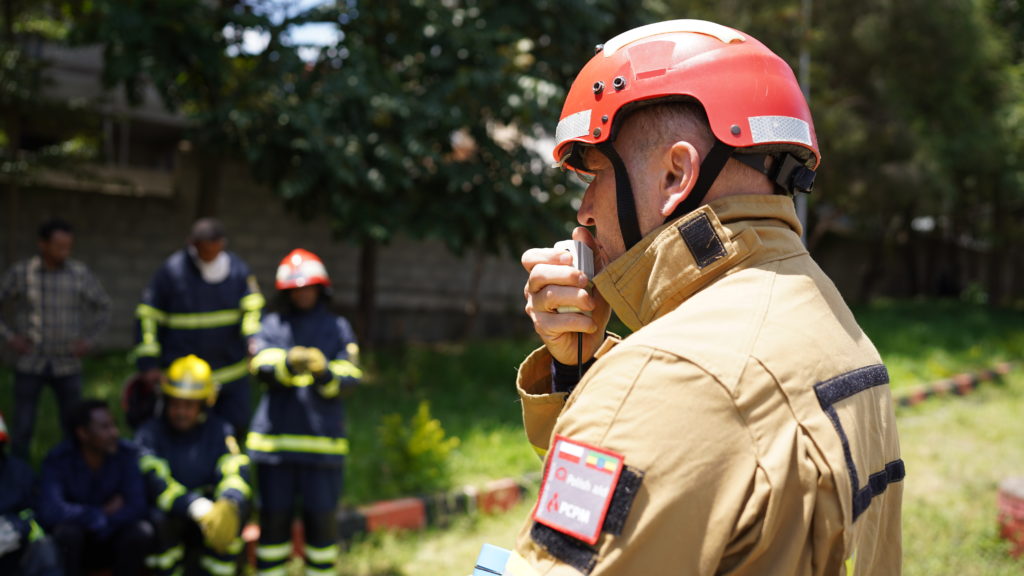
The results are already visible. In 2024, PCPM trained 18 firefighters and instructor candidates, as well as 106 paramedics and ambulance drivers; today, 100 percent of ambulance drivers within the fire department structures have completed training in pre-hospital care. For the first time in the history of the Foundation’s operations in Ethiopia, local trainers have begun co-leading training sessions. The value of firefighting and medical equipment purchased for Ethiopia exceeded 730,000 PLN in 2024, and the Foundation is also modernizing the training center in Addis Ababa and building a training simulator, drawing on its experience in Kenya. In 2025, aid extended beyond the capital to the Sidama and South Ethiopia regions, near the border with Kenya.
Nigeria: first training sessions
Polish firefighter instructors once again proved that the “Polish school of rescue” has a strong international reputation — this time in Nigeria. At a Seplat company base near Sapele, in Delta State, they led training on operating heavy fire trucks intended for use in the oil and gas sector. About 80 people from various company divisions passed through the lecture hall and training ground, covering everything from theory, through the crucial water-foam system, to independently starting the vehicles and operating the control panels by the end of the course. The biggest challenge, however, turned out not to be the equipment itself but the conditions: the base lacked a hydrant network, so the Poles simply assembled a makeshift connection, filled the tanks, and demonstrated the system’s full operation in practice to ensure the safety of the entire mission.
The training also brought to light a truth known to every firefighter: even the best fire truck is only as good as the skills of its crew and how regularly it is used. Hence, the most important conclusion from the trip, simple and universal: crew training and putting equipment into service should happen as soon as possible after delivery, because equipment that sits idle loses functionality faster than equipment that is used. It is precisely such trips – practical, concrete, and experience-based – that build the reputation of Polish rescuers far beyond the country’s borders.
Tanzania: a training center built from scratch
In Tanzania, there is no profession of “paramedic.” The first graduates of a program related to emergency medicine finished their studies only 10 years ago. PCPM’s projects enable rescuers to acquire new competencies, significantly improving the quality and availability of first aid and specialized medical assistance in the country. Not only paramedics are trained, but also instructors, who will independently prepare future medics for the profession.
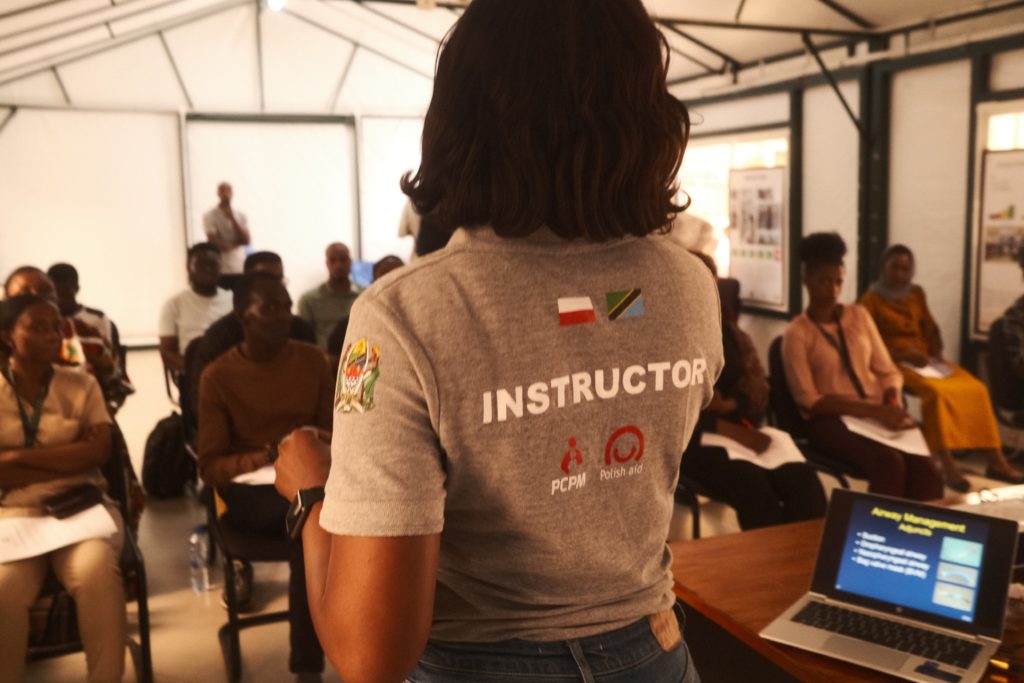
The PCPM Foundation built and equipped the Tanzanian-Polish Emergency Medicine Training Center in Dar es Salaam, the country’s largest city with a population exceeding 6 million. In addition to training, PCPM equipped Tanzanian hospitals and clinics with medical equipment. As part of the project, seven medical facilities in this African country received, among other things, mannequins, vests for practicing choking response, and trainers for practicing intraosseous access and hemorrhage control. Tanzanian hospitals were also equipped by the Poles with diagnostic equipment – ultrasound sets, ECG machines, cardiac monitors, intravenous infusion equipment, oxygen therapy apparatus, as well as equipment for cardiopulmonary resuscitation and intubation.
However, as with the firefighters, PCPM did not stop at donating the appropriate equipment. Instructors successfully trained 2,400 doctors and nurses in emergency medicine, in accordance with the rigorous standards of the American Heart Association. This comprehensive program prepared dozens of Tanzanian instructors. In addition, 150 emergency service personnel, including firefighters, scouts, and drivers, underwent first aid training and were equipped with modern medical kits, increasing their capacity for immediate response.
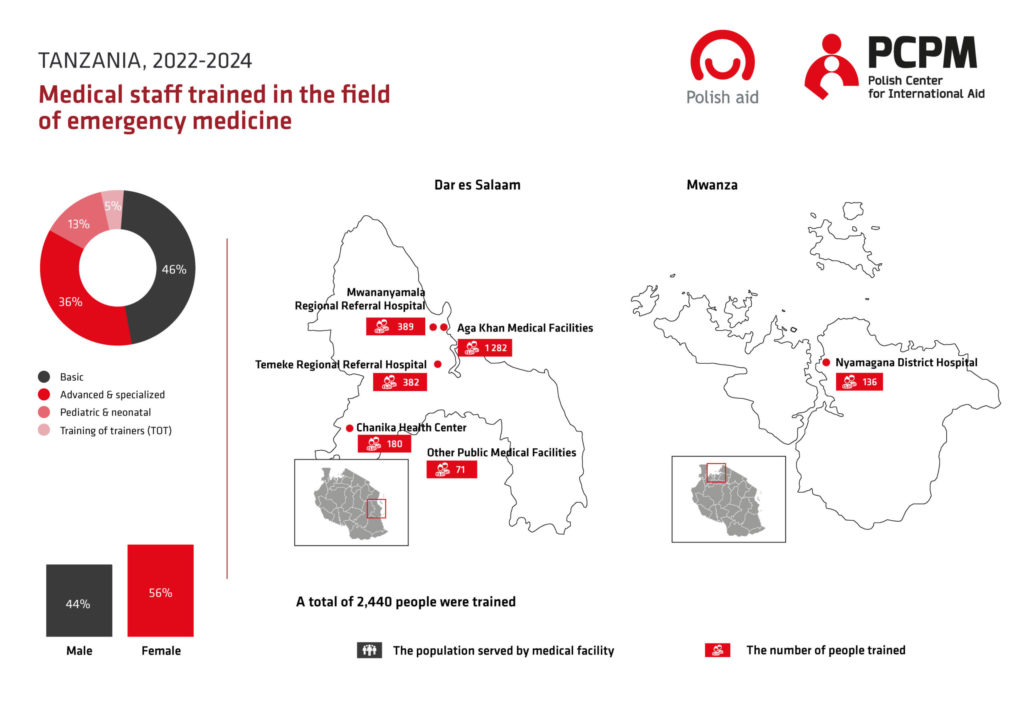
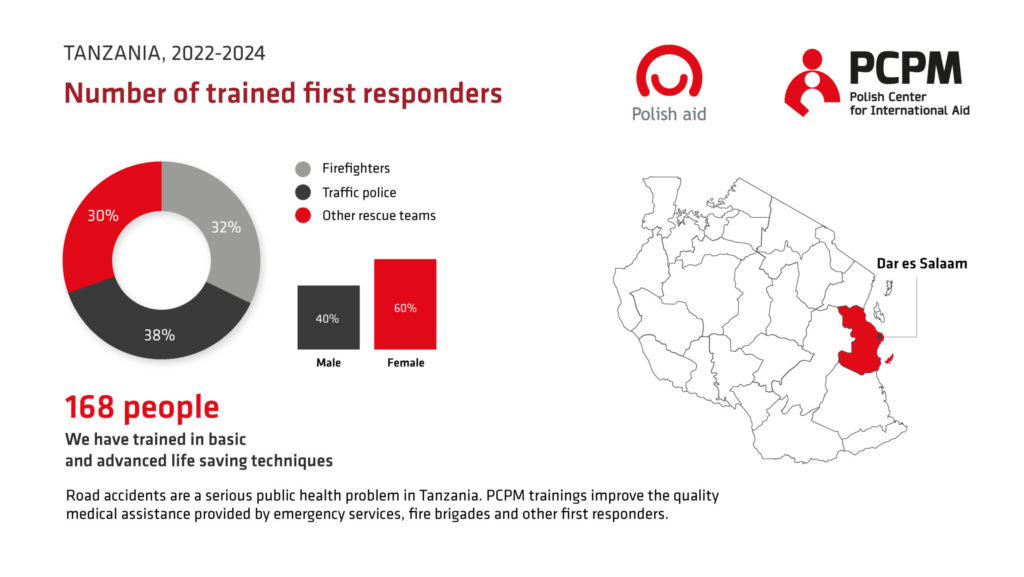
It is impossible to calculate exactly how these efforts translate into a specific number of lives saved. However, every developing country needs efficient rescue services, and on the front lines – whether in the case of an accident or a fire – are precisely firefighters and paramedics. That is why it is so important that their numbers be as large as possible, but even more important that they have the appropriate competencies and tools to save human lives. PCPM has the privilege of having consistently helped in these countries for several years and can compare the starting situation to the current state. The improvement is visible to the naked eye, and the numerous words of thanks that flow in from doctors, medics, and firefighters previously trained by PCPM are the most important proof of this.