A systemic safety revolution in East Africa
The presence of the Polish Center for International Aid (PCPM) in Sub-Saharan Africa is not merely a response to immediate humanitarian needs, but above all a strategic intervention in a region of key geopolitical importance. Countries such as Kenya, Ethiopia, Tanzania and Nigeria are home to a combined population of 515 million people. The growth of cities such as Nairobi, Lagos and Addis Ababa, expanding at a rate of 4–5% annually, is outpacing the capacity to develop critical safety infrastructure.
Rapid urbanization has led to the emergence of vast “informal settlements,” where, according to UN-Habitat data, as many as 60% of the populations of metropolitan areas such as Nairobi may live. These are high-risk areas where buildings are constructed without engineering oversight, makeshift electrical connections are commonplace, and the lack of access roads and hydrant networks makes conventional firefighting operations impossible. The statistics speak for themselves: in Ethiopia, the road traffic death rate is 28 per 100,000 inhabitants, compared with around 5.7 in Poland. Nigeria loses more than 40,000 people every year in road traffic incidents. Fire-related mortality in Sub-Saharan Africa is seven times higher than in Western Europe. This disparity highlights a capacity gap that cannot be bridged through equipment donations alone. It requires a fundamental shift from short-term assistance towards building sustainable operational capacities – the core principle behind the “Polish School” of rescue.
What Is the “Polish School” of Rescue?
The export of Polish technical and operational expertise has become one of the most effective instruments of Polish “soft power” in Africa. The “Polish School” of rescue, implemented by PCPM, rejects the model of short-term material assistance in favor of the comprehensive professionalization of national safety systems. The strategy is based on the premise that modern technology can only be effective when placed in the hands of qualified personnel operating within recognized state structures.
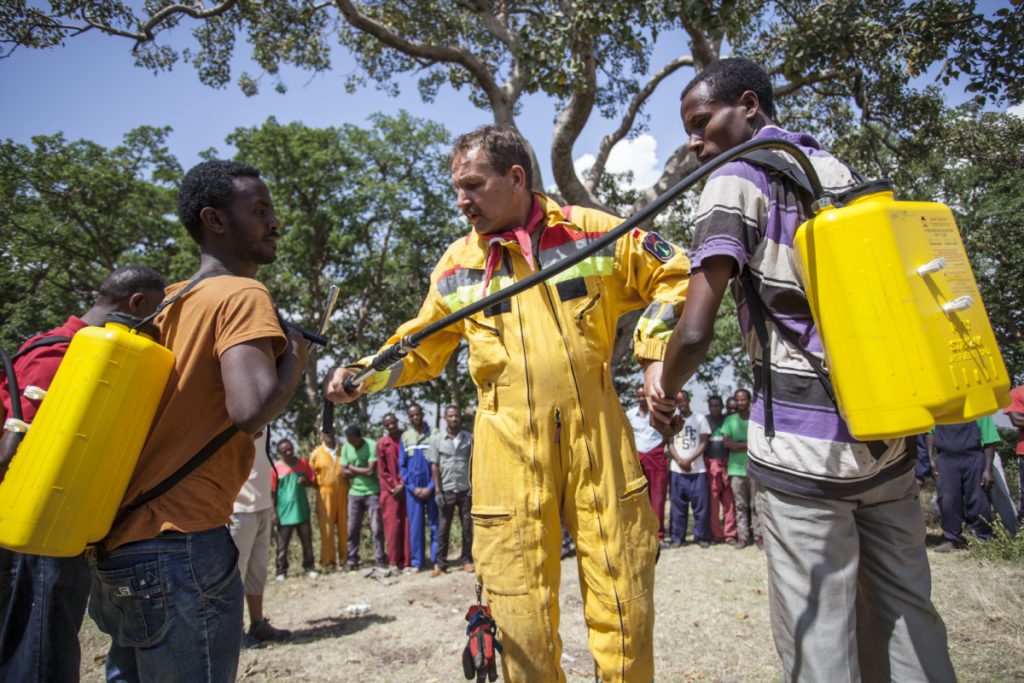
The foundation of this model is the development of systems: from the official recognition of firefighting as a profession, through certification, to national training and education programs. A key demonstration of the durability and success of this approach is the implementation of so-called trilateral cooperation. Today, Kenyan firefighters trained by Polish experts are themselves serving as instructors in Ethiopia, ensuring the autonomy of the system and its resilience to the withdrawal of external support. By moving away from ready-made templates and adapting methodologies to local conditions, Poland has emerged as a leader in the professionalization of emergency and rescue services in the region.
Kenya: From Dispersed Units to a National System
The evolution of Kenya’s emergency services under Polish support is a process of transforming structures resembling those of the 1970s into a modern professional force. Thanks to funding from the Polish Aid programme of the Polish Ministry of Foreign Affairs, the number of fire stations has increased from several dozen to more than 70, while the number of active firefighters has grown from several hundred to more than 1,600.
At the heart of this transformation is the FIRETRACK Training Center in Kiambu. It is not merely a modern equipment facility, but above all a certified institution that has introduced competency-based training programmes. The establishment of an official professional certification pathway has fundamentally changed the social status of firefighters in Kenya. A force that once struggled with low prestige and a lack of public trust has become a professional guarantor of public safety, directly improving the effectiveness of rescue operations.
The Elite of Rescue Services: Establishment and Certification of Kenya’s USAR Team
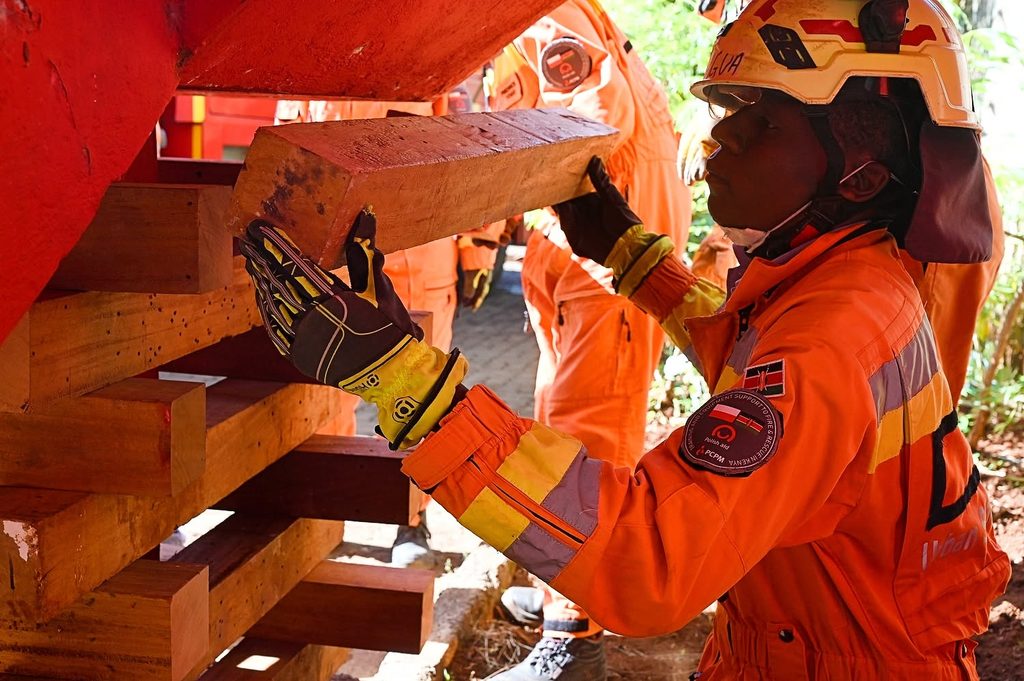
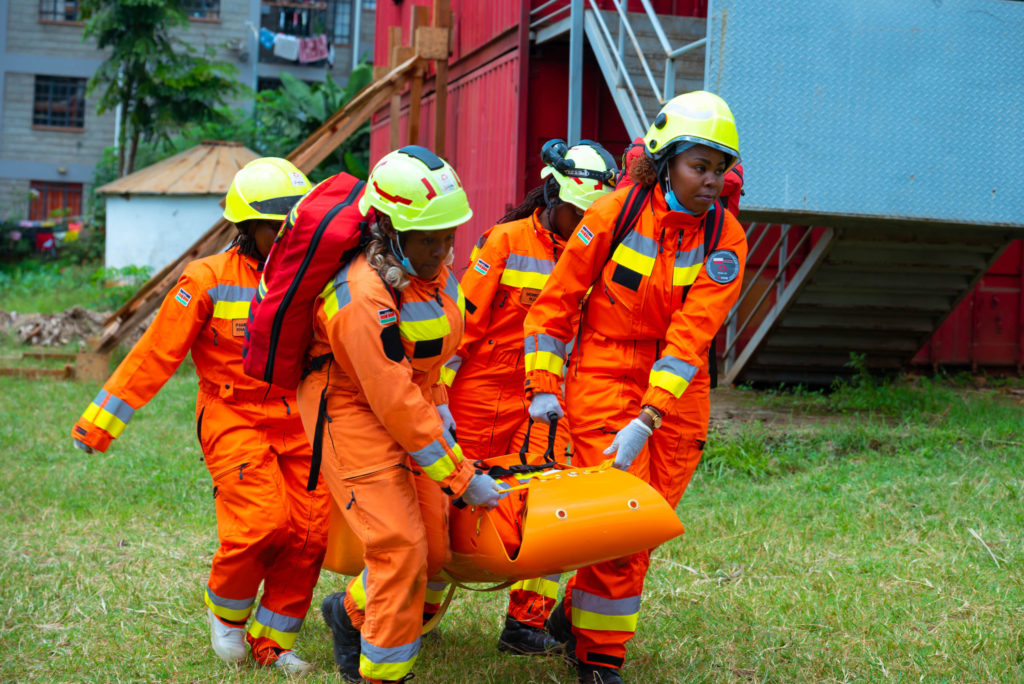
A breakthrough in Kenya’s safety architecture came with the launch of a specialized Urban Search and Rescue (USAR) team in May 2026. Established in cooperation with the National Disaster Management Unit (NDMU), the team is the only one of its kind in East Africa.
The investment included training 75 team members and the construction in Kiambu of the only training ground in East Africa where firefighters can practice operations in collapsed structures and rubble. The team’s high level of professionalism is demonstrated by the fact that 45 rescuers have obtained national Level 4 certification, confirming their ability to conduct the most complex operations in collapsed structures. Such capabilities are of strategic importance in a region facing a high risk of building collapses caused by structural failures and corruption in the construction sector.
Baptism of Fire in Ngong and Spectacular Rescue Operations
The effectiveness of the “Polish School” was put to its toughest test in May 2026. In the town of Ngong, Kajiado County, two eight-storey apartment buildings collapsed. The operation, conducted under the supervision of Polish instructor Albert Kościński, lasted for many hours, and experts compared its level of difficulty to conditions encountered following the earthquake in Turkey. Since the beginning of 2026, units trained by Polish experts have rescued 28 people from collapsed structures, with the Nairobi-Kiambu USAR team directly responsible for saving at least 20 of them.
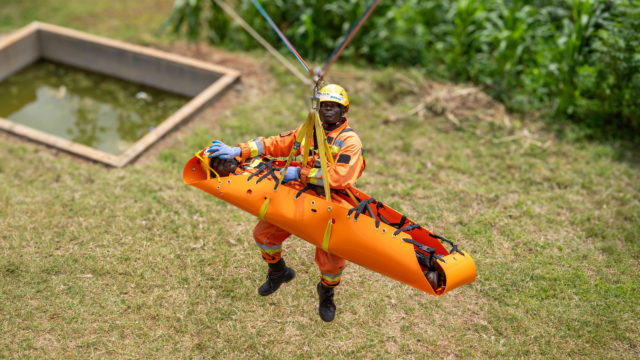
The case of Robert Makoha, a worker trapped in a narrow well in Ruaka, has become a symbol both of the gaps in the emergency response system and of the success of the training provided. The man spent 14 hours in darkness and rising water. Emergency services were called with a delay because witnesses did not know the emergency number – one of them had to run 2 kilometers to the nearest station to report the accident. Makoha’s life was saved solely through advanced rope-rescue techniques introduced by PCPM. Their precise application made it possible to extract the victim from the unstable structure without aggravating his injuries.
A Polish Brand at the Heart of Africa
The activities of PCPM have strengthened Poland’s position as a leader in rescue and emergency response in East Africa. As Dr. Wojtek Wilk emphasizes, PCPM has become a brand associated with the highest level of operational professionalism. The “Polish School” is a project that goes far beyond a simple transfer of technology – it is about building systemic resilience across the region. A new philosophy of saving lives is now spreading from Nairobi, and through certified training centers and qualified personnel, it is permanently transforming the safety landscape of this part of the continent.