Ethiopia
Ethiopia
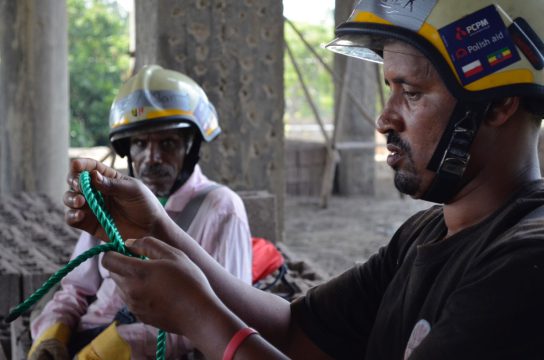
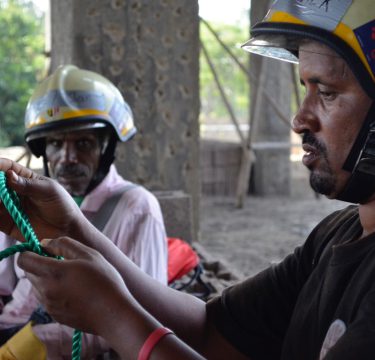
We train and equip emergency response services so they can provide effective assistance to people and animals. We support firefighters, medical professionals, and veterinary services in saving lives every day.
Our Support on the Ground
Ethiopia, home to 130 million people, faces critical demographic and climate-related challenges. Rapid urbanization and increasingly extreme weather events require systemic solutions rather than short-term responses. For years, the Polish Center for International Aid has supported the development of firefighting services in Africa. The experience gained over a decade of work in Kenya is now being applied by the Foundation in Ethiopia.
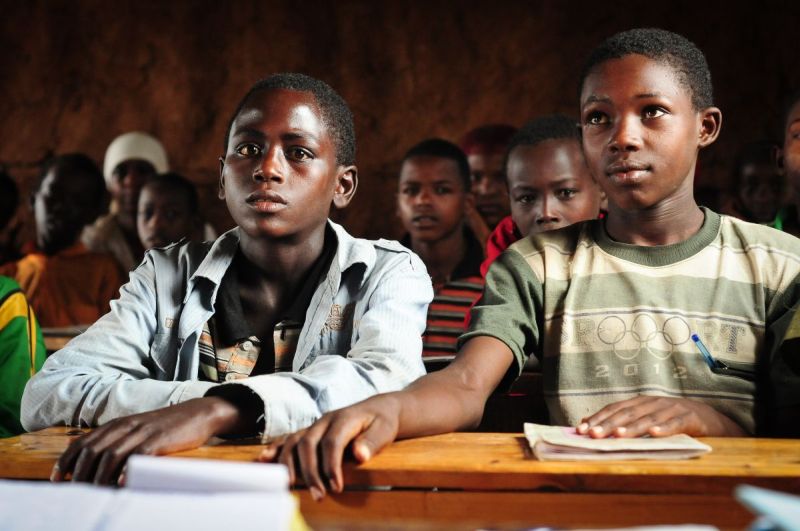
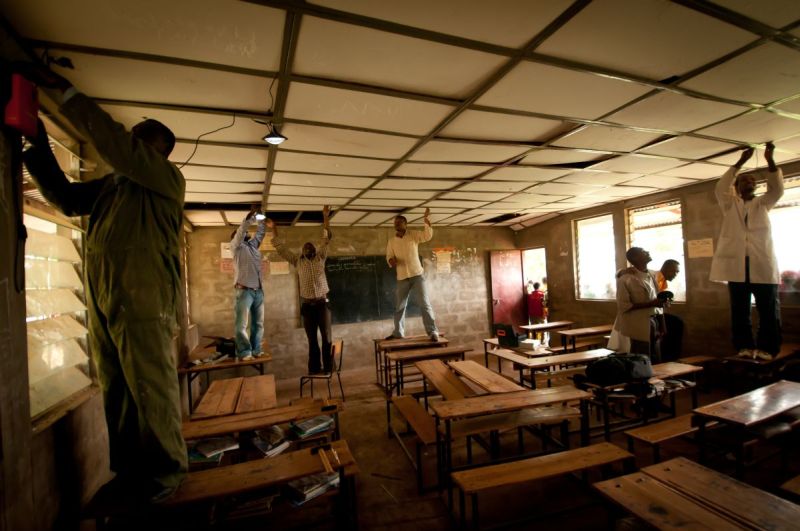
The PCPM Foundation has been operating in Ethiopia since 2012. Initially, its work focused on supporting education and rural communities in the drought-affected southern regions. The Foundation provided lighting and water to schools, organized training for teachers and parents, and in 2020, in response to the famine, launched a school feeding program.
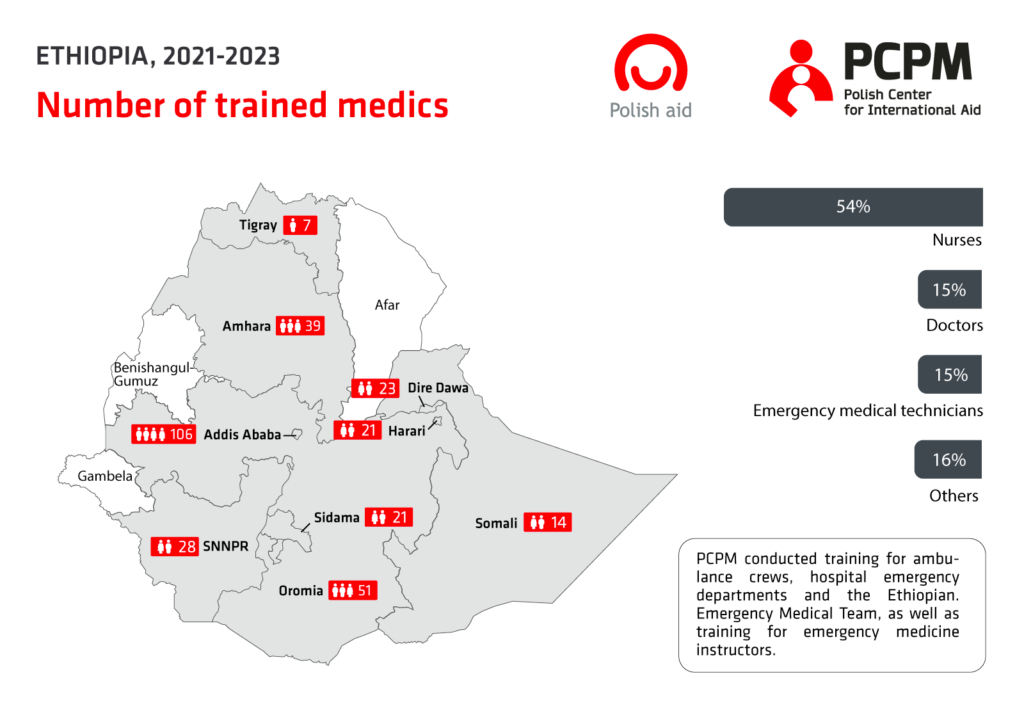
Since 2015, PCPM has been developing systemic emergency response projects in Ethiopia. Between 2021 and 2023, with funding from Polish development assistance and in cooperation with the Ethiopian Ministry of Health, PCPM provided pre-hospital care training to ambulance emergency medical teams from 13 major cities across the country. As part of the project, the Foundation also supplied equipment for ambulances and hospital emergency departments. Support for Ethiopia’s Emergency Medical Team (EMT), including training, mentoring, the preparation of local instructors, and the provision of specialized equipment, was further expanded during the project.
In 2026, the Ethiopian National Emergency Medical Team (EMT) was classified by the WHO as an Emergency Medical Team Type 1 Fixed. This represents an important achievement for Ethiopian institutions and the team, which has spent years building its expertise and operational capacity.
Today, PCPM’s support has evolved into a long-term development project, “Supporting the Development of Emergency and Crisis Response Services in Ethiopia.” As part of the project, we train and equip fire services, develop emergency medicine and veterinary services, and focus on building sustainable, locally led response systems.
We train and equip fire departments
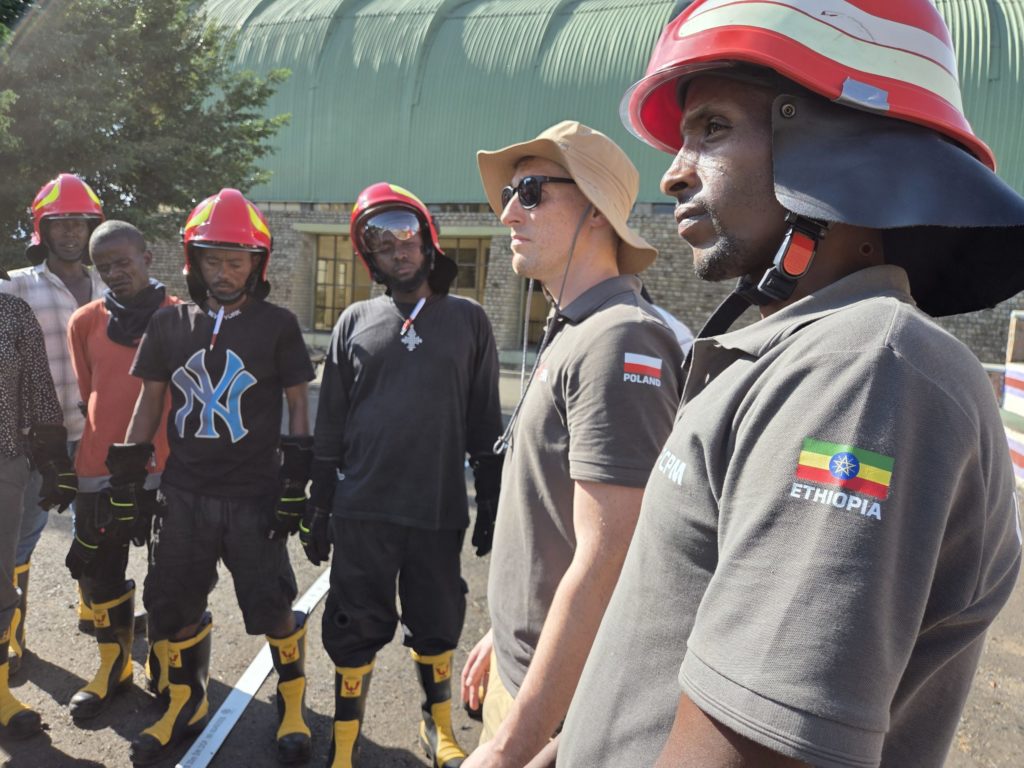
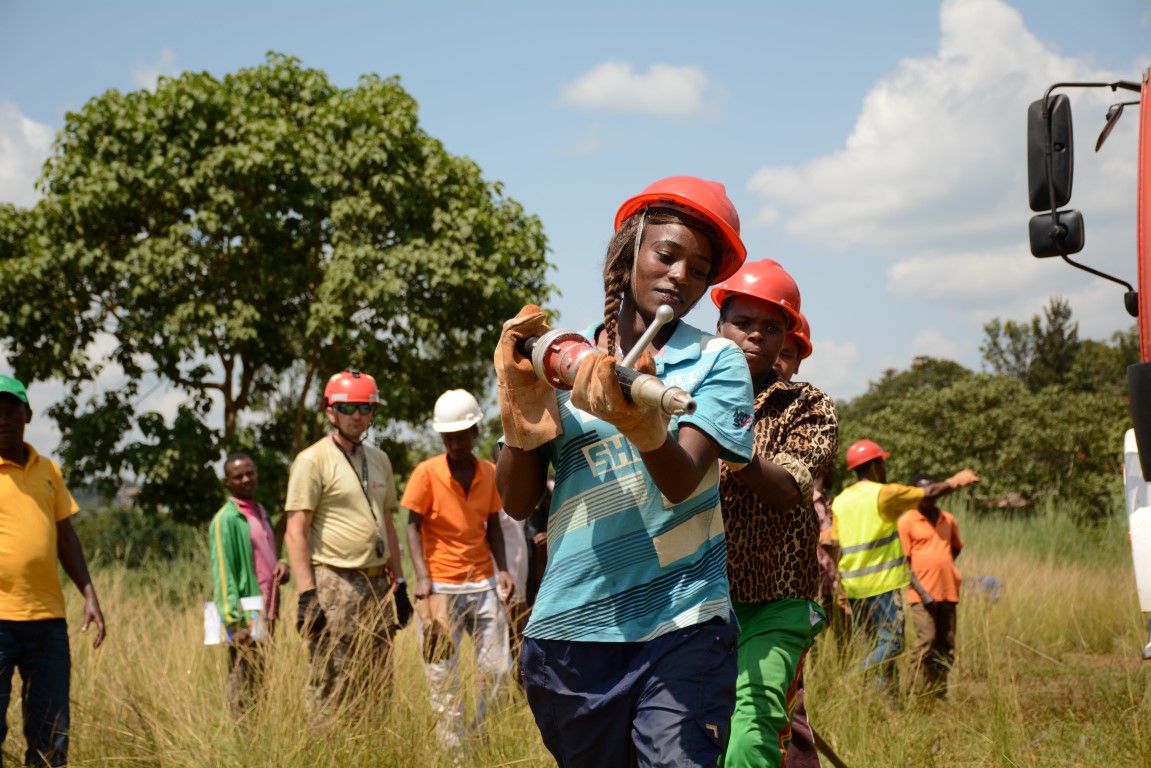
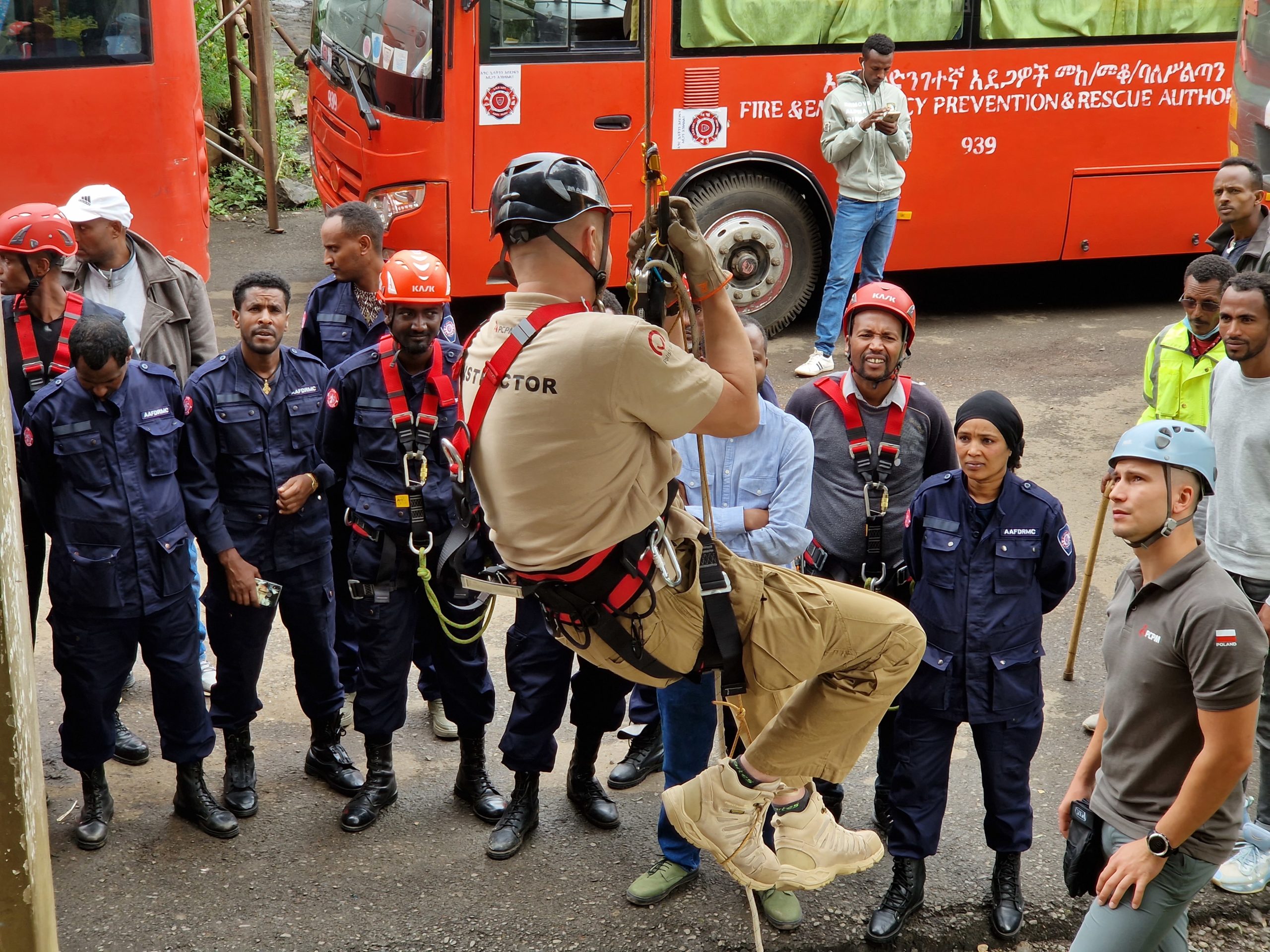
In Addis Ababa, we are equipping a fire service training center that will be able to train emergency response services from across Ethiopia. We are replacing outdated equipment and personal protective equipment, as well as repairing devices that have remained unused at fire stations for months or even years. We also train firefighters in the independent maintenance and repair of their equipment, enabling them to restore it to working order more quickly and respond more effectively during emergency operations.
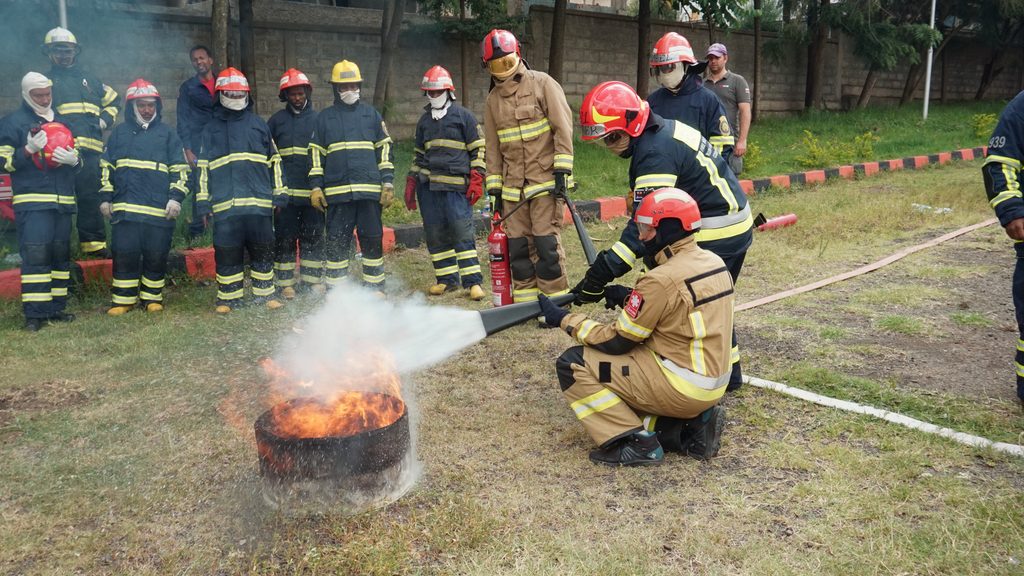
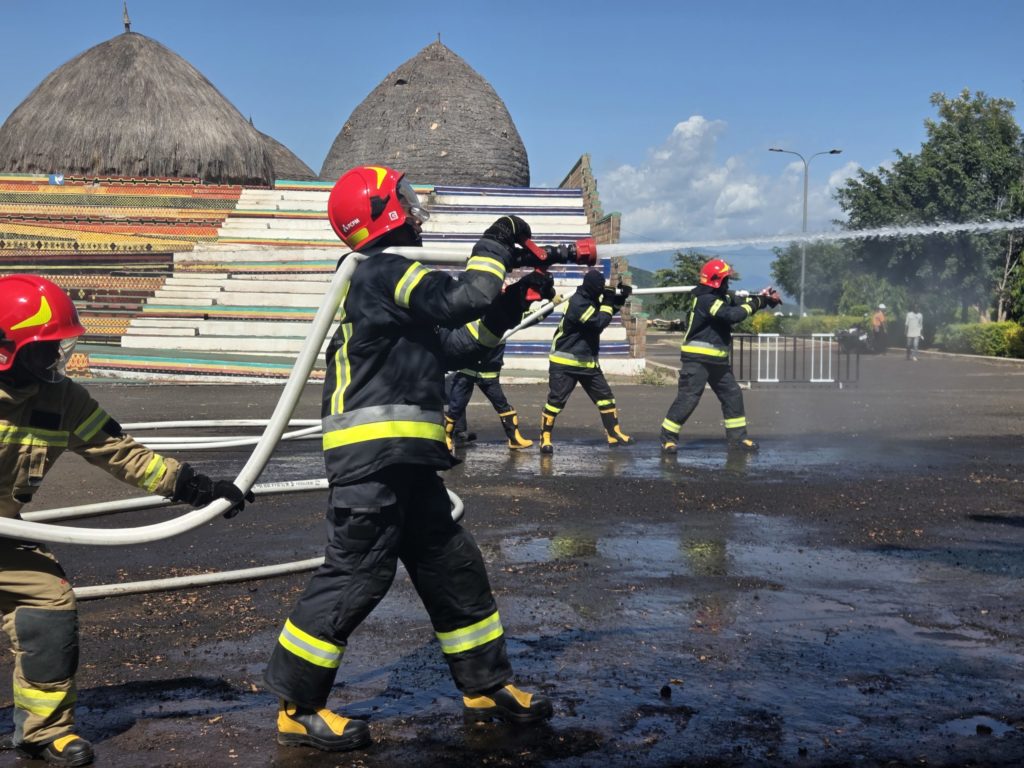
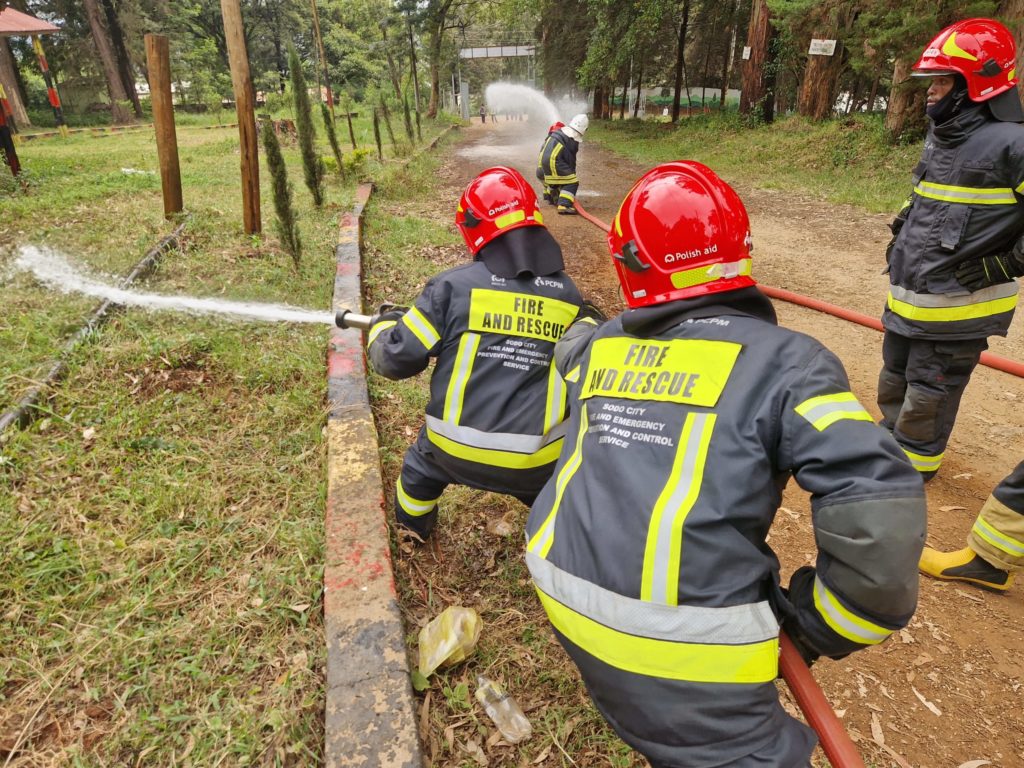
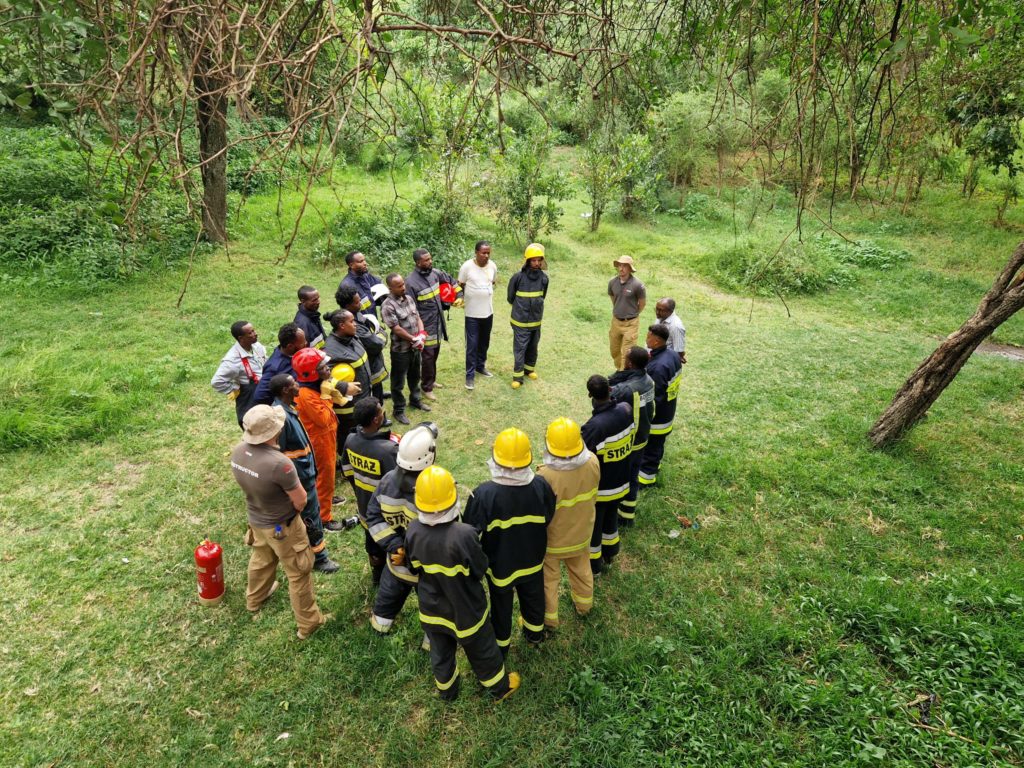
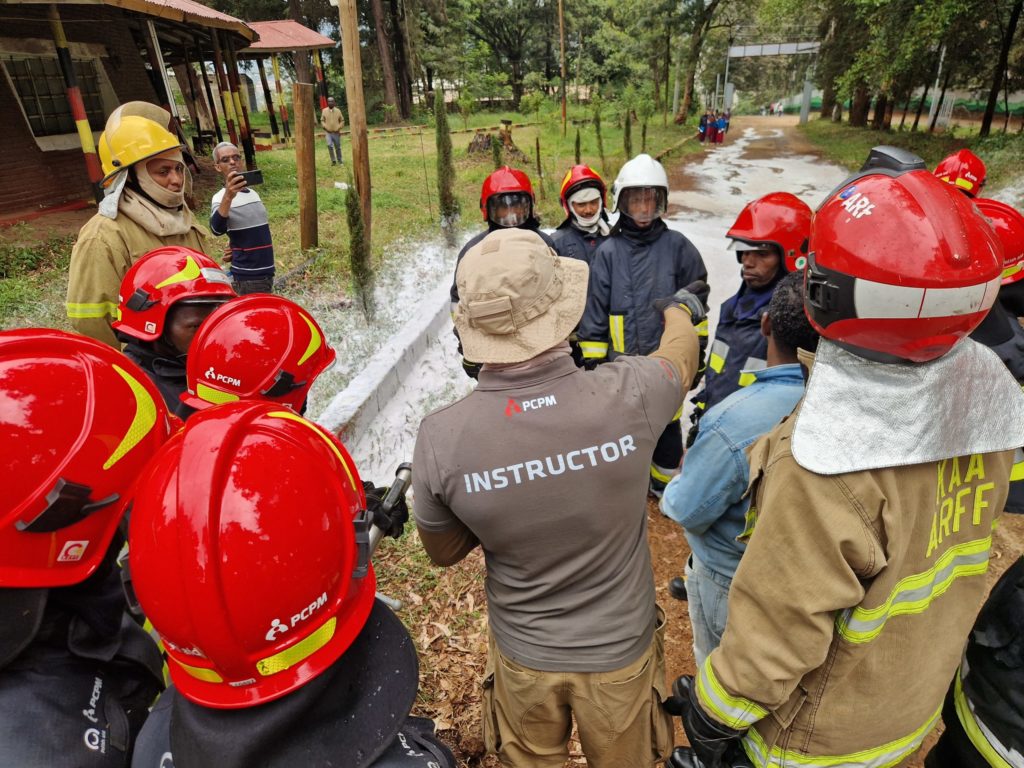
The fire service in Ethiopia is currently not fully prepared to respond to hazards arising from human activity or natural disasters. We are building a sustainable system that will remain in place after the project ends. Polish and Kenyan trainers conduct instructor training for outstanding officers from Addis Ababa. These officers then share their knowledge and experience, developing a systematic approach to safety in the Sidama Region and southern Ethiopia. International exchanges with experts from different countries make it possible to implement proven procedures for responding to large-scale fires and natural disasters.
In Addis Ababa and Hawassa, we provide advanced training in firefighting, as well as equipment maintenance and repair, systematically strengthening firefighters’ skills. We are developing the only training center of its kind in Ethiopia, equipping it with the tools and infrastructure needed for realistic firefighting and technical rescue exercises.
One of the key elements of the project is the construction of a training simulator modeled on a facility built by PCPM in Kenya. The structure, made from metal shipping containers, will allow firefighters to safely practice operations in conditions that resemble real-life emergencies from firefighting and navigating confined spaces to evacuating casualties.
We support emergency medical services
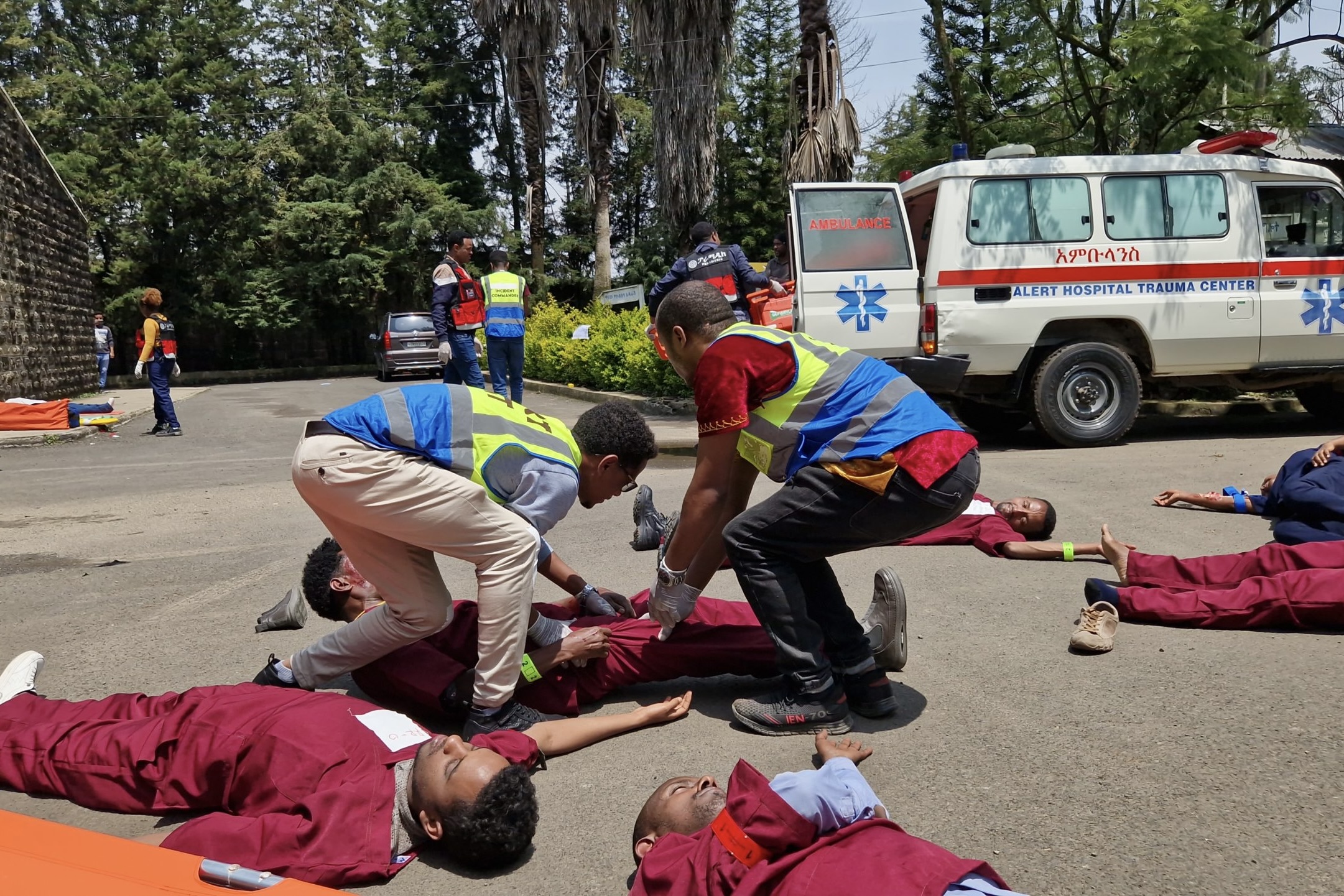
In Addis Ababa, PCPM is working to improve the effectiveness of the emergency medical services system, with a focus on training, inter-agency cooperation, and upgrading ambulances.
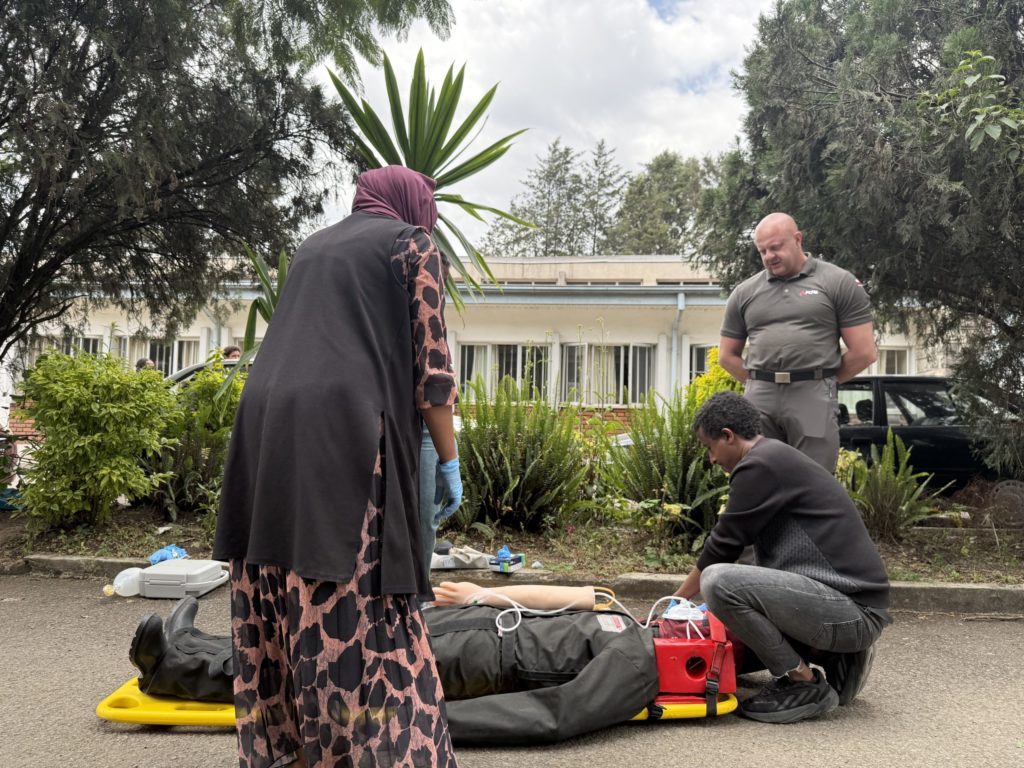
We are developing practical skills and procedures that can be applied in the city’s challenging traffic conditions. PCPM’s support also includes equipping ambulances with essential equipment, including oxygen equipment, compact stretchers, and defibrillators.
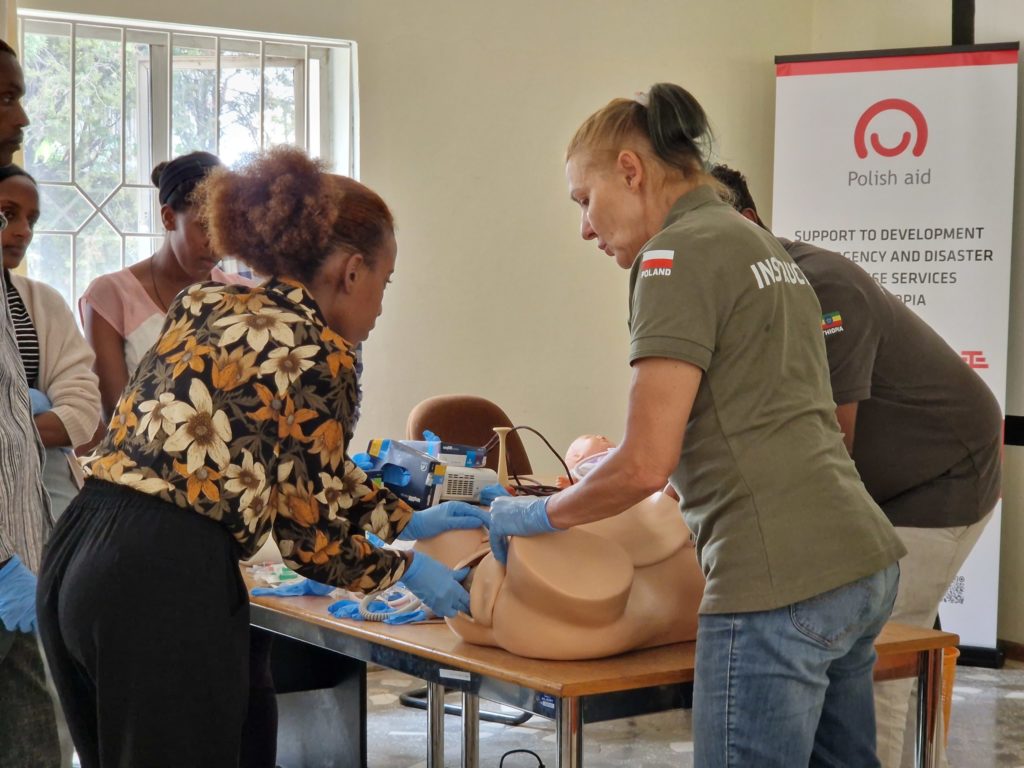
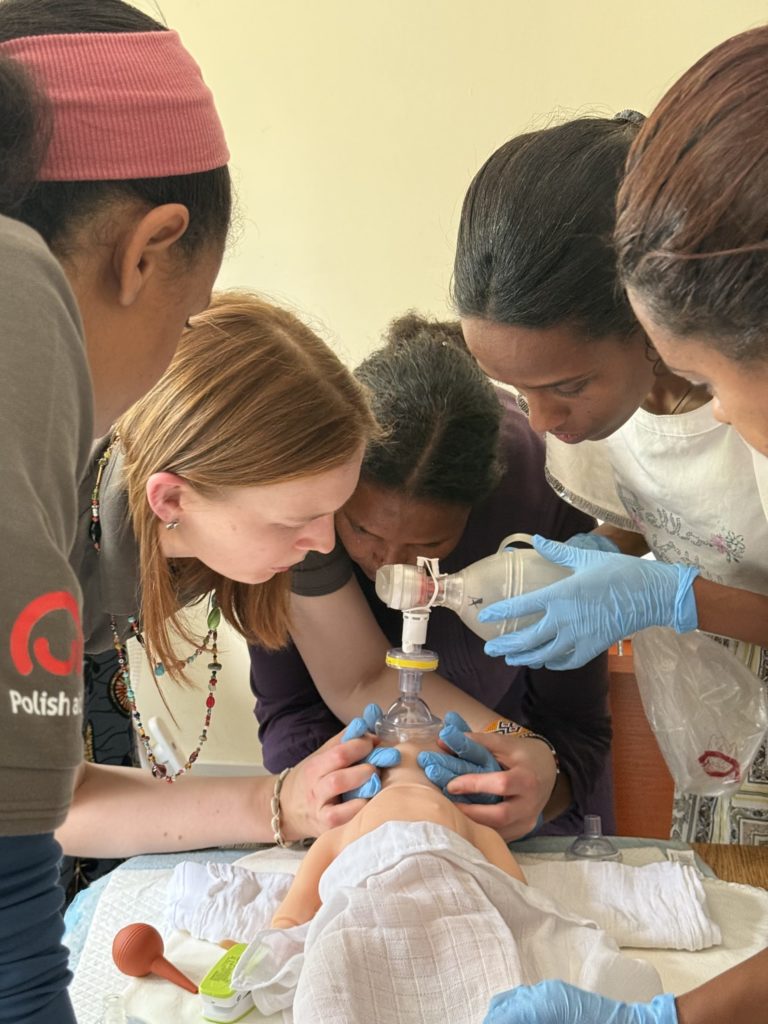
As part of the pre-hospital care training, participants learn how to manage medical emergencies, including obstetric emergencies. The training is aimed at medical personnel working in ambulances in Addis Ababa and is particularly important given the high proportion of calls related to childbirth and pregnancy-related emergencies. The aim is to provide participants with the knowledge and skills needed to manage obstetric emergencies and apply them effectively in the context of ambulance service operations.
The training covers the fundamentals of emergency care, patient care during transport, and cooperation with the fire service. The project helps establish coordination between ambulances, fire service medics, and hospitals. This is particularly important in Ethiopia, where established procedures for inter-agency cooperation are still lacking.
We organize trainings for veterinary services
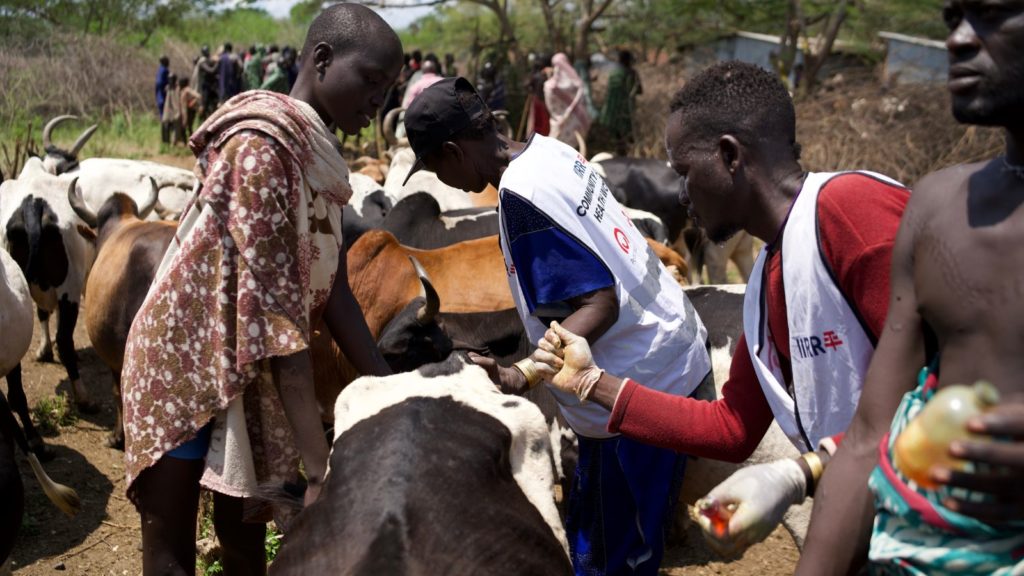
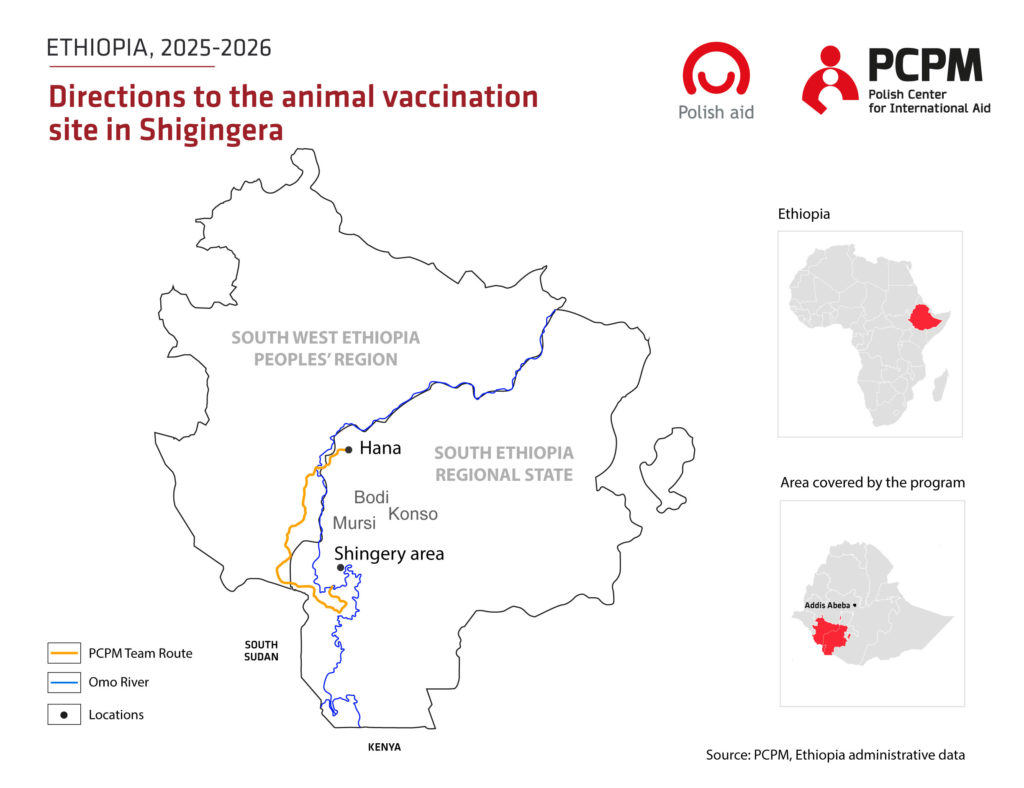
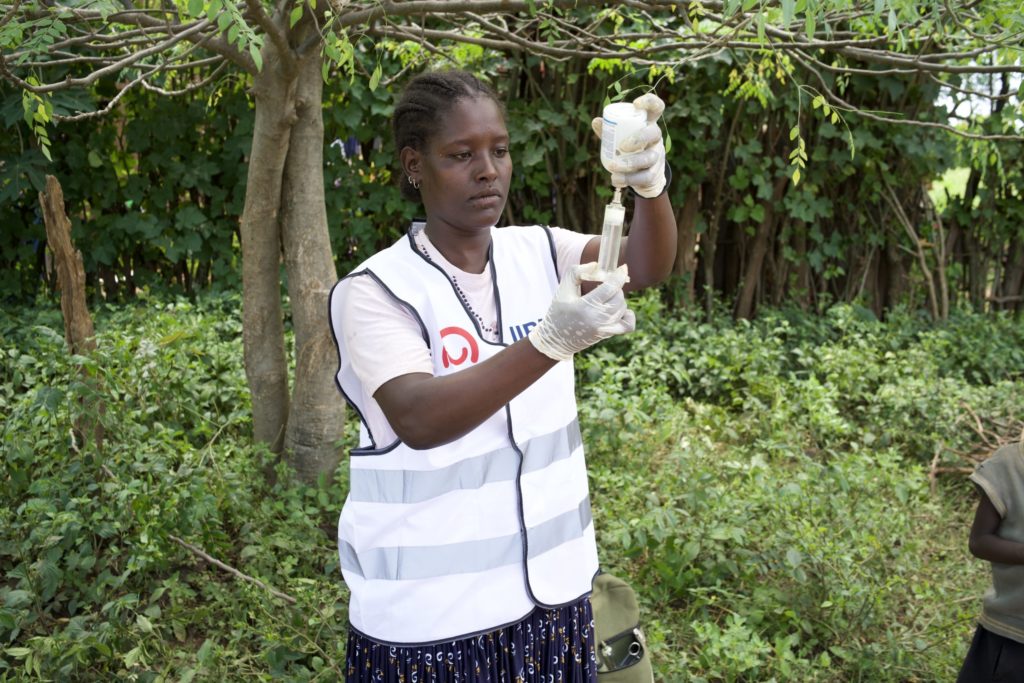
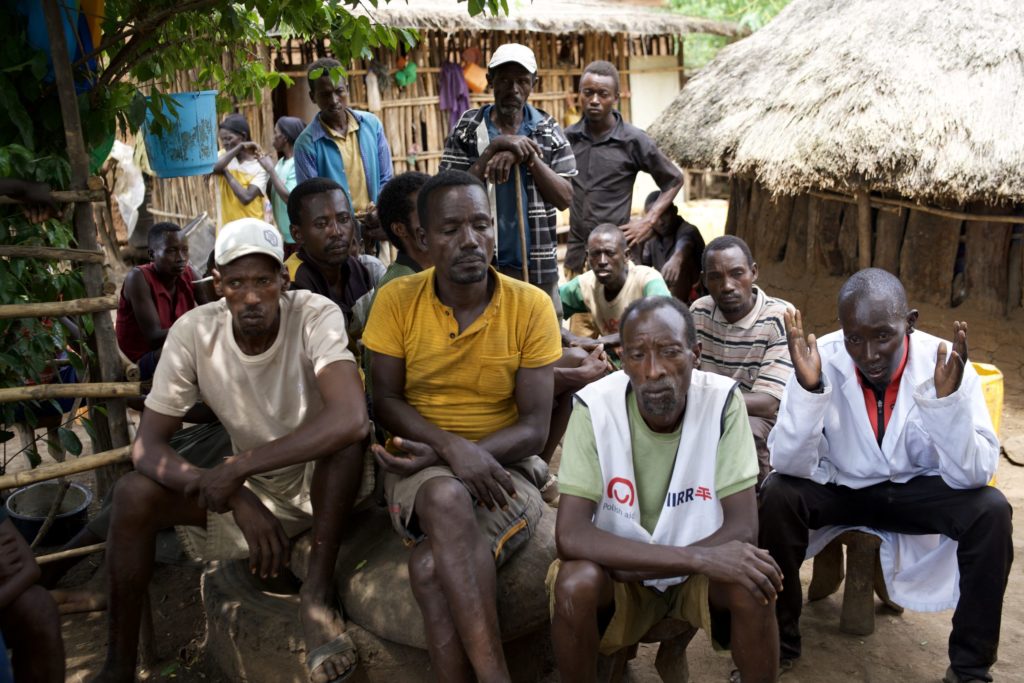
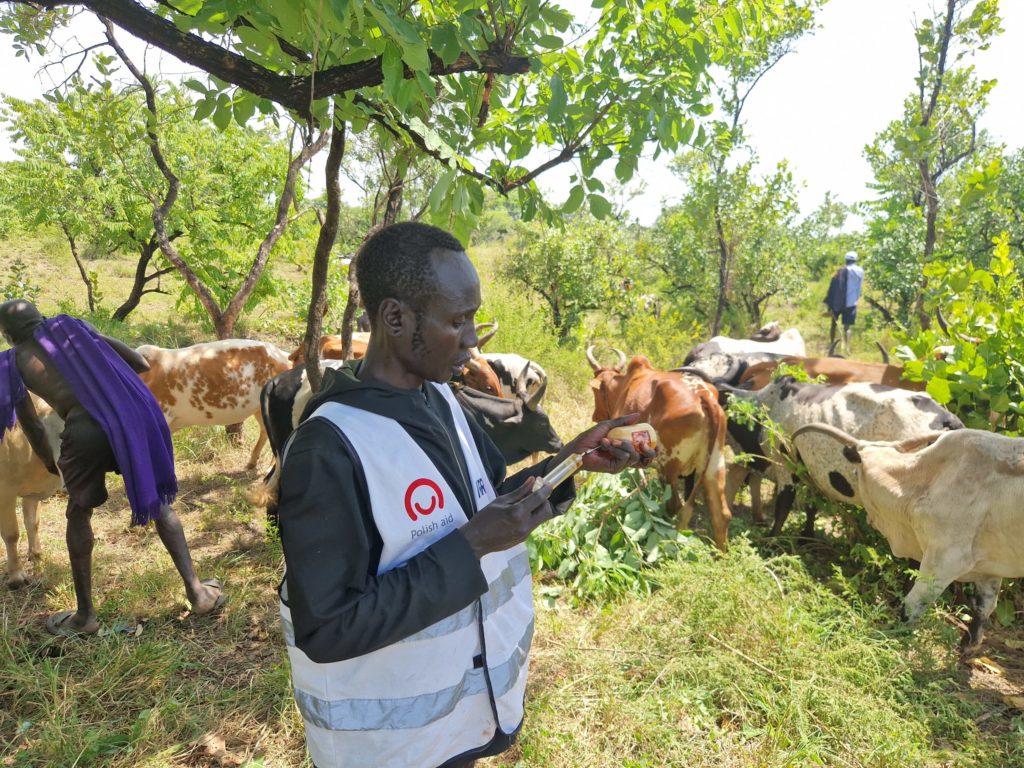
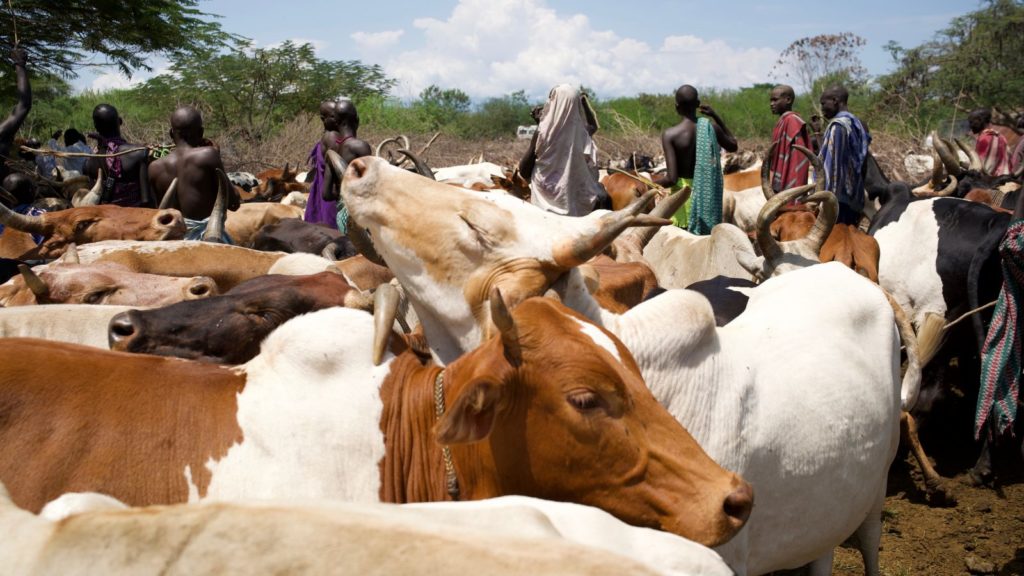
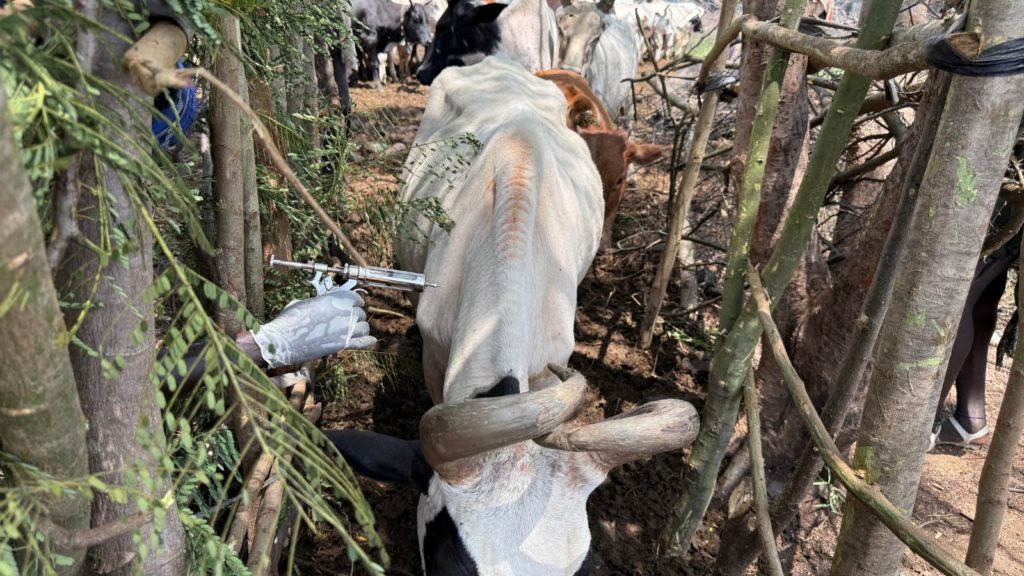
The PCPM project in southern Ethiopia, in the Omo Valley and within Omo National Park, focuses on cattle vaccination as a tool for both public health and peacebuilding. The Foundation works in this area with the International Institute of Rural Reconstruction (IIRR) and, since early 2025, has been training local vaccination workers. The project involves a group of 40 people selected by community elders and representing the Mursi, Bodi, and Konso communities. Their participation is itself an important element of building trust between communities that have experienced conflict.
The training is highly practical: participants learn how to vaccinate animals, recognize diseases through physical examination and observation without advanced diagnostic tests, and work with veterinary medicines, including how to read labels. The aim is to reduce outbreaks of cattle diseases such as pasteurellosis and blackleg, which directly affect food security and intensify competition for healthy herds. Joint vaccination campaigns also provide a platform for inter-community cooperation. Shared meals are organized before meetings, while the common goal of protecting animal health helps bring together groups that otherwise live with ongoing tensions.
The training comprehensively prepares participants for their roles as Community Animal Health Workers, covering animal examination, disease identification, and the administration of medicines and vaccines. Participants also learn how to cooperate with experts from the Selamago District Agriculture Office, understand their responsibilities, and follow procedures for reporting disease outbreaks.
Equalizing educational opportunities for primary school pupils and young people was the main focus of the Foundation’s projects in 2012. Among other things, PCPM worked in drought-affected regions in southern Ethiopia. In addition, in the following years the foundation retrofitted schools and libraries and provided training for teachers and parents. In 2020, in response to the famine, PCPM also ran a feeding program for schoolchildren.
From 2016. The Foundation also started training for emergency services and firefighters.
In 2021, at the invitation of the Ethiopian Ministry of Health, the Polish Center for International Aid launched a project to support the building of the country’s emergency medical system, including the Ethiopian Emergency Medical Technician (EMT) Team. This team brings medical assistance to victims of conflict, natural disasters, epidemics (including cholera and dengue), and refugees on the Sudanese border.
In 2023, the main aim of the projects was to improve pre-hospital care, improving the response to emergency events such as heart attacks and mass events such as road accidents involving more victims.
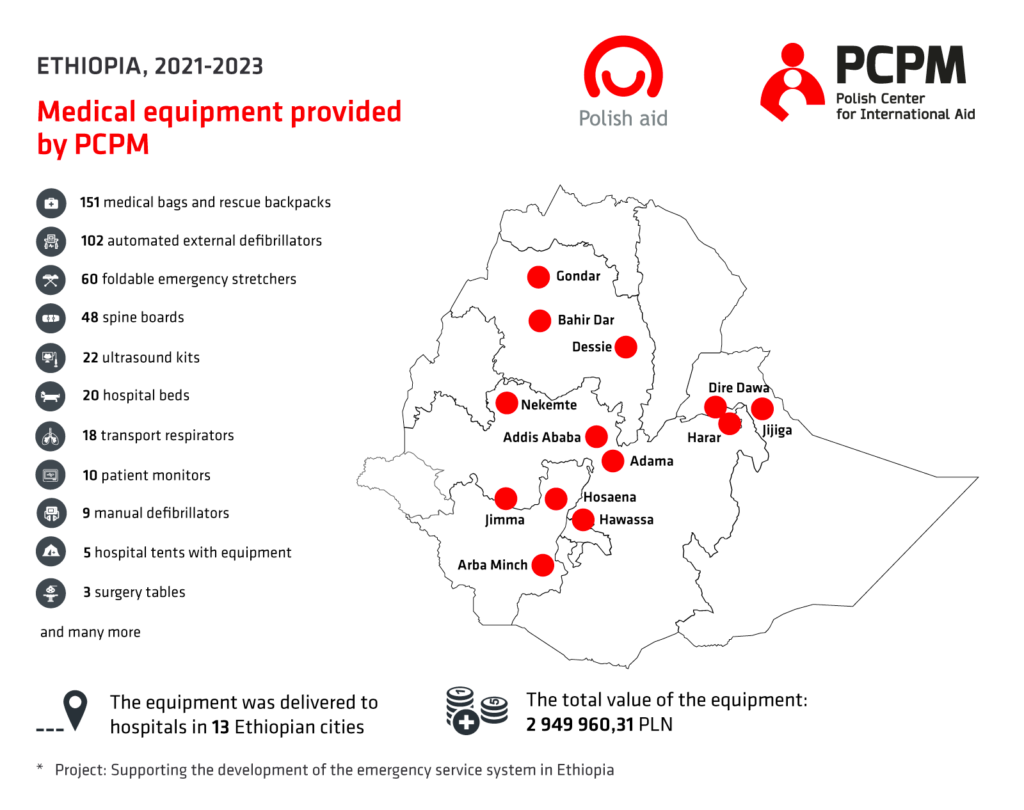
The PCPM Foundation trained public health system staff: doctors, nurses, and paramedics in pre-hospital care in the Advanced Trauma Life Support (ATLS) standard.
In total, between 2012 and 2023, the Polish Center for International Aid Foundation implemented 9 projects with a total funding of PLN 11 044 089. The projects were mostly funded by the Polish Aid program of the Ministry of Foreign Affairs of the Republic of Poland. The EMT mission was financed by the Chancellery of the Prime Minister.
Report: