

Polish medics train Ukrainian medics in Ivano-Frankivsk
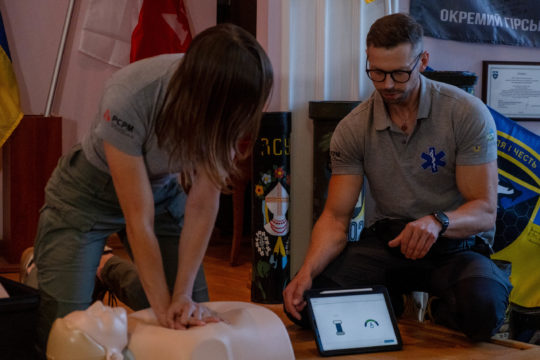
Ivano-Frankivsk, located far from the front line in western Ukraine, is considered a relatively safe city by wartime standards. This is one of the reasons why the Polish Center for International Aid (PCPM) decided to conduct medical training here. Nevertheless, Ivano-Frankivsk faces many of the same challenges as the rest of the country.
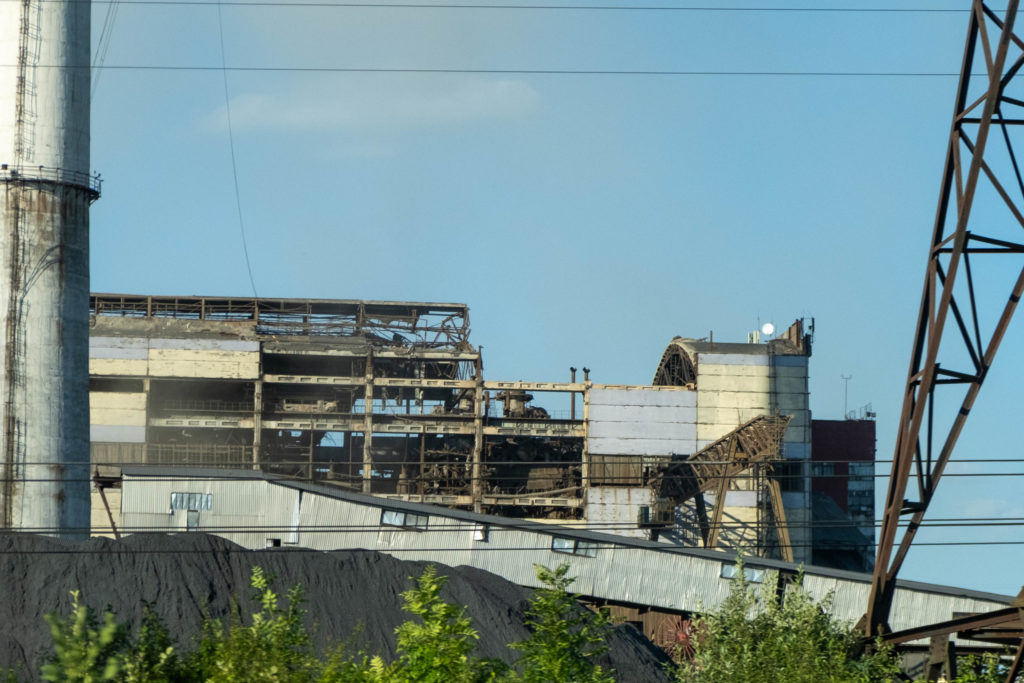
The thermal power plant in Burshtyn, several dozen kilometres from Ivano-Frankivsk, has been attacked three times. Russian missiles struck its switchyard, plunging the city into an electricity-saving regime: reduced street lighting, suspended trolleybus services and hours without electricity in apartment buildings. For residents of western Ukraine, a region considered relatively safe until recently, this is another reminder that the front has also moved deeper into the country – all it takes is a glance at the sky. This was the situation in February following the latest attacks. Although the power plant is currently operating continuously, the damage visible to the naked eye offers little reason for optimism. “The Russians can launch another attack at any moment,” residents say, a reality underscored by the loud sound of aircraft flying over the city from a nearby airbase.
In such conditions, firefighters and emergency medical responders continue their daily work. In addition to putting out fires and clearing rubble, they are increasingly becoming targets of attacks themselves.
It was at the headquarters of the emergency medical service in Ivano-Frankivsk, in a building that until recently had also been affected by power outages, that training organised by the Polish Center for International Aid (PCPM) took place. Ten emergency medical responders spent several days in a training room where, instead of standard first-aid exercises, they took part in sessions adapted to the realities of war.
“Because Ukraine is affected by ongoing hostilities, a large proportion of its personnel are directly involved in providing assistance to the injured, both in frontline areas and directly on the front line. This means that Ukrainian emergency services do not have sufficient staff to conduct regular training, particularly in pre-hospital medical care and responding to mass-casualty incidents,” says Paweł Jessa, PCPM project coordinator.
Polish instructors in Ukraine
The training was led by two instructors from the PCPM Emergency Medical Team – Wojtek Soliński and Agata Leszczuk. Both have experience working in crisis environments, and the knowledge they shared was based on elements of international emergency medical standards: Advanced Life Support (ALS), Basic Life Support (BLS) and Tactical Emergency Casualty Care (TECC), a protocol developed to provide medical assistance in areas of active threat.
“Our trainees are very eager to learn. They see the need to acquire new skills and knowledge and ask a lot of questions,” says Agata Leszczuk. She adds that “they want to train, so after every session I have had the opportunity to conduct, I have seen an improvement in the participants’ skills.”
It is difficult to find a better illustration of why such courses are now a priority. Ukraine’s State Emergency Service (DSNS), from which most of the participants come, has lost more than 100 personnel killed in the line of duty during three years of full-scale war, while 430 have been injured.
Project funded by Taiwan
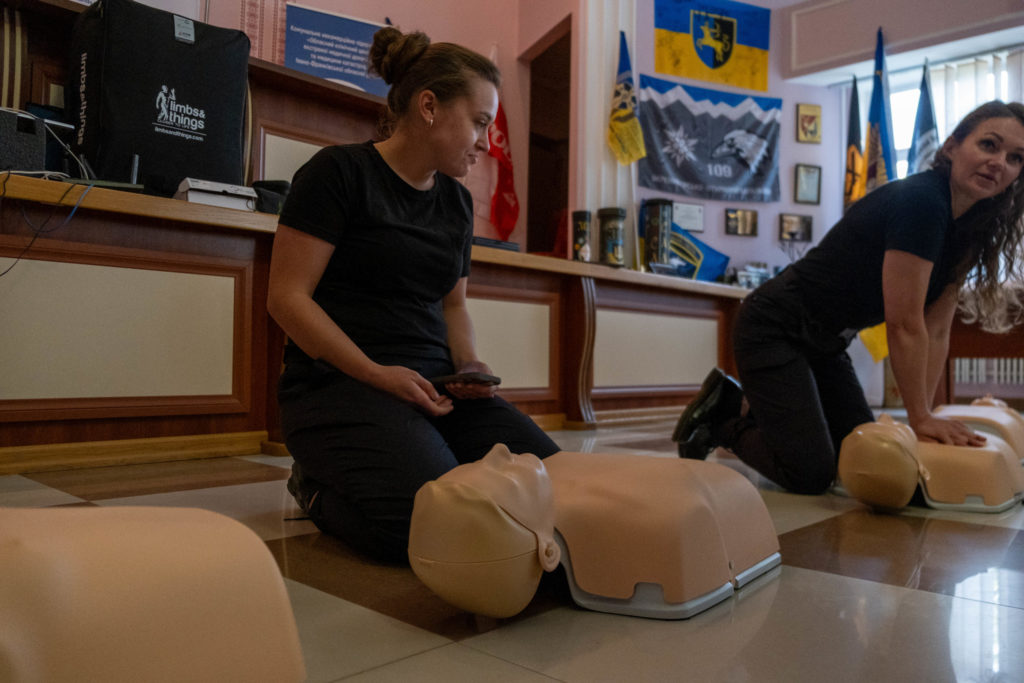
The training in Ivano-Frankivsk is part of a broader PCPM project funded by TaiwanICDF (International Cooperation and Development Fund), which has supported the strengthening of Ukraine’s emergency response system for several years. As part of the programme, Polish instructors conduct a series of training sessions not only in Ivano-Frankivsk, but also in Lviv and Vinnytsia, where permanent training centres have been established and equipped with modern equipment – haemorrhage-control simulators, intubation mannequins and advanced paediatric mannequins that allow responders to practise treating the youngest victims of attacks.
The model underpinning the entire project is referred to by the organisers as “safe-haven training”. Responders working directly in frontline areas are sent for training to safer regions of western Ukraine. The solution serves a dual purpose: it not only allows participants to gain new qualifications, but also gives them several days away from working under constant threat. As Paweł Jessa, the project coordinator, emphasises, for many firefighters and medics this is the only opportunity to briefly step away from the realities of the front – a form of psychological recovery that, in the longer term, also translates into the quality of the assistance they provide.
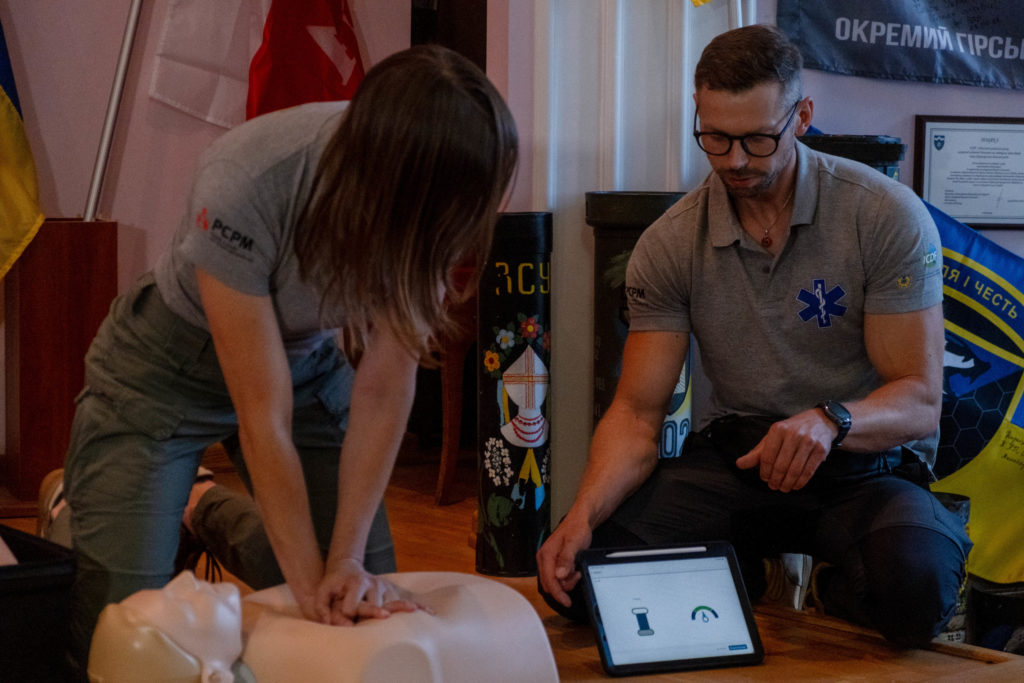
Selected participants from the most advanced courses will eventually become instructors themselves, passing on the knowledge they have gained to the next generation of responders in their own units, without the need to bring in foreign trainers every time. This approach is intended to ensure that the project’s impact continues long after its formal completion.
“In addition to the support we provide to Ukraine, we can also learn a great deal from Ukraine. Above all, it is the ability to adapt and remain resilient. Ukraine is already in its fifth year of war and has had to learn how to function in such a reality,” says Lin Jian-Jhang of TaiwanICDF.
Ultimately, PCPM plans to train around 300 firefighters and medics. The most experienced and highly skilled participants will be selected to take part in advanced courses, after which they will be able to become trainers themselves and provide training to other firefighters and medics within their own units.


