

Legendary “White Helmets” in Aleppo Train Rescue Dogs with Support from Poland
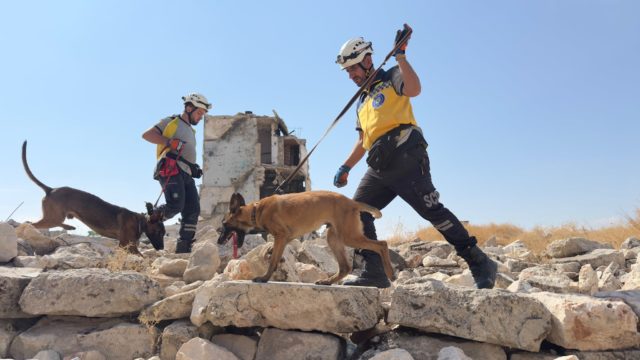
In Syria, where the earth reminds people every few years just how fragile life can be, and collapsed buildings become traps for thousands, the work of search-and-rescue dogs can mean the difference between life and death. That is why a second training mission for search-and-rescue teams and their dogs has been launched in Aleppo. Inspired by the K9 Nose Print Project, founded by a Polish woman and developed in cooperation with Polish instructors, the initiative trains dogs to assist the rescuers of the White Helmets, the Syrian Civil Defence.
Experts Working Together to Save Lives
The project was born out of the need to create a practical and effective rescue tool in places where disasters are part of everyday life and access to specialist equipment and expertise is severely limited.
The initiative was founded by Paulina Kuntze from Poznań, Poland, who established the K9 Nose Print Project. She has been working with the White Helmets for ten years and understands the realities of operating amid the Syrian crisis.
The Aleppo project is her own initiative, supported both professionally and financially by the Polish Center for International Aid (PCPM) Foundation. The international organisation Kids Paradise Foundation has also joined efforts to support the development of the K9 rescue team operating within the Syrian Civil Defence.
Together with Przemysław Rembielak, a firefighter and co-creator of the concept, Paulina Kuntze is developing an idea that began with a field assessment and an initial week-long training session organised in August 2025.
Krystian Faltyn, a rescuer and search-and-rescue dog expert from the Podhale Mountain Volunteer Search and Rescue Service (GOPR), is also sharing his training and instructional expertise in Aleppo. One clarification is worth making here: internationally, the term K9 is used to refer to units that employ dogs for specialised tasks, including search and rescue.
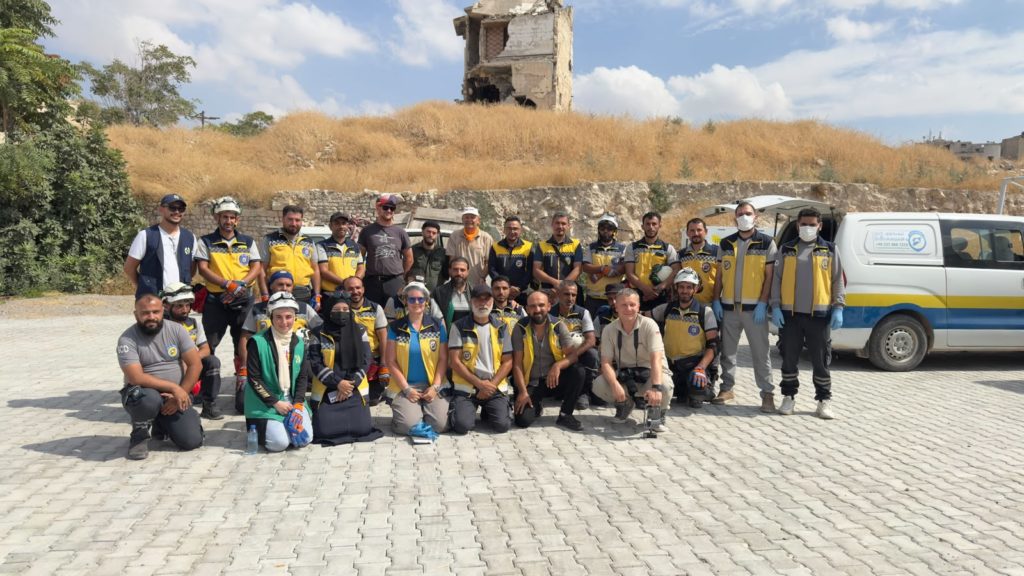
Today, the White Helmets have a dedicated canine unit, their own training centre in Kafr Karmin, kennels for more than 30 dogs, exercise areas, transport vehicles and an organisational structure that allows them to develop a comprehensive system.
“Syrians are very open to knowledge and eager to gain new experience. They do not expect someone to simply give them something or bring them aid. I get the impression that they would rather acquire this knowledge themselves and learn methods that have already been proven effective,” says Darek Zalewski of the PCPM team, who observed the White Helmets’ latest training sessions in Syria.
Theory Put to the Test in the Field
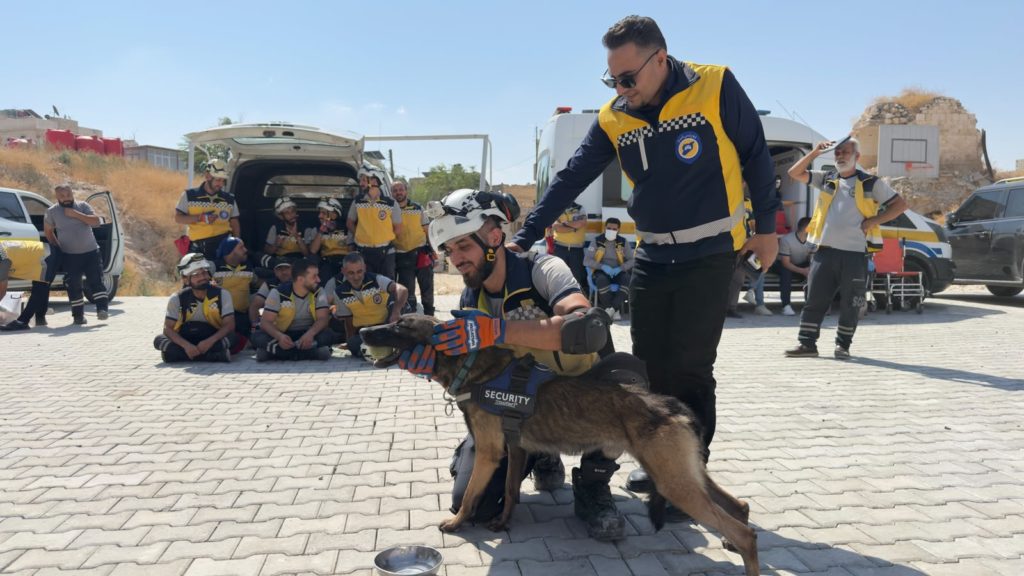
The latest training session led by Polish instructors focused primarily on practical skills: how to work with dogs during search operations in real-life conditions, how to socialise the animals, how to assess puppies for their suitability for search and rescue work, how to build a strong bond between a dog and its handler, and how to use motivational techniques that encourage dogs to work even in extreme conditions.
The programme included both classroom-based theory and field exercises conducted on actual rubble sites, which remain common in Syria as the country rebuilds after years of war.
An important element of the initiative is ongoing cooperation and coordination between the trainers, the local team and the search-and-rescue dog unit of the Syrian Civil Defence.
In Syria, Rubble Is More Than Just a Legacy of War
The geographical context is no coincidence.The Idlib region, Aleppo and northwestern Syria as a whole lie in an active seismic zone. In addition to the devastating effects of war, the region is also regularly affected by earthquakes.
The major earthquakes of 2023, which reached a magnitude of 7.8, claimed more than 7,000 lives and left 100,000 people injured. The Polish Center for International Aid (PCPM) was also involved in providing assistance in the aftermath of the disaster.
Read more about PCPM’s earthquake response on the Turkish-Syrian border.
Seismic forecasts indicate that powerful earthquakes measuring above magnitude 6 are expected to strike Syria’s most seismically active region every six to seven years. This provides a window of opportunity to prepare rescue teams for effective search operations, as it takes approximately two to three years to train a rescue dog to full operational proficiency and assess the team’s capabilities.
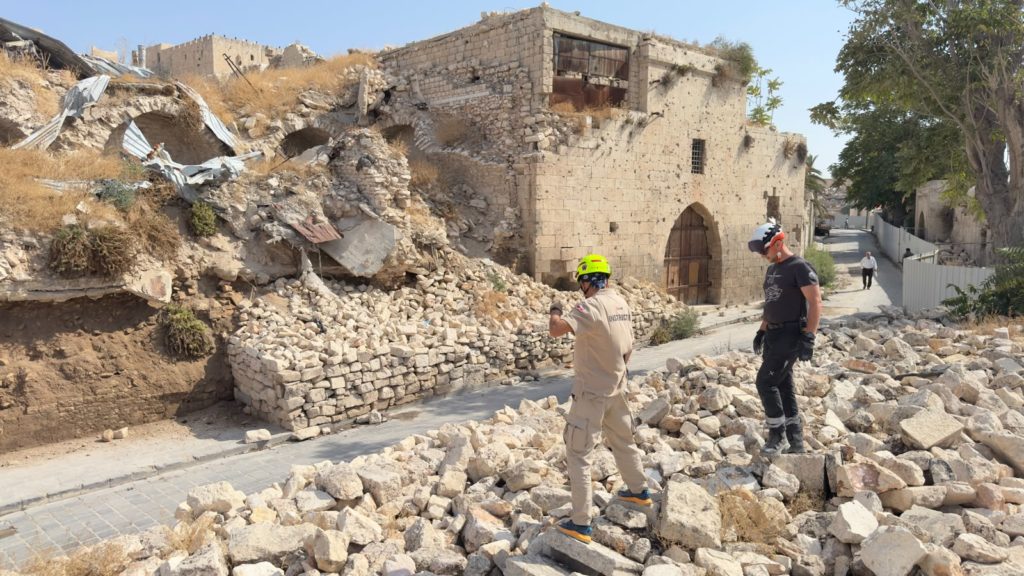
The need is urgent. The White Helmets, Syria’s nationwide rescue organisation, still lack some of the specialised training and equipment needed to respond swiftly and effectively to building collapses, landslides and earthquakes. In such emergencies, locating people trapped beneath the rubble presents a particularly difficult challenge.
Search-and-rescue dogs are indispensable in these situations, but they require specialised selection, training and care. This is especially important for puppies, which must be assessed and selected for the traits needed for search-and-rescue work. Expert guidance on health, development, veterinary care and nutrition is also essential to prevent mistakes during the dogs’ upbringing and training.
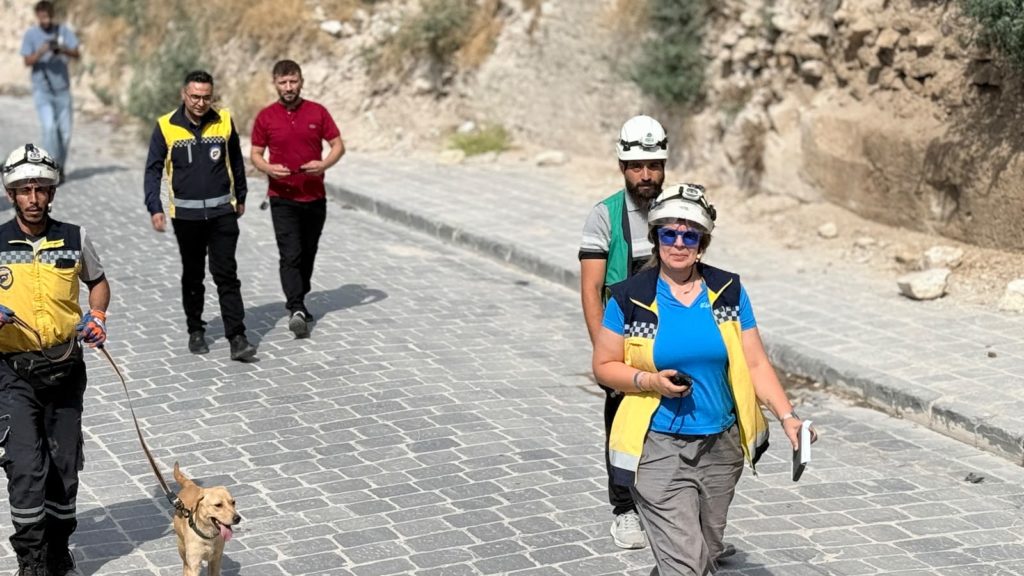
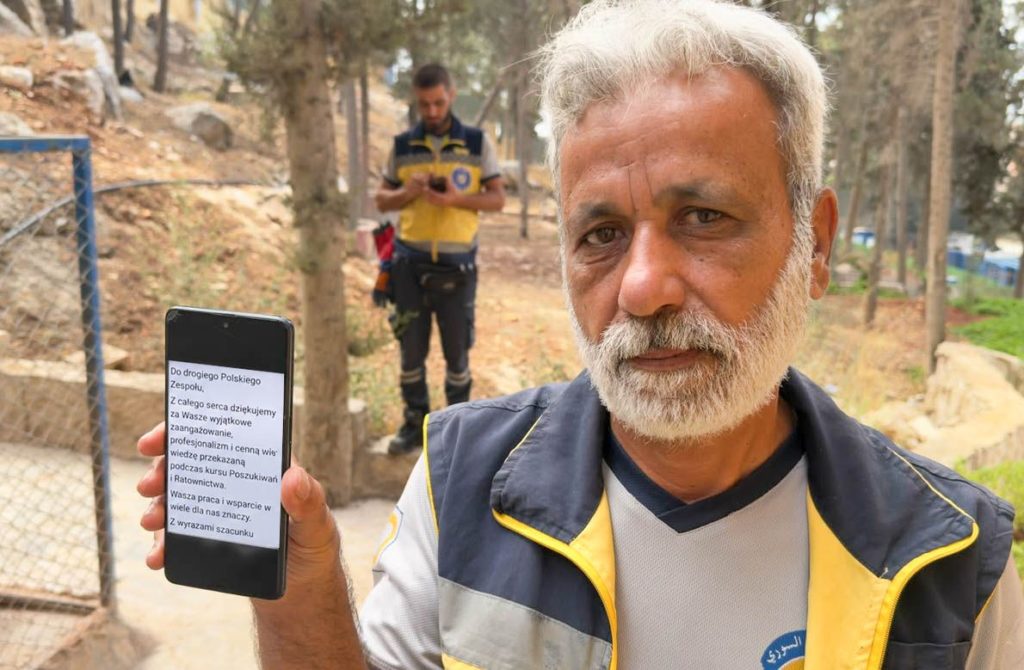
Polish support in providing this unique rescue “tool” in the form of trained dogs could become a landmark development in Syria’s civil protection system. This project is driven by people who recognise the importance of taking action in places where the challenges are exceptionally demanding.
At the PCPM Foundation, we are proud to support this initiative, particularly because canine search-and-rescue operations are an area close to our hearts. We have delivered similar training programmes in Kenya and Ukraine. Having witnessed the results and effectiveness of this approach first-hand, we are convinced that this initiative represents an important step towards building a more effective search-and-rescue system.


