

Official Launch of Urban Search and Rescue (USAR) Capability in Kenya
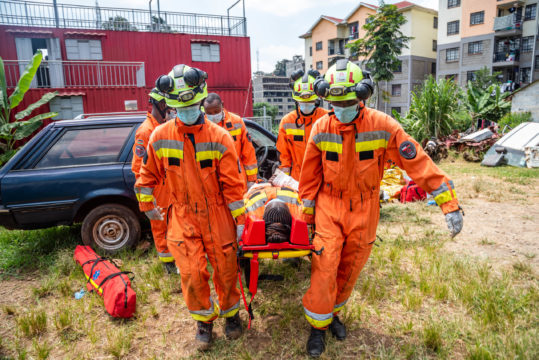
On 7 May 2026, Kenya will took a significant step forward in strengthening its national disaster response system with the official inauguration of a specialised Urban Search and Rescue (USAR) capability. The initiative is the result of a multi-agency partnership between the Kenya Police Service – National Disaster Management Unit (NDMU), Kiambu and Nairobi County Fire Brigades, and the Polish Center for International Aid (PCPM), fully funded under the Polish development cooperation programme (Polish Aid).
“This project demonstrates how Polish development cooperation translates into concrete, life-saving solutions. Thanks to the support of Polish Aid and the long-term engagement of Polish instructors, we have been able to share practical experience, operational standards and training systems that are now embedded in Kenya’s rescue services. Importantly, this is the first specialised USAR capability of this kind in Kenya and one of the first in the East African region, setting a benchmark that can be followed by other countries. What we are launching is not only a new operational capability, but a sustainable model for building rescue capacity across the region,” said Wojtek Wilk, CEO of the Polish Center for International Aid (PCPM).
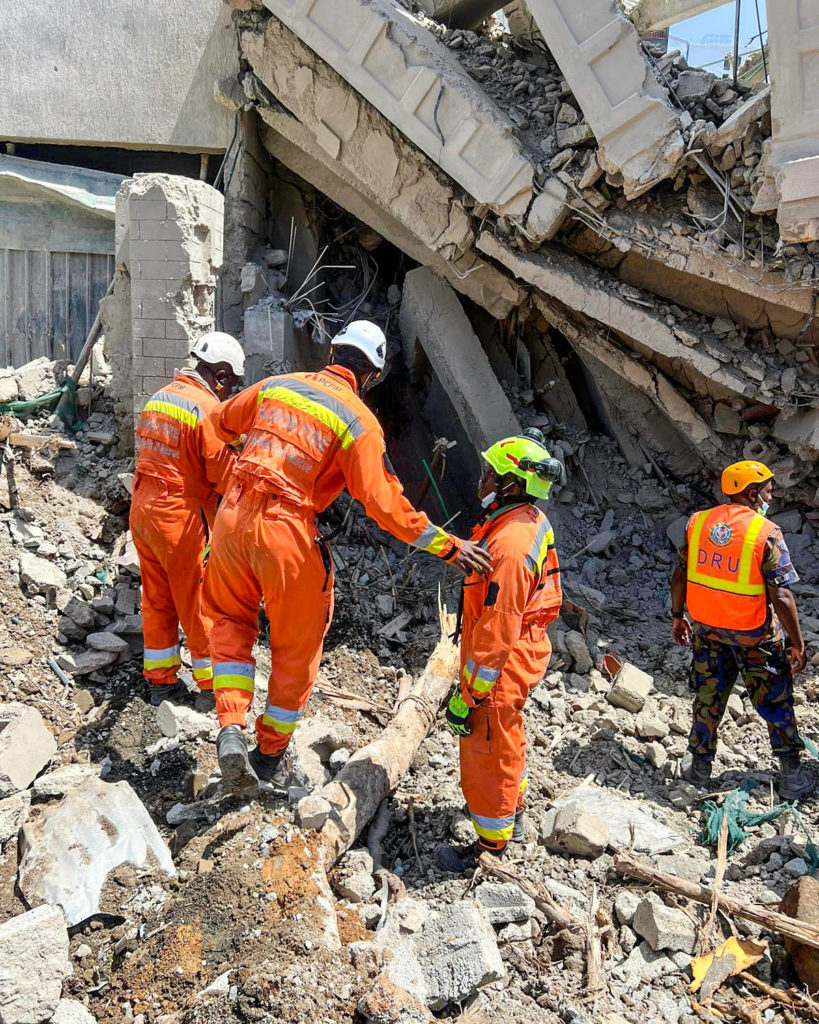
The launch marks the transition from capacity-building to full operational readiness of a specialised USAR team, capable of responding to complex urban disasters, including building collapses and large-scale emergencies.
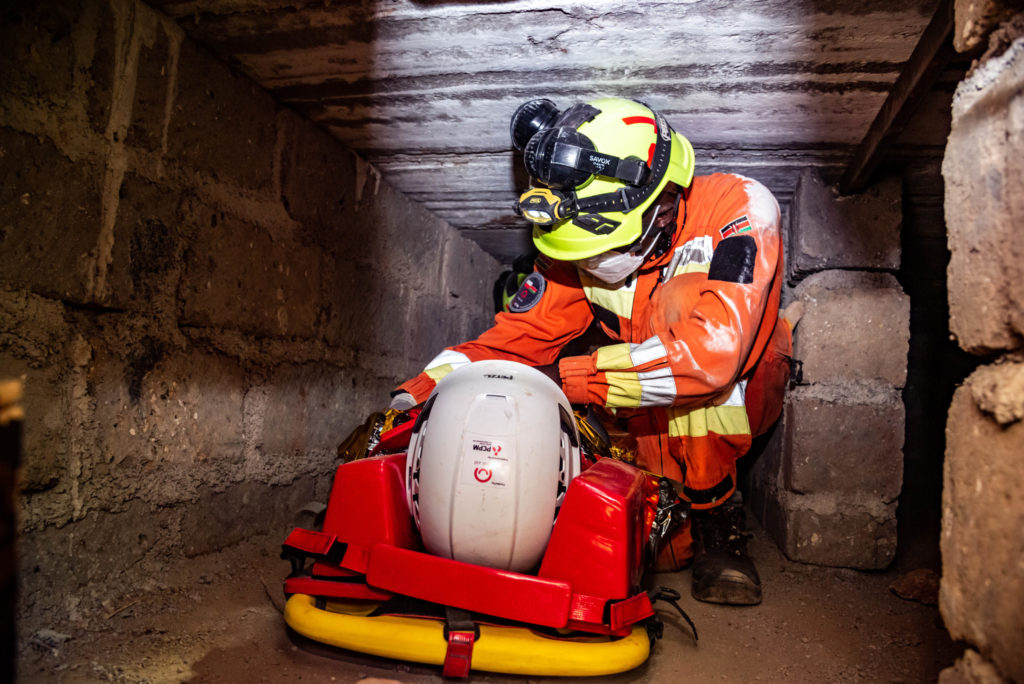
Urban Search and Rescue (USAR) refers to highly specialised operations involving the location, extrication and stabilisation of victims trapped in collapsed structures or other complex urban environments. In Kenya’s rapidly urbanising context, where construction-related incidents are becoming more frequent, such a capability is essential for improving survival rates and ensuring an effective, coordinated emergency response.
The USAR capability is the result of long-term cooperation between Kenya and Poland, made possible through sustained support from Polish Aid, focused on building a modern, professional and sustainable fire and rescue system. Since 2016, Polish experts and instructors have been working with Kenyan partners to strengthen technical skills, operational standards and training systems, while the Polish Center for International Aid (PCPM) has been active in Kenya since 2014, supporting the development of the fire and rescue sector in close cooperation with national and county institutions.
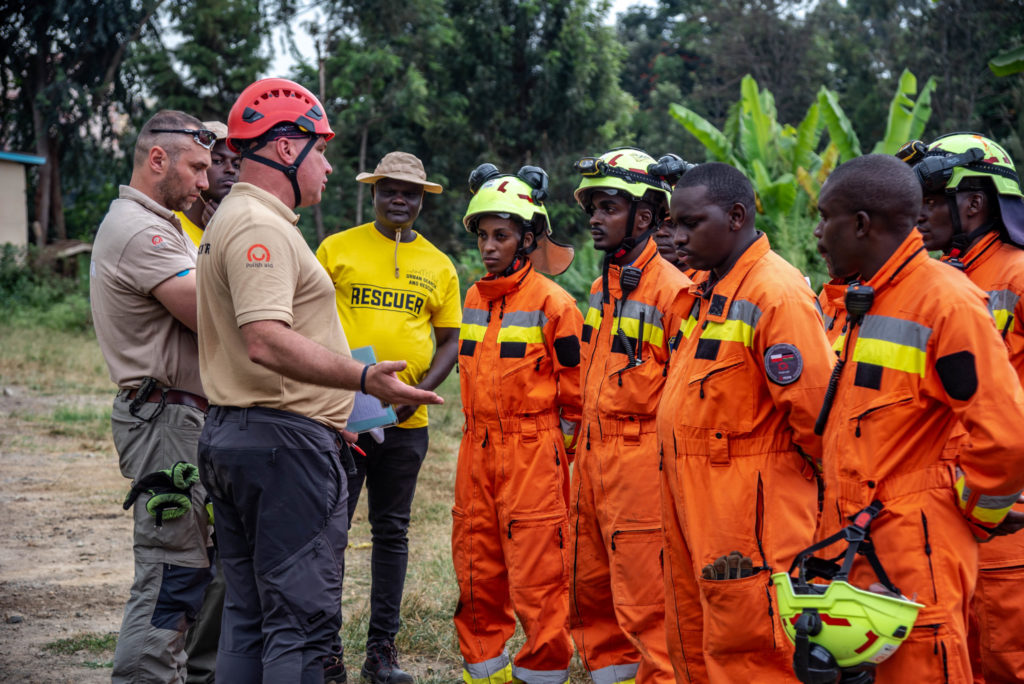
A key milestone in this process was the establishment of the Fire and Rescue Training Center (FIRETRACK) in Kiambu, developed with Polish support between 2018 and 2020 and now serving as a national hub for firefighter training. As a certified training institution, FIRETRACK has introduced competency-based curricula, professional certification pathways and modern training infrastructure, significantly advancing the professionalisation of Kenya’s fire and rescue services.
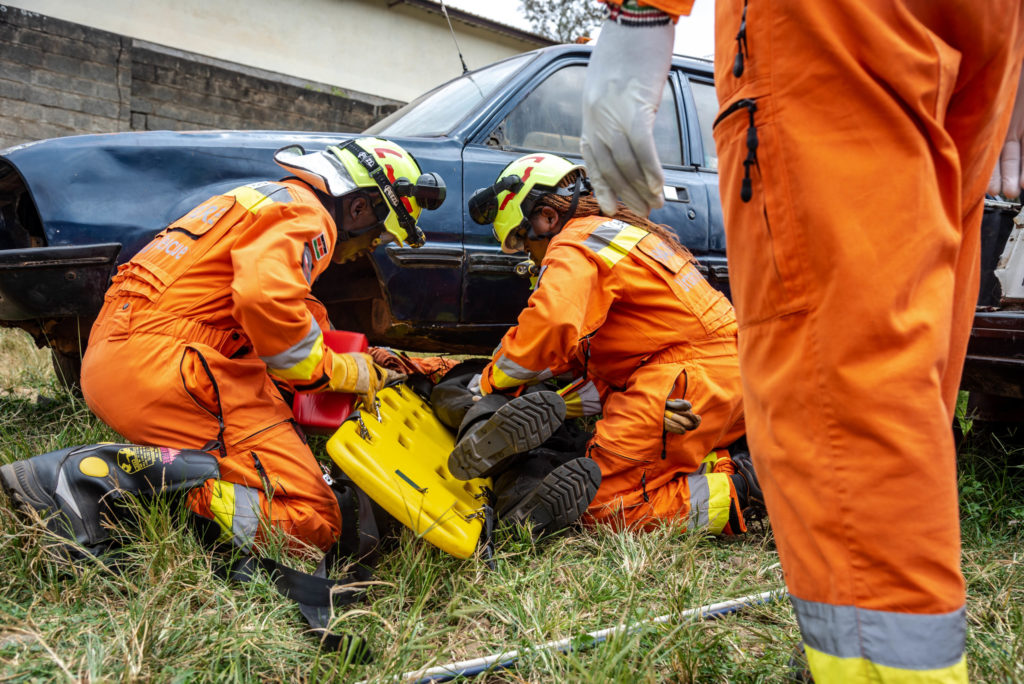
Within the current project (2024–2026), this long-term investment has translated into the creation of a specialised USAR capability. To date, 75 members of the USAR team from NDMU and Kiambu and Nairobi County Fire Brigades have been trained, alongside 21 First Responders from seven counties. An additional 180 First Responders are planned to be trained in the coming months. Importantly, 45 rescuers have already received National Level 4 certification, confirming their advanced professional qualifications.
The project has also delivered critical infrastructure and equipment necessary for real-life operations. This includes a state-of-the-art USAR drill yard at FIRETRACK – currently the only facility of its kind in East Africa – as well as specialised rescue tools, logistics systems and dedicated storage facilities ensuring operational readiness.
The official launch marks the achievement of operational capability, while the development process continues. Throughout 2026, the USAR team will further strengthen its readiness through advanced training modules and multi-agency coordination drills, aimed at improving cooperation between all involved services and ensuring effective joint response in real emergency scenarios.
The importance of building such a capability is already clearly visible in practice. In 2026 alone, Kenya has experienced multiple building collapse incidents in Nairobi and other parts of the country, highlighting the urgent need for specialised rescue response. Trained members of the Nairobi–Kiambu USAR team have already been deployed in real emergency situations, where their newly acquired skills and equipment proved critical in rescuing victims trapped under collapsed structures, contributing to saving at least 20 lives during recent rescue operations.
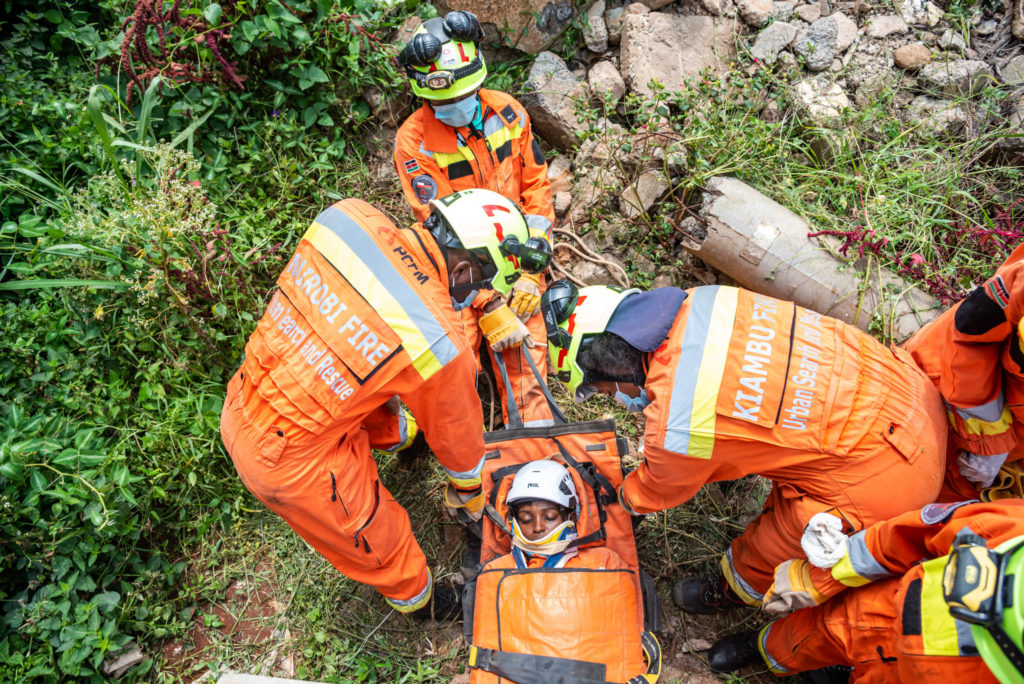
These real-life deployments demonstrate that the investment in training, equipment and coordination – enabled by Polish development funding – is already delivering tangible results. The USAR team is not only trained – it is actively responding to emergencies and contributing to saving lives, while continuing to further strengthen its capabilities.
Beyond technical achievements, the programme has already demonstrated strong impact. Training evaluations show very high satisfaction levels (average 4.65/5), with over 90% of participants confirming that the acquired skills are directly applicable in real rescue operations. Participants also report a significant increase in confidence and operational readiness.
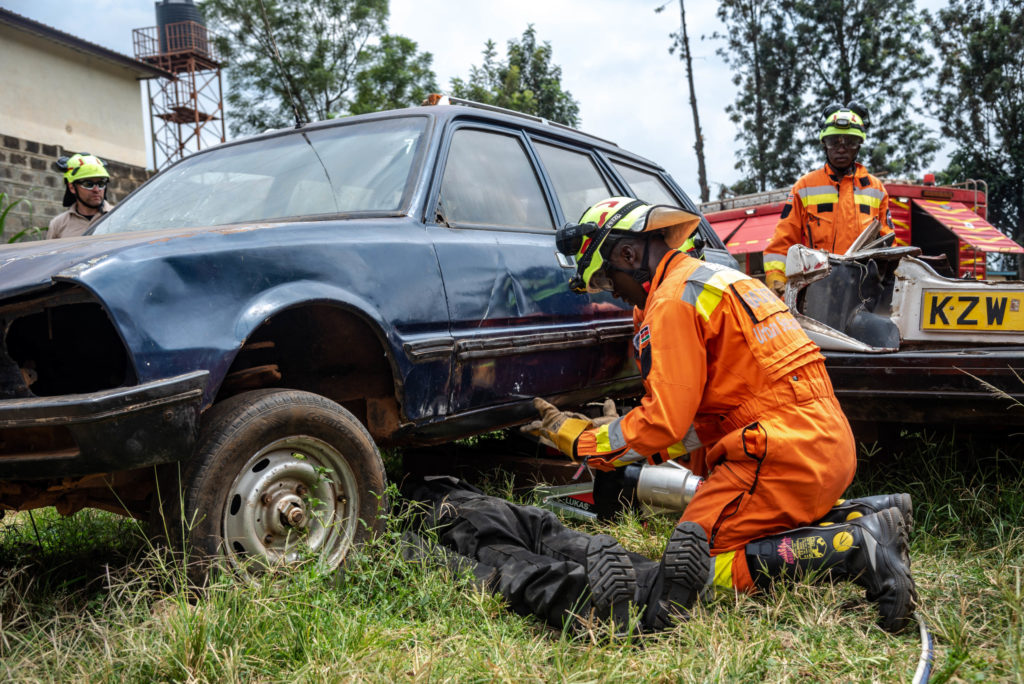
“The establishment of a national USAR capability is a major milestone for Kenya. It significantly strengthens our ability to respond to complex urban emergencies and to protect our citizens in situations where every minute matters. At the same time, it positions Kenya as a regional leader in disaster response. Other countries in the region can look to this model as an example of how to build an effective, coordinated and professional rescue system. Continued joint trainings and coordination exercises will ensure that this capability keeps evolving and remains fully effective in real-life operations,” said Dr. Ochieng, Director of the National Disaster Management Unit (NDMU).
The newly established Nairobi–Kiambu USAR team is now operational, already deployed in real incidents, and ready for further response, representing a major step forward in Kenya’s ability to respond to complex disasters and protect lives in high-risk urban environments.
Watch our video about USAR Team here:


