

PCPM, together with TaiwanICDF, is helping Ukrainian firefighters
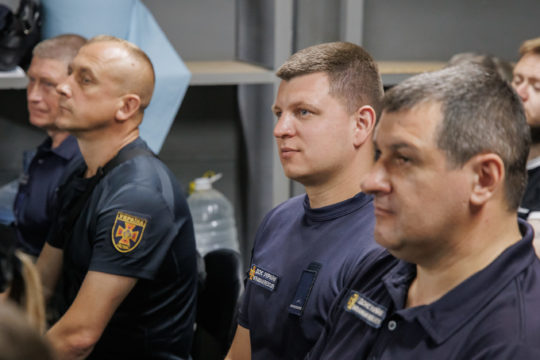
Five years of full-scale war in Ukraine have fundamentally redefined the concept of emergency response. In a country where critical infrastructure is being systematically destroyed, emergency service personnel have become not only the last line of defense for civilians but also direct targets of attacks. Under conditions of extreme strain on the system, is it possible to build a structure capable of withstanding the toughest challenges? Thanks to the Polish Center for International Aid (PCPM) and the support of Taiwan ICDF, Ukrainian emergency services now have that opportunity.
Rescuers Under Fire
In Ukraine, the line between rescuer and victim no longer exists. Personnel of the State Emergency Service of Ukraine (SESU) are no longer responsible solely for firefighting. Their daily reality includes technical rescue operations under fire and the disposal of unexploded ordnance.
During the war, the State Emergency Service of Ukraine has suffered tragic losses: more than 100 personnel have been killed in the line of duty, and 430 have been injured as a result of direct attacks.
Many injured SESU officers who, moments earlier, were pulling people from beneath the rubble, become patients themselves. They are often referred to the PCPM-operated MEDEVAC HUB, from which they are transferred for medical treatment across Europe.
This is precisely why advanced emergency medicine training based on ALS (Advanced Life Support) and TECC (Tactical Emergency Casualty Care) standards is not merely an additional qualification it is a matter of survival.
New Equipment
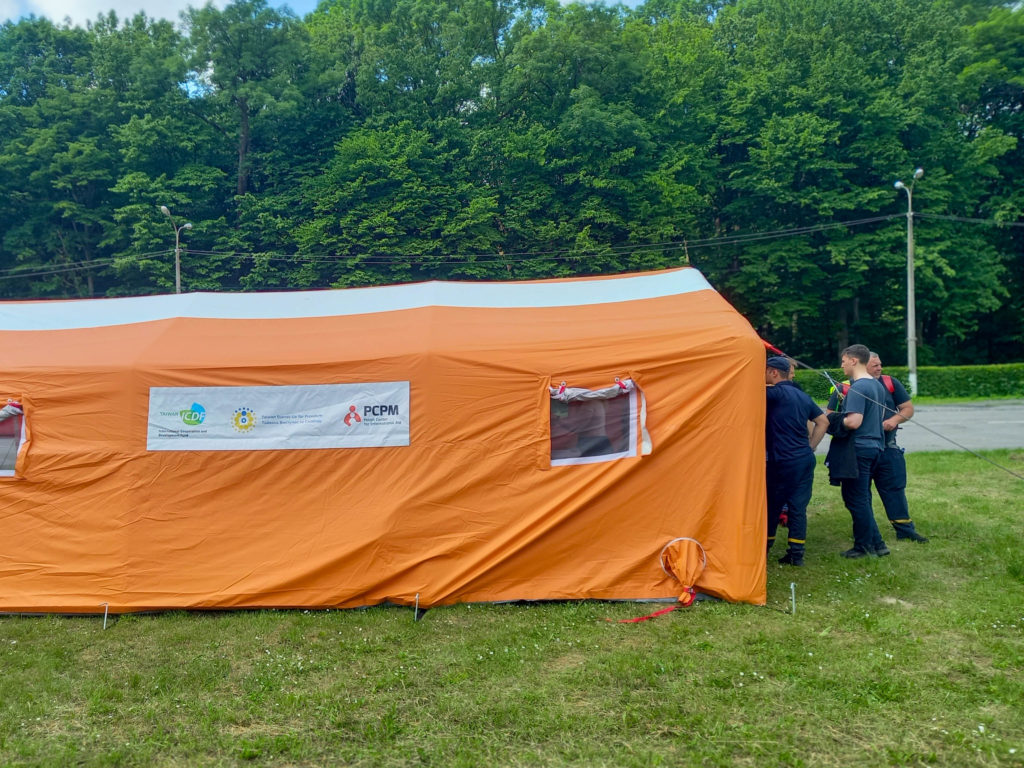
A key component of the project is the provision of professional medical triage kits to 10 SESU regional headquarters and the Lviv State University of Life Safety.
These are not simply medical bags but comprehensive systems that include pneumatic tents and complete logistical support, enabling the establishment of mobile casualty triage centers at any mass-casualty incident site.
Training centers in Lviv and Vinnytsia will be equipped with modern training equipment, including:
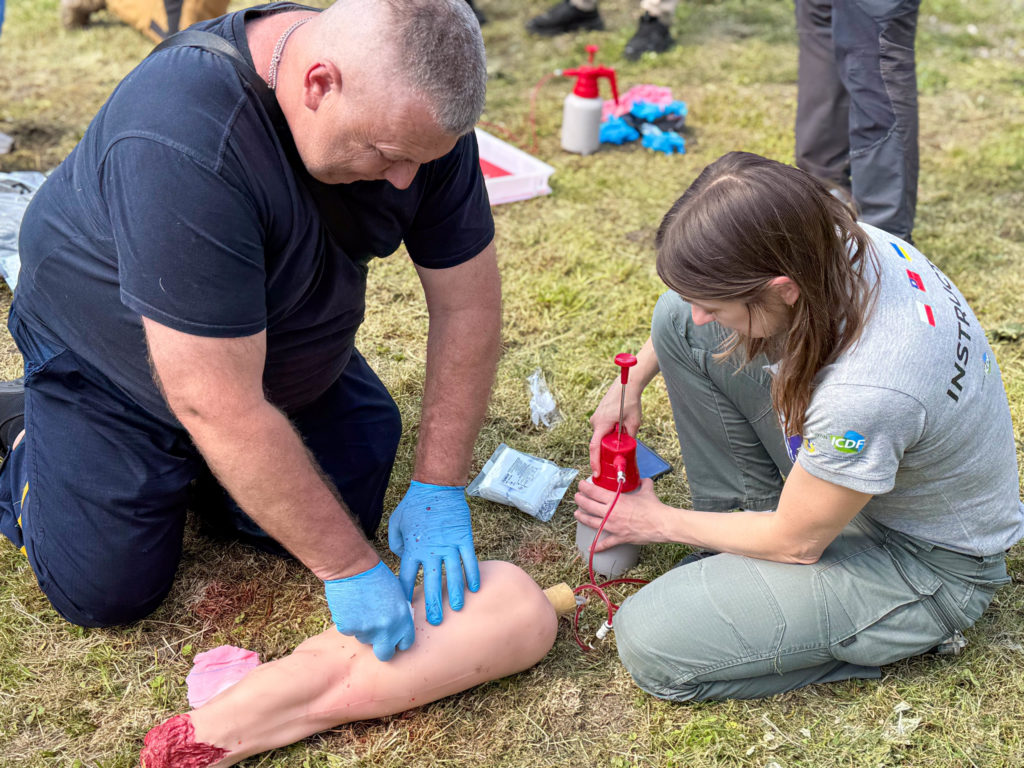
- Hemorrhage and wound simulators, allowing trainees to practice controlling massive bleeding under combat-stress conditions;
- ALS mannequins and intubation training mannequins, enabling the development of advanced medical skills;
- Advanced infant and pediatric simulators, essential for training in the treatment of the youngest victims of bombardments.
As a result, rescuers can train in conditions that closely replicate real-life incidents, helping to build the automatic responses required when lives depend on seconds.
– The project was designed to reach all of Ukraine despite the ongoing fighting,” says Paweł Jessa, the project coordinator.
As he explains, “a safe-haven training model has been adopted training sessions are conducted in safer regions of western Ukraine, such as Lviv and Vinnytsia, where rescuers working directly in frontline areas are temporarily deployed for instruction.”
In June, a four-week training session concluded, during which a total of 94 firefighters and medical personnel were trained.
– Our goal is to train approximately 300 firefighters and medics. From among them, we select the most experienced and highly qualified individuals to complete an advanced course so that they can later become trainers themselves and provide instruction within their own units,” says Paweł Jessa.
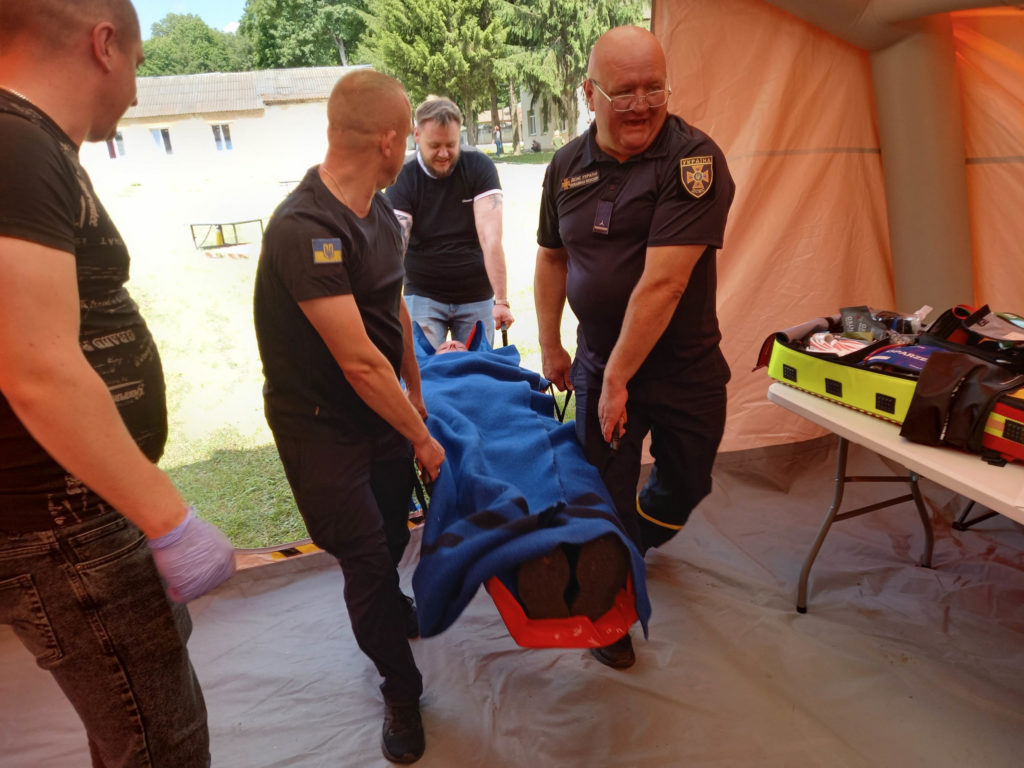
This strategic approach enables knowledge to be passed on without interruption to people who operate daily under conditions where every minute of training can translate into lives saved in heavily damaged cities such as Dnipro or Kharkiv.
A New Generation of Instructors
The greatest value of the project is not the equipment it is the people.
To ensure long-term sustainability, Polish instructors from the PCPM Emergency Medical Team will identify a group of 24 future instructors during the training program. These individuals will complete the Advanced Specialized Rescue Operations Training course.
– These 24 instructors, selected from nearly 300 trained participants, will ensure that this knowledge continues to spread. They will be prepared to independently train future rescuers using the equipment base that has been transferred to SESU in Vinnytsia. Furthermore, each of the 10 SESU units whose personnel participate in the training will receive medical triage kits. These kits include pneumatic tents, triage equipment, first-aid supplies, generators, heaters, and lighting systems, directly enhancing their capacity for immediate response,” says Jessa.
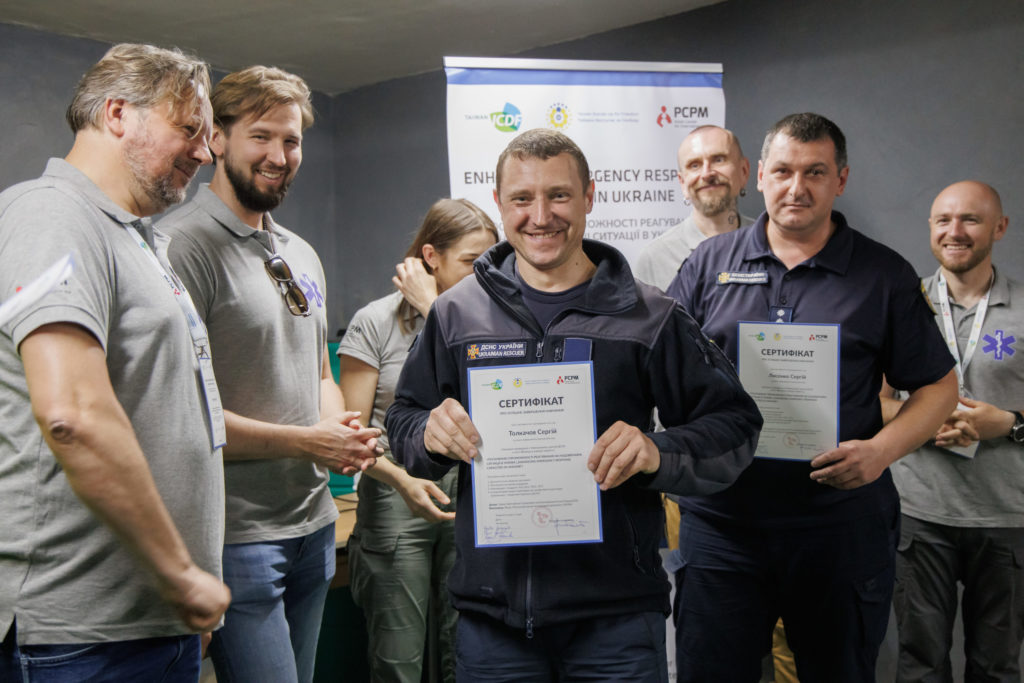
As the project coordinator emphasizes, the training serves another important purpose as well: it offers much-needed relief for overstretched firefighters.
– A large number of firefighters are currently deployed in frontline regions and have limited opportunities to conduct independent training. Our program fills that gap. For the participants themselves, these courses provide a chance to catch their breath, learn something new, and improve their qualifications. It is also a form of psychological recovery,” says Paweł Jessa.
This project therefore goes far beyond delivering equipment or conducting a few rounds of training. Its objective is to establish a sustainable system in which Ukrainian rescuers can train future generations of responders, provide more effective medical care, and operate more safely even under wartime conditions.
In a country where emergency services have themselves become targets of attack, every new skill and every newly trained instructor can directly contribute to saving lives.
Cooperation with Taiwan ICDF
Thanks to financial support from Taiwan amounting to as much as USD 4 million, the Polish Center for International Aid (PCPM) carried out extensive humanitarian assistance activities in Ukraine through the third quarter of 2024.The projects covered a wide range of regions from Kharkiv and Mykolaiv oblasts, through Kherson and Poltava Oblast (including the city of Poltava), to Lviv, Truskavets, and Sumy Oblasts (including the city of Trostianets).
The Foundation’s activities focused on providing practical, tangible assistance to those most affected by the war.
Support for the Ukrainian fire and rescue service is the latest joint project undertaken by PCPM and Taiwan ICDF.


