

Psychological Support as part of building a sustainable USAR Team in Kenya
Building collapses usually make headlines as brief news updates: the number of victims, the duration of the operation, the equipment used. Much less attention is paid to what happens in between – to the people who spend long hours working in the rubble, making decisions under enormous pressure, and trying to remain calm in situations where every mistake can cost lives or take away families’ last hope of finding their loved ones.
That is exactly what unfolded last week in Kenya. In Ngong, Kajiado County, two eight-story buildings under construction collapsed. Day and night, the debris was searched by Nairobi’s USAR teams – units previously trained by Polish instructors with the support of the Polish Aid programme of the Ministry of Foreign Affairs of the Republic of Poland. The operation continued without interruption because people could still have been trapped beneath the ruins.
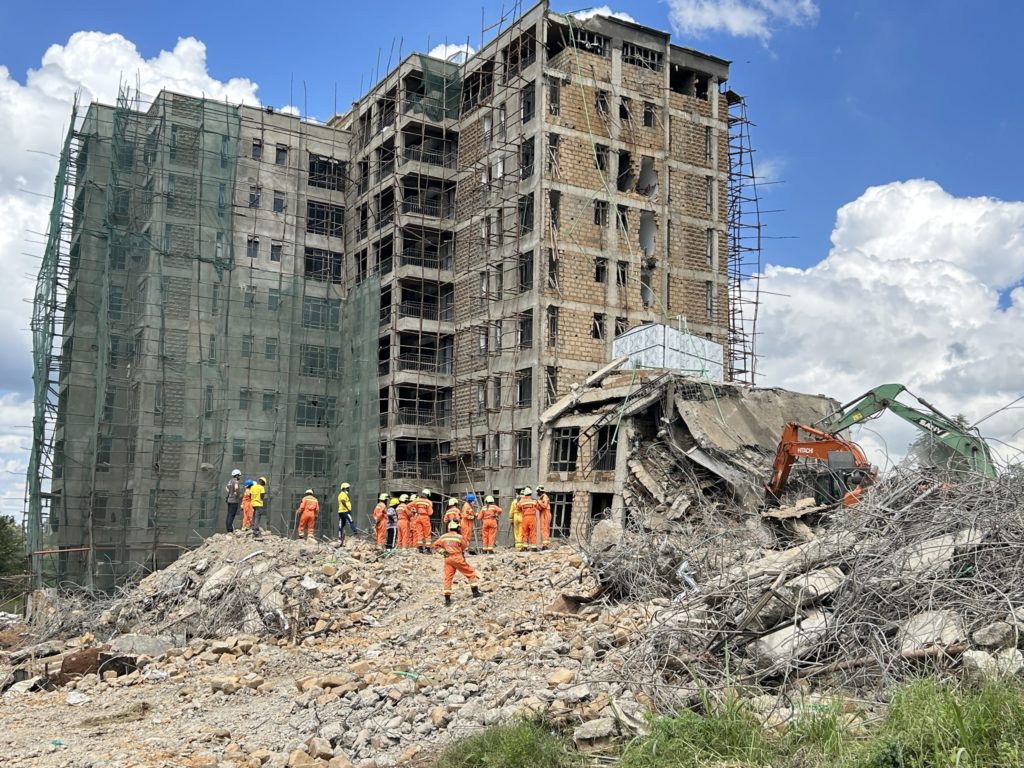
Eventually, rescuers reached an area where construction workers were believed to have been staying. “USAR firefighters dug down to a mattress. Witness statements indicated that mattresses were only located in the room occupied by construction workers,” local media reported. The collapse of one of the buildings claimed at least four lives. Polish instructors observing the work of the Kenyan rescuers were also present at the scene. For many hours, it was a dramatic race against time.
The rescue operation following the collapse in Ngong became a real test. It was no longer about exercises or verifying theory in controlled conditions. What the USAR rescuers had previously developed during training sessions with PCPM instructors now had to withstand the reality of exhaustion, stress, and direct confrontation with danger. It is in moments like these that it becomes clear whether a rescue system truly works or only exists on paper.
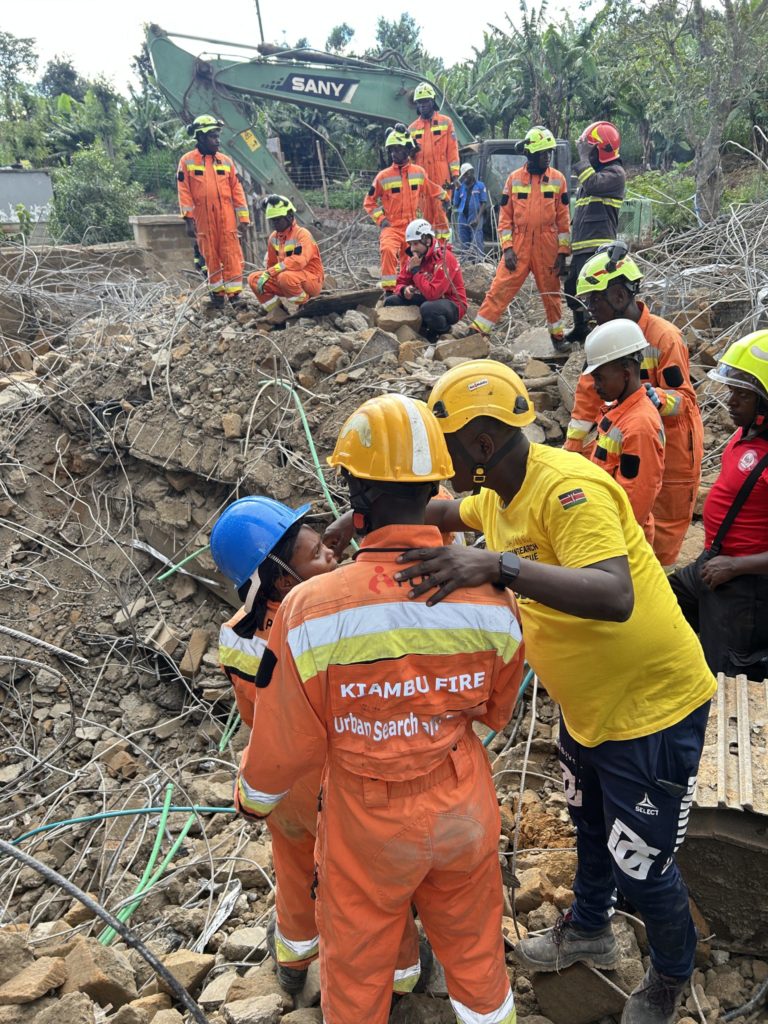
“Kenyan rescuers worked for several days in difficult conditions, under time pressure, fatigue, and immense responsibility. All recovered victims were brought out from the rubble. This means a great deal to their families – and equally to the rescuers themselves,” says Albert Kościński, fireman and instructor from PCPM.
For those involved in training and mentoring the teams, one moment was particularly meaningful: seeing months of transferred knowledge come back into practice – in the way work was organised, communication flowed between teams, and decisions were made during the most difficult moments.
“I saw people who only recently had been practising procedures during training, and who were now applying them during a real building collapse. Calmly, responsibly, and as a team. This operation also demonstrated something very important: rescue work does not end with equipment, techniques, and procedures” says Kościnski.
At the same time, the events in Kenya highlighted an issue that for years received far too little attention in rescue work. Even the best-trained rescuer is not unaffected by what they witness and experience during such operations.
Preparing teams from a technical and operational perspective so they are ready to respond quickly and effectively is the foundation of every training programme. Equally important, however, is caring for the wellbeing of people who are regularly exposed to stress and traumatic experiences. This is a key element in preventing professional burnout, but also an essential form of support – not only by equipping participants with the knowledge and skills needed to help others, but also by providing them with tools to take care of themselves. After all, every rescuer knows that it is impossible to help others effectively without first ensuring one’s own safety and wellbeing.
“This operation also made one thing very clear: building rescue capacity does not end with equipment and training. A rescuer who spends several days working in rubble, among victims, and under intense psychological strain also needs structured support once the operation is over” – concludes Rafał Własinowicz, Head of the Fire and Rescue Training Department in Kenya.
Working around victims, enduring days of exhaustion, and carrying emotional tension do not end when responders leave the disaster site. It is becoming increasingly clear that a modern rescue system must care not only about operational effectiveness, but also about the people carrying out these operations. This is why the operation in Ngong may prove important not only because of the rescue effort itself, but also because of the shift in thinking about support for rescue teams.
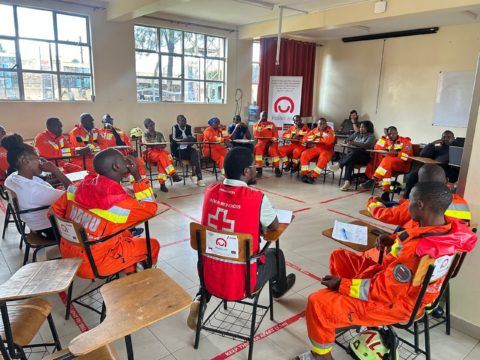
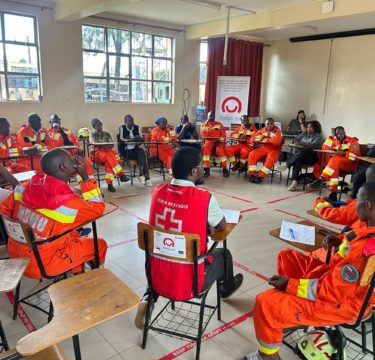
In response to this need, the PCPM team, which had been training and supporting USAR rescuers for months, organised psychological support sessions and group meetings. They created a space where rescuers could share experiences and openly talk about emotions that often follow difficult operations.
The meeting was received very positively. Although its details will remain within the group, one thing is certain — this kind of support is deeply needed. Mental health is easy to overlook in everyday life, including in demanding professions where the focus is primarily on the health and lives of others.
The operation in Ngong demonstrated that modern rescue work does not end in the rubble. What happens to rescuers once the operation is over is equally important.


