Resilience Is Built Step by Step
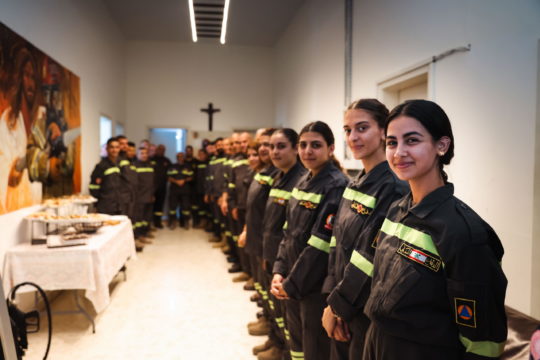
For more than a decade, PCPM has been strengthening Lebanon’s civil defence step by step. Small changes, accumulated over the years, have significantly improved the service’s capacity. Training programmes, personal and heavy equipment, modern fire stations and solar-panel installations have all contributed to building resilience in Lebanon. In a country facing overlapping crises, an effective civil defence service is often the last line of protection.
Lebanon has been balancing on the brink for decades, grappling with overlapping crises that would bring many stable Western systems to their knees. A catastrophic economic collapse, which wiped out 98 per cent of the value of the local currency, the mass arrival of refugees, the COVID-19 pandemic and the devastating Beirut port explosion have created a landscape of permanent instability.
How can resilience be built in a country where basic public services have almost ceased to function – resilience that can withstand the escalation of armed conflict in 2024 and the latest regional tensions? The answer lies in the Humanitarian-Development-Peace Nexus. This approach rejects the simple division between saving lives and supporting long-term development. Instead, it combines the two into a coherent strategy for strengthening the state and society from within. The nexus approach is designed to connect humanitarian, development and peacebuilding efforts in order to reduce vulnerability, strengthen local systems and address the underlying causes of crises.
Solar-powered fire stations – a forced innovation
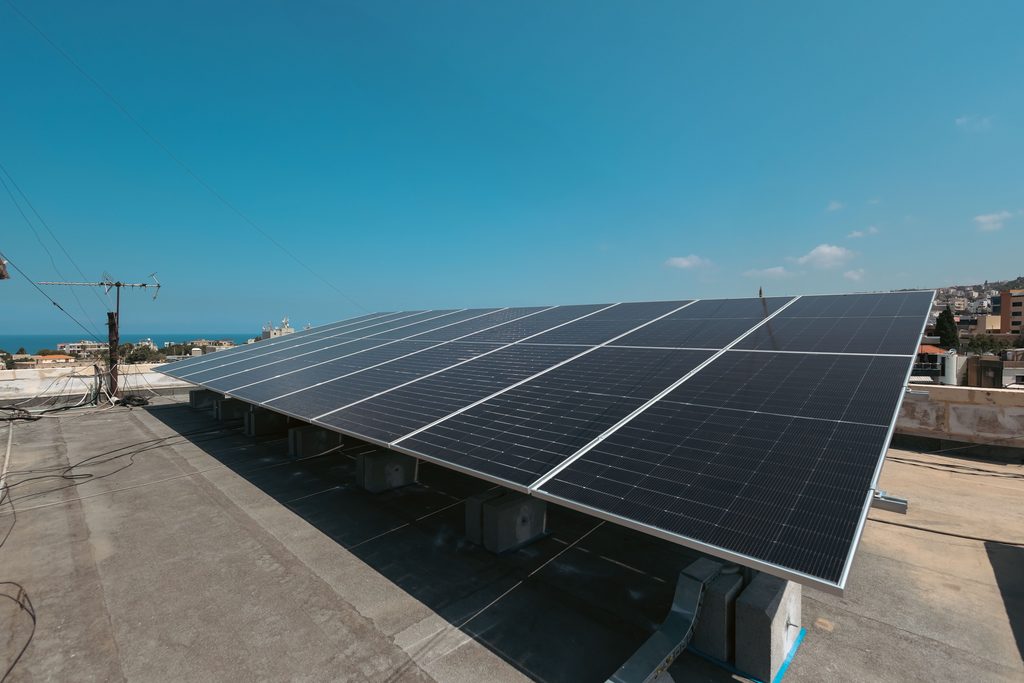
In Lebanon, a lack of electricity is not merely an inconvenience- it is an existential threat. When the public grid fails, Lebanese Civil Defence stations lose the ability to receive emergency calls. In densely populated neighbourhoods, this can be a matter of life and death. That is why, for PCPM, installing solar systems at stations such as Bourj Hammoud, Bourj el Barajneh, Bachoura, in the Beirut metropolitan area, and Jdeideh was never simply an environmental project. It was an operational priority, ensuring that rescuers could continue working at night.
The strategic importance of this solution goes beyond energy production. At the Bourj Hammoud station, solar panels generate 19,000 kWh of clean energy each year. This not only reduces CO₂ emissions by 15 tonnes, but, above all, saves 5.7 tonnes of diesel annually. This independence is a foundation of the “peace” component of the Nexus model: it strengthens citizens’ trust in local institutions that remain among the few services still functioning in the darkness of crisis.
Equipment alone does not guarantee an effective emergency response. It must be part of a broader system that includes trained personnel, suitable infrastructure and the ability to maintain operational readiness during a prolonged crisis.
“Thanks to development initiatives, several million people have gained better access to essential services. One example is the Lebanese Civil Defence station in Borj El Barajneh, in the southern suburbs of Beirut, whose area of responsibility covers the needs of approximately one million people. Another is the rehabilitation of a road in Kobayat, an important regional link towards the Bekaa Valley,” says Rana Gabi, PCPM’s Director of Middle East Projects.
“Kobayat itself is a good example of an approach that combines development and community resilience. PCPM has implemented projects there worth approximately USD 3 million in total. They included the construction of a bridge, the development of approximately 8,000 metres of sewerage networks, the construction of tanks at a wastewater treatment plant, rehabilitation of the plant, support for Lebanese Civil Defence infrastructure – including a fire station and improving access to drinking water, among many other activities,” Gabi adds.
It is worth noting that Lebanon’s Civil Defence is a service more closely resembling the fire service in Poland, especially now that Poland’s new Civil Protection and Civil Defence Act has assigned additional responsibilities related to protecting the population.
Systemic change
When the first staff members of the Polish Center for International Aid arrived in Lebanon in July 2012, the country was slowly beginning to feel the effects of one of the most complex humanitarian crises in the modern world. The arrival of hundreds of thousands of refugees fleeing the war in Syria placed enormous pressure on the impoverished Akkar region in the north. It was there, in the shadow of a war unfolding only a few dozen kilometres away, that PCPM established broad cooperation with local authorities, including the Lebanese Civil Defence. PCPM quickly understood that in a country with an extremely weak central government, local and decentralised emergency services were the foundation of security for thousands of people.
That same year, PCPM began its long-term cooperation with the Polish Aid programme of the Ministry of Foreign Affairs of the Republic of Poland. The partnership continues to this day. With this support, the Foundation has helped strengthen Lebanon’s civil defence across the country for more than a decade.
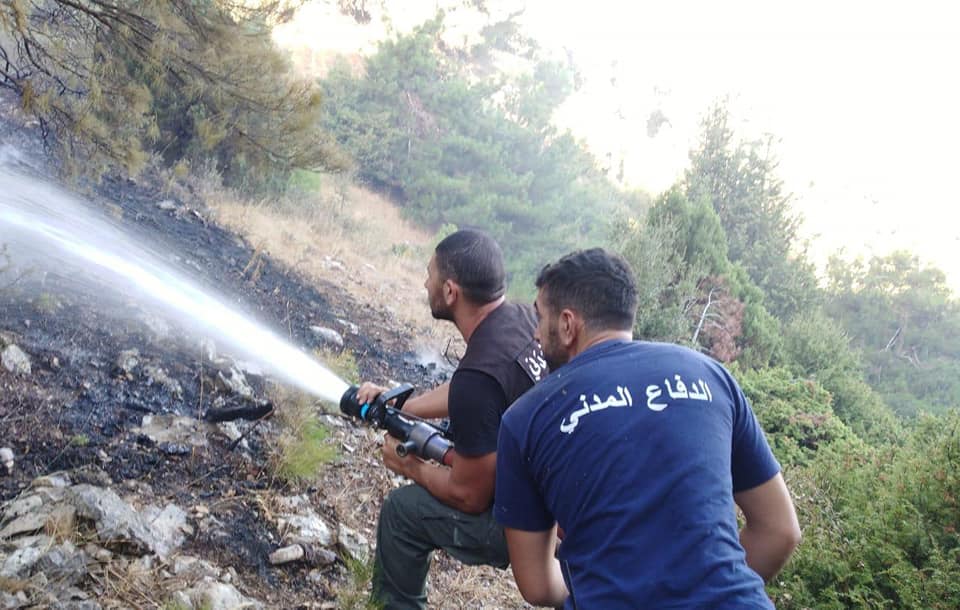
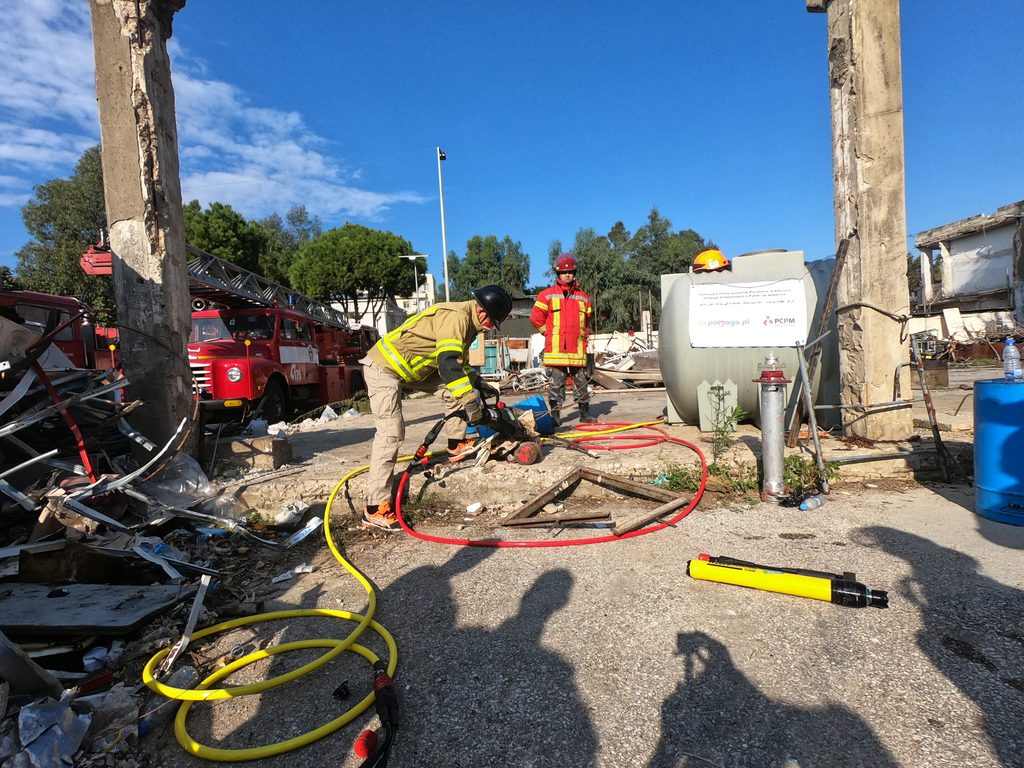
In autumn 2013, Polish instructors conducted the first specialised training sessions in firefighting and road rescue for local Civil Defence volunteers in the mountainous town of Kobayat in Akkar. Over time, this initial exchange of expertise developed into a systemic resilience-building programme.
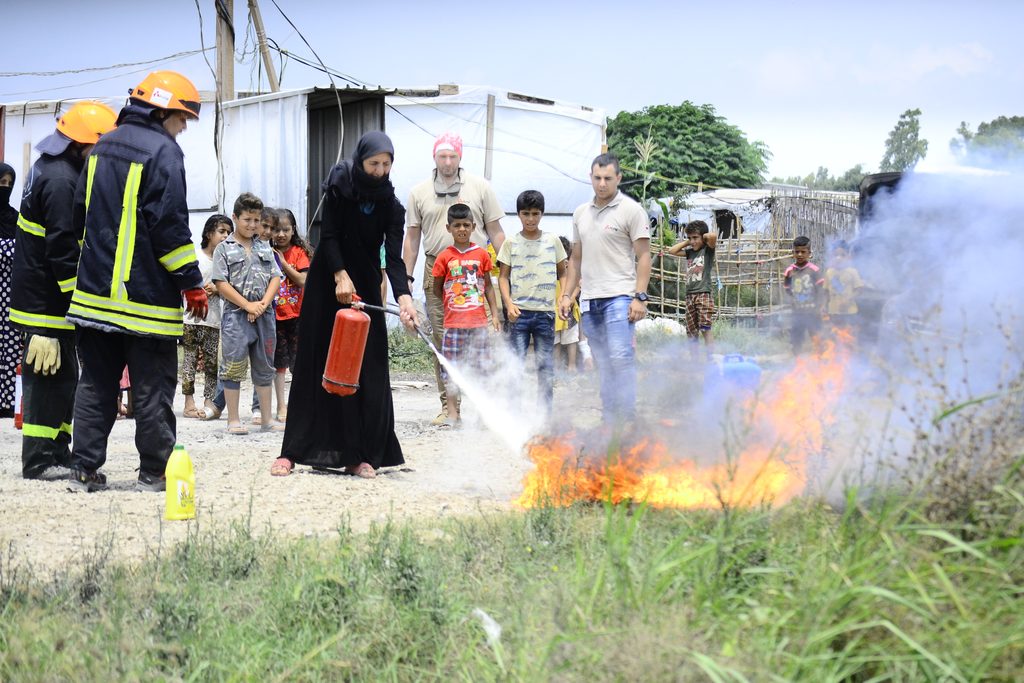
One of the most serious challenges was the risk of fires in makeshift shelters in Syrian refugee camps. Together with the Civil Defence, PCPM installed basic stations equipped with firefighting gear, enabling residents to tackle fires at an early stage. Lebanon’s Civil Defence is decentralised, which meant that crews often arrived too late when a fire broke out in a refugee camp. The structures themselves – made of wood and numerous tarpaulins – were highly flammable, allowing fires to spread rapidly.
Between 2016 and 2019, the Foundation’s activities covered more than 250 informal settlements in Akkar, the area around Tripoli and Arsal, reaching approximately 38,000 people. It installed 350 firefighting kits and supplied fire extinguishers, while also ensuring their maintenance. In addition, 1,700 people received training on reducing fire risks in the 250 settlements.
The following years brought a rapid expansion of cooperation, combining education with major equipment and infrastructure support. In 2017, Kobayat received its first specialised rapid-response vehicle: a mountain Toyota Hilux equipped with pumps and water tanks, capable of reaching the most difficult forested areas. A dedicated deep well was also drilled there to ensure that firefighters had access to water.
In 2018, PCPM delivered another off-road vehicle to the Abde and Bebnine stations, modern operational containers for firefighters in Arsal and specialised rope-rescue equipment for the station in Zahle. Throughout this period, Lebanese rescuers continued to receive training from Polish experts.
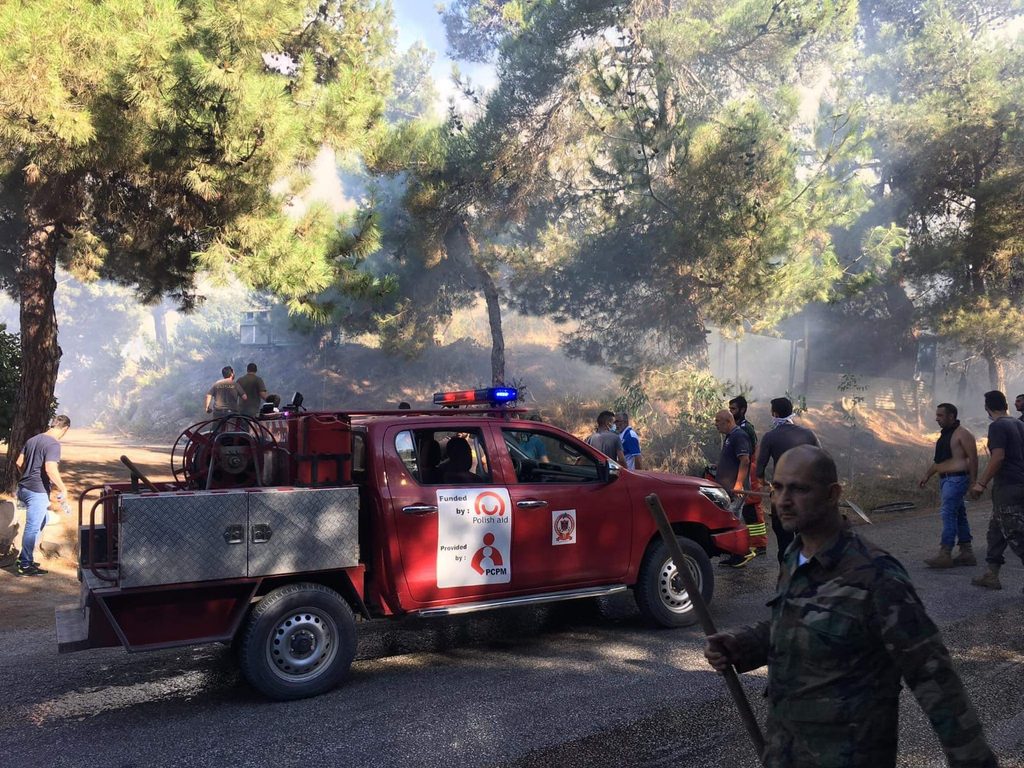
PCPM transferred the lessons learned in northern Lebanon to other parts of the country. The conclusion was clear: in a country where the central government is highly ineffective, local services carry the greatest responsibility for helping civilians.
The PCPM Foundation began by renovating and furnishing the Cola station in Beirut. It also funded firefighting masks and protective suits for rescuers in Tripoli and Kobayat, as well as the distribution of hundreds of fire extinguishers in Akkar’s Sahel region and in schools in Arsal.
The explosion
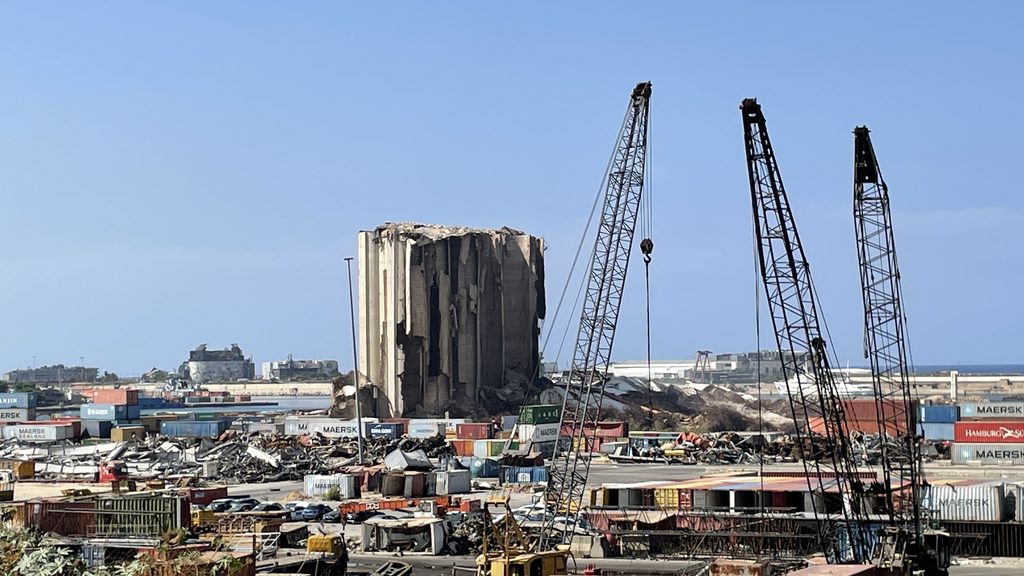
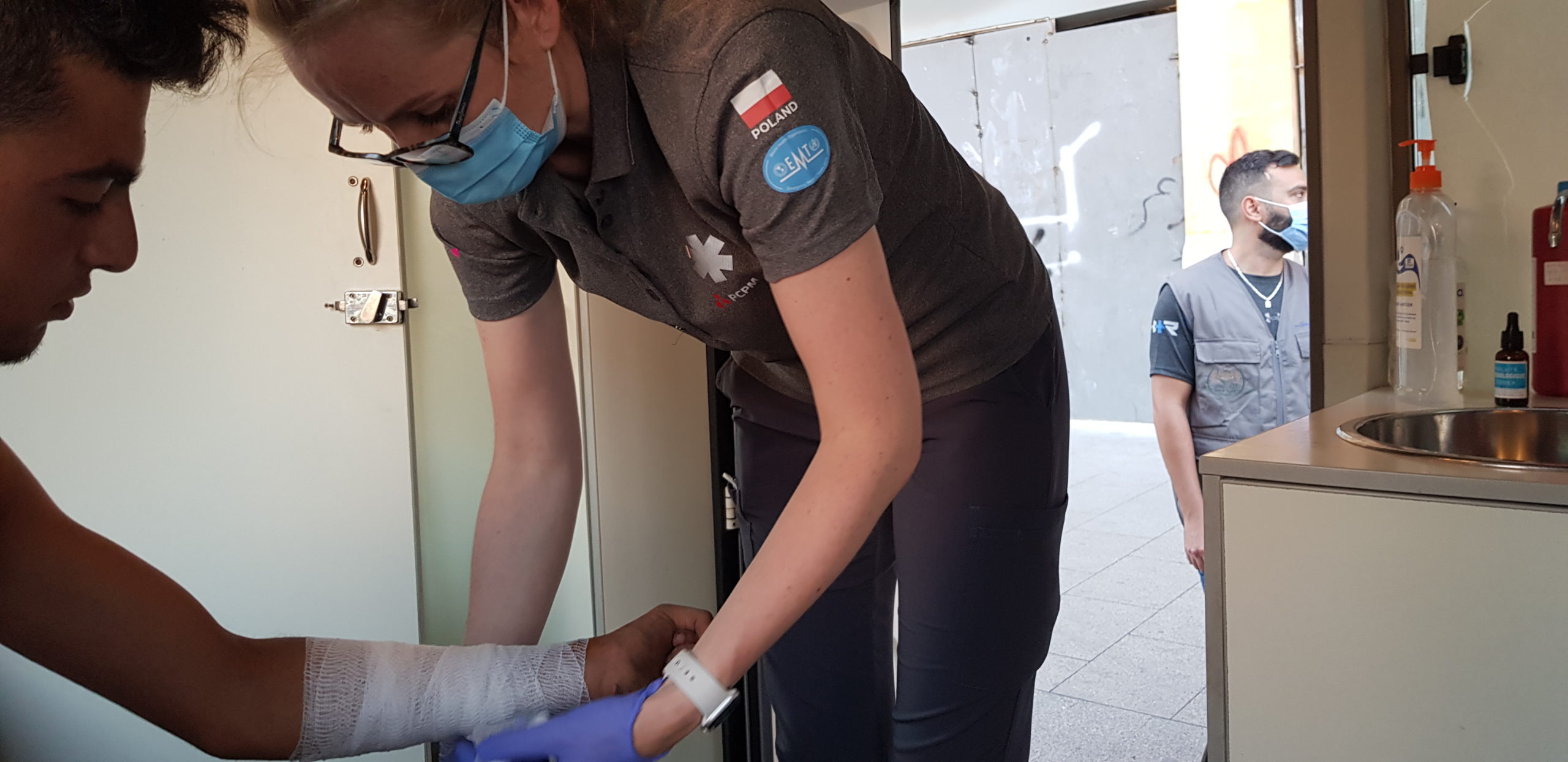
In addition to Lebanon’s immense economic crisis, 2020 was marked by the devastating explosion in the port of Beirut. The day after the disaster, PCPM’s Emergency Medical Team arrived in the Lebanese capital. Together with Polish firefighters, they were among the first foreign responders to assist at the scene.
Alongside providing direct medical assistance, PCPM immediately supported Beirut’s firefighters by delivering essential parts for the compressor used to refill SCBA oxygen cylinders. Without them, entering toxic post-explosion smoke would have been impossible.
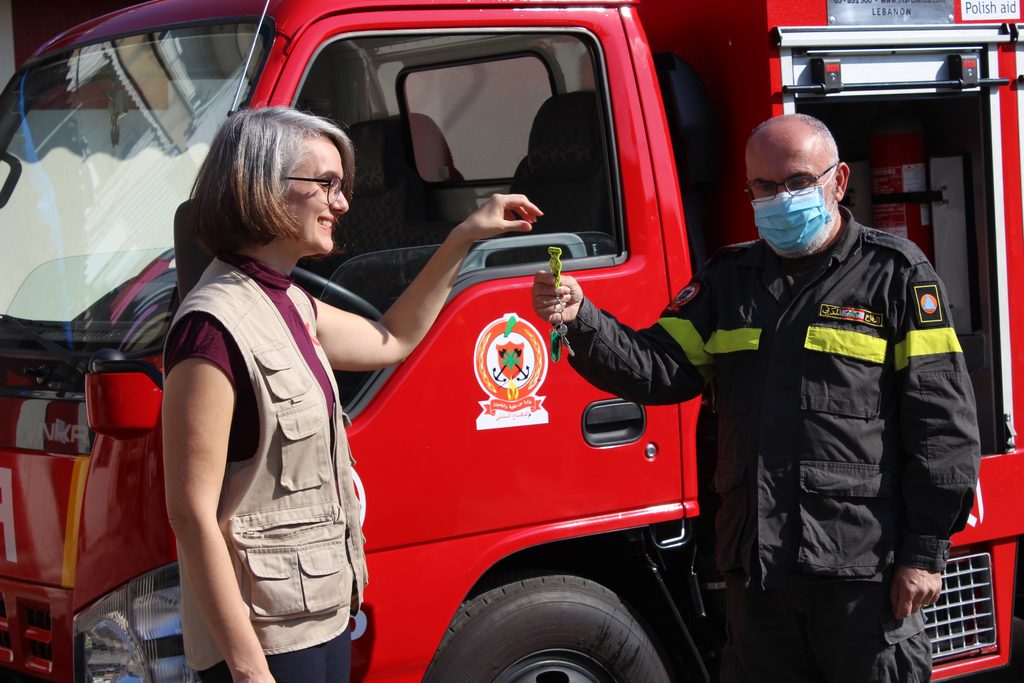
At the same time, PCPM delivered a heavy fire engine to fight fires in the densely built urban area of Bourj Hammoud and carried out a full renovation of the local fire station. In 2021, as part of the European Union-funded MASAR project, firefighters in Akkar received hundreds of portable tools, including fire beaters and backpack pumps, headlamps, pruning shears and other equipment needed for their daily work.
When the power fails
In the following years, Lebanon’s Civil Defence faced another challenge. The service was chronically underfunded and lacked equipment, while most rescuers – who worked as volunteers – received no financial compensation or adequate gear. The economic crisis of 2021–2022 made the situation even worse. Fuel, which is used to generate most of Lebanon’s electricity, became increasingly scarce across the country. There was often no electricity even to charge a phone, and when charging was possible, the telecommunications network was severely affected by power shortages.
The service faced the prospect of paralysis: without electricity, communication systems and water pumps could not operate. PCPM therefore redirected its efforts towards making civil defence units more self-sufficient.
The Foundation installed advanced photovoltaic systems on the roofs of key stations in Bourj Hammoud, Bachoura and Jdeideh, giving them greater energy independence. At the same time, intensive firefighting training continued, while volunteer firefighters visited residents’ homes to carry out preventive inspections of electrical installations.
In 2024, the station in Sed El Bauchrieh received a solar system and air-conditioning. Modern foam-firefighting equipment was also delivered to the headquarters in Beirut. That year, in cooperation with the Lebanese Red Cross, representatives of 25 municipalities were trained in crisis management and complex urban search-and-rescue operations.
All of this took place amid the outbreak of another devastating armed conflict between Hezbollah and Israel.
The culmination of this long, systematic effort came in 2025. In Kobayat – where PCPM had begun its work twelve years earlier – the Foundation built Lebanon’s first model regional Civil Defence station from the ground up. The facility is fully energy-independent and meets the highest technical standards. A similar solar installation and water-heating system was installed at the station in Beirut’s Borj El Barajneh district.
Lessons from Lebanon
For more than a decade, the PCPM Foundation has supported and continues to support Lebanon. Fifteen years have passed since the outbreak of the Syrian civil war, and since then both Lebanon and the wider world have changed dramatically. In 2022, Ukraine became the target of a full-scale Russian invasion, bringing a devastating war to Poland’s immediate neighbourhood.
“PCPM immediately mobilised all its resources to support Ukrainians fleeing the war. Importantly, we were able to act so quickly because we already had extensive experience working with refugees in Lebanon,” says Zofia Kwolek, a member of PCPM’s board.
“The same applies to resilience in the broadest sense. Lebanon continues to be shaken by different crises – from wars and economic problems to the refugee crisis. For years, PCPM has been strengthening the capacity of Lebanon’s civil defence to respond to emergencies. We can now apply these skills and experiences in Poland. By 2026, I think no one has any doubts that as a country and as a society, we must be prepared for different scenarios. That is what strengthens our security,” Kwolek adds.
More than a “fire service”
One of the less obvious outcomes of PCPM’s decade of work in the Akkar region and the Bekaa Valley is the experience of working with refugees – experience that could later be transferred to state programmes in Poland.
When Poland faced Europe’s largest refugee crisis since the Second World War and had to respond to the arrival of refugees from Ukraine, PCPM did not have to improvise. It used the Cash for Rent model and support mechanisms developed in the Middle East.
Lessons learned in Lebanese villages helped PCPM implement solutions through the Together Towards Independence programme, carried out jointly with Poland’s Ministry of the Interior and Administration. The programme supported refugees from Ukraine in becoming self-reliant. In the education sector, PCPM hired more than 2,000 teachers from Ukraine to support Polish schools.
PCPM’s work in Lebanon demonstrates that modern humanitarian assistance should ultimately aim to make itself unnecessary. The real measure of success is not the number of facilities supported, but the moment when a firefighter in Bourj Hammoud can answer an emergency call because the station is independent of the unreliable power grid – and reach the scene in a professional fire engine.
For more than a decade, the Polish Center for International Aid has been strengthening not only Lebanon’s civil defence but also the resilience of the wider society. This kind of support is not meant to be permanent; rather, it creates the stability that matters most. The experience gained in Lebanon is highly valuable and helps improve the planning of potential assistance in Poland.
Because the level of preparedness and resilience we build today will pay off many times over if Poland ever faces a major crisis.