

“The war took our home, and power cuts tried to take what little we had left”
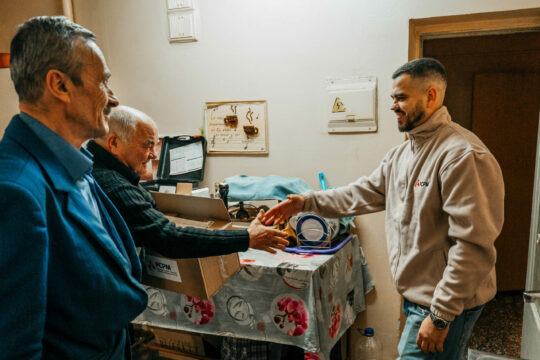
“The war took our home, and power cuts tried to take what little we had left,” says Daria, who fled the outskirts of Kharkiv with her seven-year-old son. For millions of Ukrainians, the coming winter means more than just cold weather. It is a struggle to maintain access to basic services.
- A nighttime attack on 13–14 October left around 600,000 residents of Kyiv without electricity.
- The PCPM Foundation has launched a fundraising campaign to help Ukraine survive the winter.
- Frost can kill just as missiles do.
Autumn 2026 has brought an escalation in Russian attacks on Ukraine’s energy infrastructure. In October, missiles struck all three of Kyiv’s main combined heat and power plants. The attack on the night of 13–14 October left around 600,000 residents of the capital without electricity. Russia is increasingly targeting areas far beyond the front line. According to the UN, in September more than half of civilian casualties were caused by long-range missile and drone attacks reaching towns and cities far from the fighting. The International Energy Agency warns that, despite ongoing repairs, Ukraine may once again face electricity shortages this winter.
The scale of this campaign is well documented. According to the UN, between October 2025 and March 2026, Russia carried out at least 423 attacks on Ukraine’s electricity infrastructure and 74 attacks on heating facilities. Since the beginning of the full-scale invasion, nearly 18,000 civilians have been killed, including 850 children, and more than 55,000 have been injured. Between January and September 2026 alone, 2,570 people were killed and 15,211 injured. The total number of casualties was 59 per cent higher than in the same period a year earlier. Hospitals are also among the targets: the WHO has recorded more than 3,300 attacks on Ukraine’s healthcare system since the beginning of the invasion. In Dnipro, the organisation lost half of its medical supplies intended for approximately 225,000 people living in frontline areas. Russian strikes have also hit the railway network, which has been used to evacuate more than four million people from endangered areas since 2022. The UN confirmed 130 attacks on railway infrastructure between June and September, with more than 500 locomotives damaged or destroyed.
Personal tragedies
Behind the statistics are real families. Hundreds of thousands of them have already lost their homes once and had to start from scratch in unfamiliar cities. Now they must also cope with power cuts. After fleeing Kharkiv, Daria was fortunate enough to be able to work remotely. But even that privilege is gradually becoming a thing of the past. When large-scale attacks on the energy grid began, electricity was unavailable for eight to twelve hours a day, while her income depended on having access to the internet. She moved between so-called “Points of Invincibility”, cafés equipped with generators and petrol stations, charging her laptop whenever an opportunity arose. She cooked meals on a camping stove, and a thermos filled with boiling water became the most valuable item in her home. She and her son built blanket hideouts and read by candlelight so that the boy would not be afraid of the dark.
“I slept with my cat to keep warm”
Iryna fled the Donetsk region in 2014 with her husband, their two sons (later three) and her grandmother. After 24 February 2022, the family was forced to flee once again. They settled in an old guesthouse where, during the first few days, some of the windows did not even have glass. Volunteers managed to provide them with a generator, which proved invaluable during the winter of 2023. Neighbours would come over to charge their phones and boil water so they could at least make themselves a hot cup of tea. “They slept in their clothes, crowded together in one room to keep warm,” while the children were constantly falling ill. Iryna’s husband serves in the Armed Forces of Ukraine and has been wounded.
“Winter is coming, with freezing temperatures, and we have no idea what to expect from the enemy,” the woman says.
Olga, 58, who lives with a disability, first survived the occupation of a village near Kupiansk. In a house without gas or electricity, the temperature never rose above 10°C. She slept with her cat, Dron, because she had heard that animals are the first to sense danger. It was also simply warmer to sleep together. After being evacuated, she cared for her bedridden mother. Whenever the power went out, the modern boiler stopped working, so Olga heated water to fill rubber hot-water bottles and changed her mother’s nappies by torchlight. Sadly, her mother passed away in March. Today, Olga lives alone, with no alternative to gas heating. Her disability pension is not enough to afford solar panels.
“A few days ago, during a power cut, it became so cold inside my home that the hopelessness of the situation even caused me to have nervous breakdowns,” she admits.
For older people, power cuts can be life-threatening
Margo, from Kharkiv, lives with her husband and son in a rented apartment while also paying the bills for their own apartment, which currently stands empty. Their electricity is switched off two or three times a day. Since their heating depends on electricity, their home quickly becomes cold. Their eight-year-old son struggles with online learning, constantly checks the air raid alert app and is afraid of being left alone. The family no longer receives assistance, and the blankets they received four years ago are still in use every winter. Margo asks that, when planning support, people think not only about food but also about lighting, heating, children’s education and rent.
For older people, the sick and those who are bedridden, damaged infrastructure can mean a direct threat to life. Olena, evacuated from Kharkiv, suffered a spinal fracture in a Russian attack. During power cuts, she had to undergo rehabilitation in the dimly lit hospital wards of an unfamiliar city, without working lifts or heating. She lost her husband in the same attack in which she was injured. Svitlana, now over 60, lost her home in Avdiivka, her job and all her photographs. Her entire pension goes towards rent and bills, leaving her forced to cut back on food.
“We no longer have the strength to start over, but somehow, we keep going,” she says.
Winter in Ukraine, where heating, water supplies and hospitals all depend on electricity, can kill without a single weapon being fired. By depriving Ukraine of energy ahead of freezing temperatures, Russia is putting people at risk of dying not only under bombs, but also from hypothermia. All it takes is a broken boiler, frozen pipes or a generator that stops working. A child with an infection in a cold room, a bedridden person without hot-water bottles, a patient without medication or a hospital plunged into darkness: these are not hypothetical scenarios, but the lived experiences of the families described here. Meanwhile, people in need of medical evacuation wait for hours, sometimes days or even weeks.
All the stories shared here end in much the same way: their protagonists are waiting for peace and for their loved ones to return. Until then, everyday life means searching for somewhere to charge a power bank, keeping a torch and spare batteries close at hand, and planning the day around the electricity outage schedule.
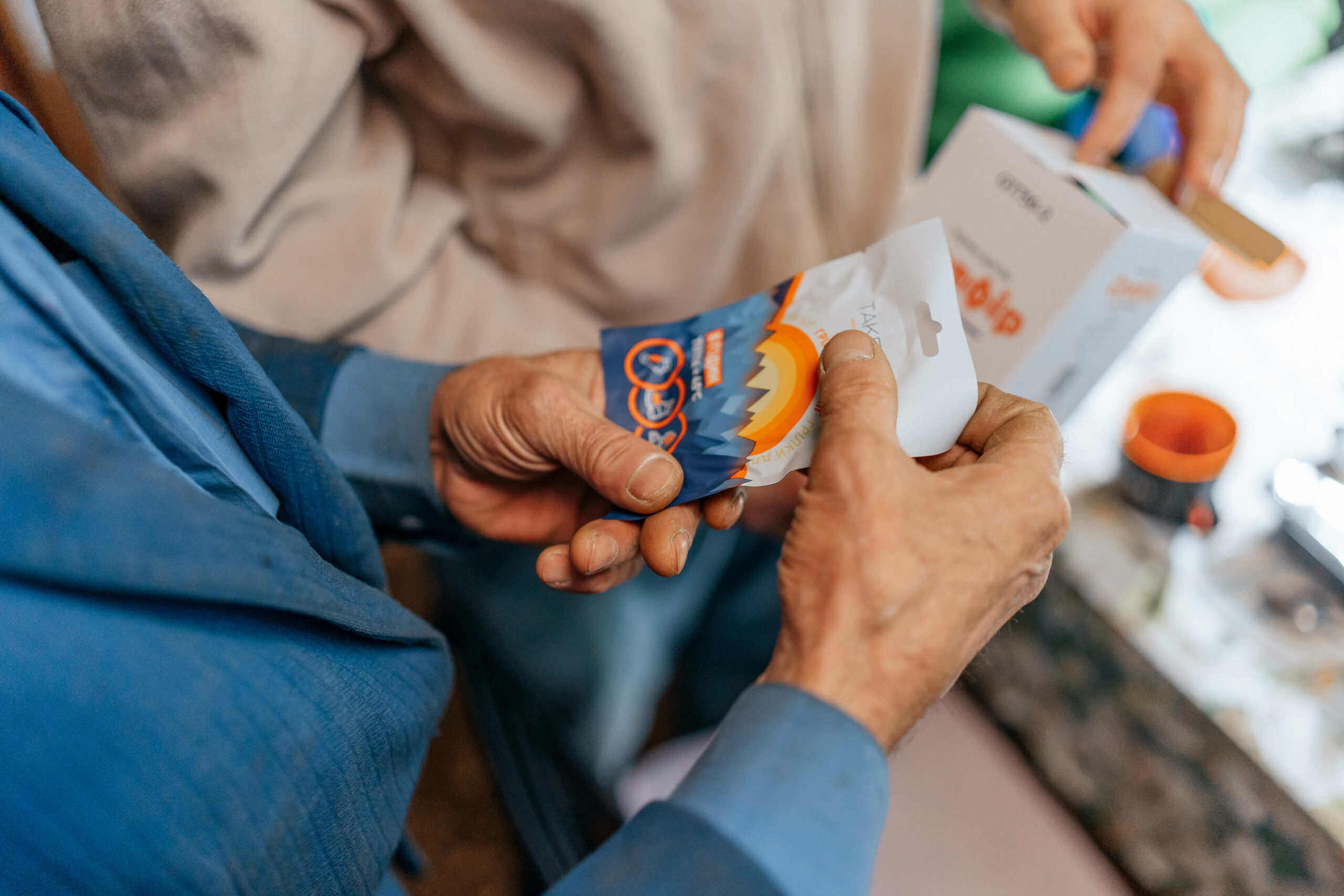
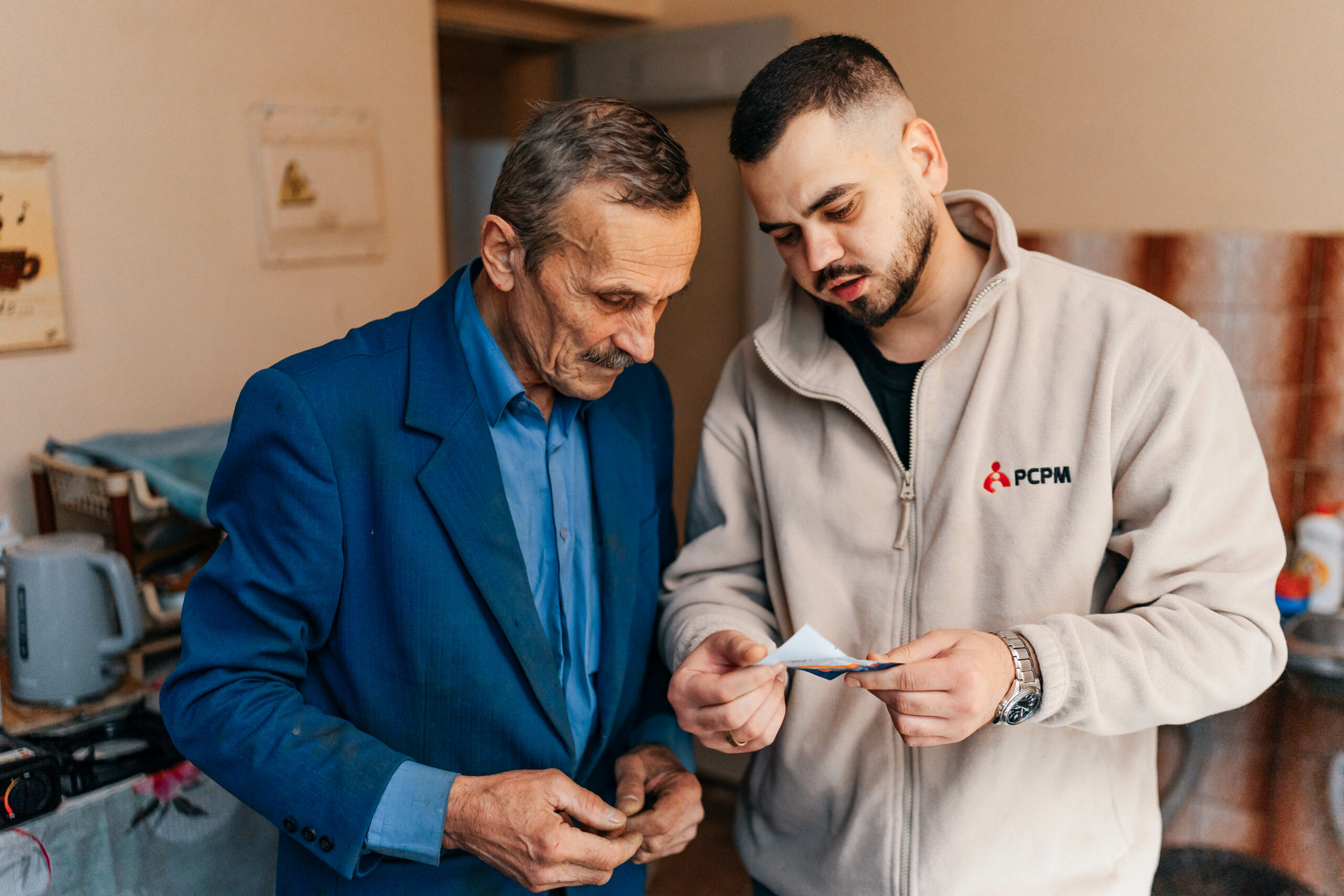
The PCPM Foundation is preparing and distributing aid packages designed to address this new reality.
Your donation goes towards purchasing specific items: torches, power banks, batteries, camping stoves and insulation materials that help people prepare for the loss of electricity and heating. Thanks to your support, we can assemble and deliver more packages to residents of Kharkiv and the Kharkiv region.
Support PCPM’s winter relief efforts.


