

Kenyan Experience – Global Impact
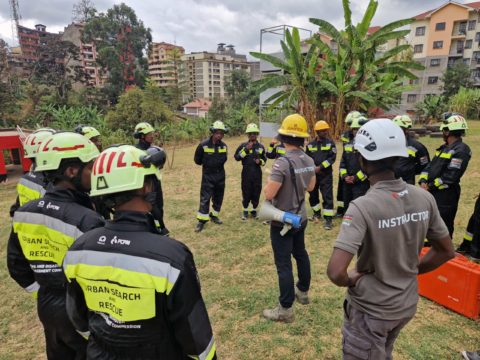
Ethiopian firefighters have come to Kenya! What may seem like a minor piece of news is, in fact, the culmination of more than 10 years of hard work by the Polish Center for International Aid (PCPM). The training center in Kiambu, where Kenyan firefighters are trained, has now become a place whose experience neighboring Ethiopia wants to draw on. In this way, a center that initially served local needs is becoming a regional hub at the forefront of firefighting and rescue not only in Kenya, but across East Africa.
Rapid urbanization has led to the emergence of extensive informal settlements, which, according to UN-Habitat data, are home to as many as 60% of the population of metropolitan areas such as Nairobi. To address this challenge, in 2024, with funding from the Polish Aid program of the Polish Ministry of Foreign Affairs, PCPM began building the first urban search and rescue team in this part of Africa.
This would not have been possible without the Foundation’s consistent work in Kenya for more than 10 years. When Polish instructors first came to Kenya more than a decade ago to train firefighters, they encountered a system resembling the Polish firefighting service of the 1970s: scattered, poorly equipped units, low levels of public trust, and even attacks on firefighters themselves.
The results of more than a decade of work in Kenya are tangible. The number of fire stations has grown from several dozen to more than 70, while the number of firefighters has increased from several hundred to more than 1,600. The Foundation has provided thousands of kilograms of equipment, but its greatest achievement is something more lasting than equipment: building a system. The profession of firefighter has been officially recognized in Kenya, a certification pathway has been established, and training has been incorporated into the national vocational education system. Between 2018 and 2020, with Polish support, the FIRETRACK Training Center was established in Kiambu. Today, it serves as the national firefighter training center.
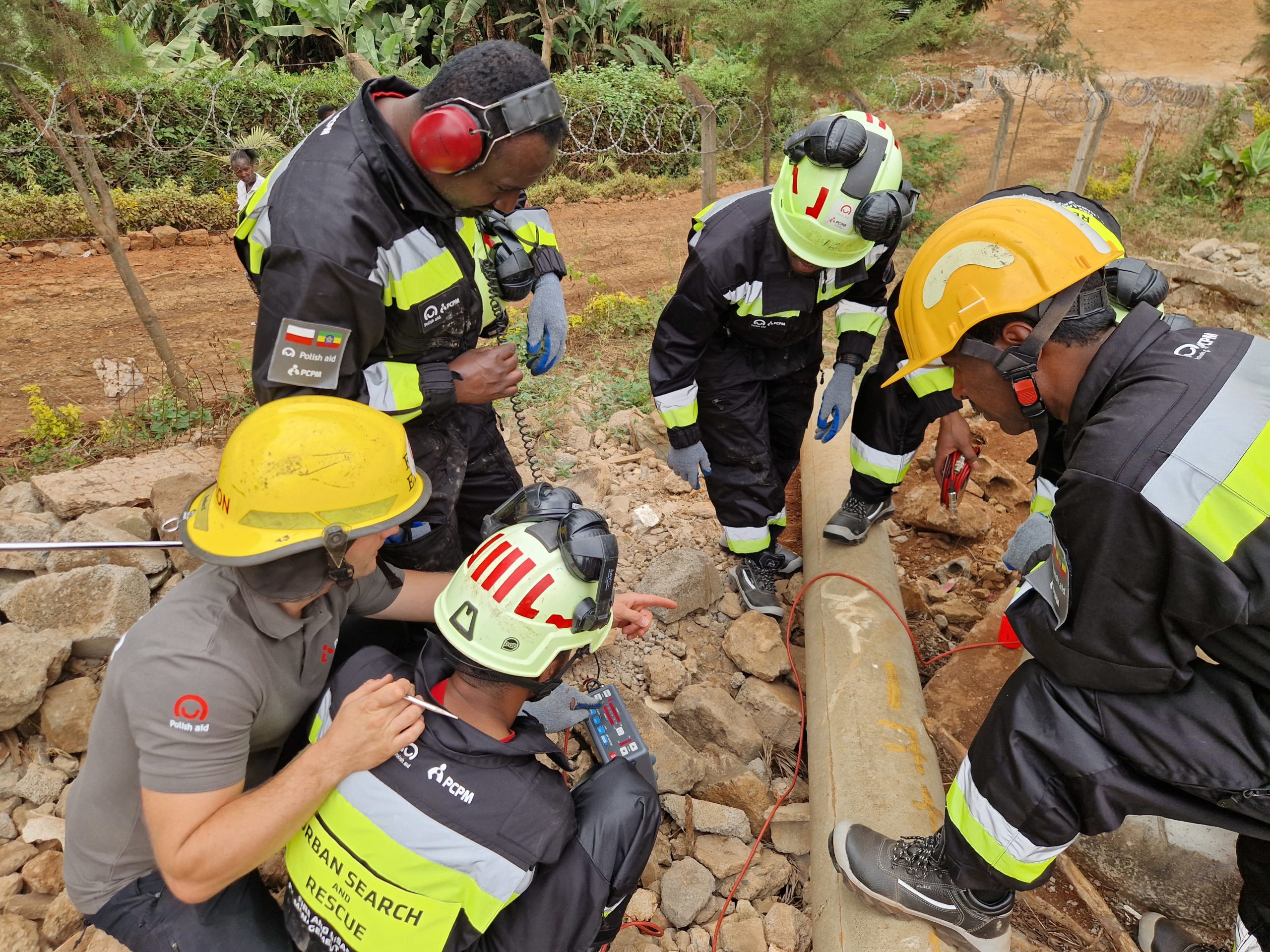
The culmination of this cooperation is the first specialized urban search and rescue (USAR) team in Kenya and in this part of Africa, designed to operate in the aftermath of building collapses and other structural disasters. It is the only team of its kind from Algeria to South Africa.
A System Taking Root
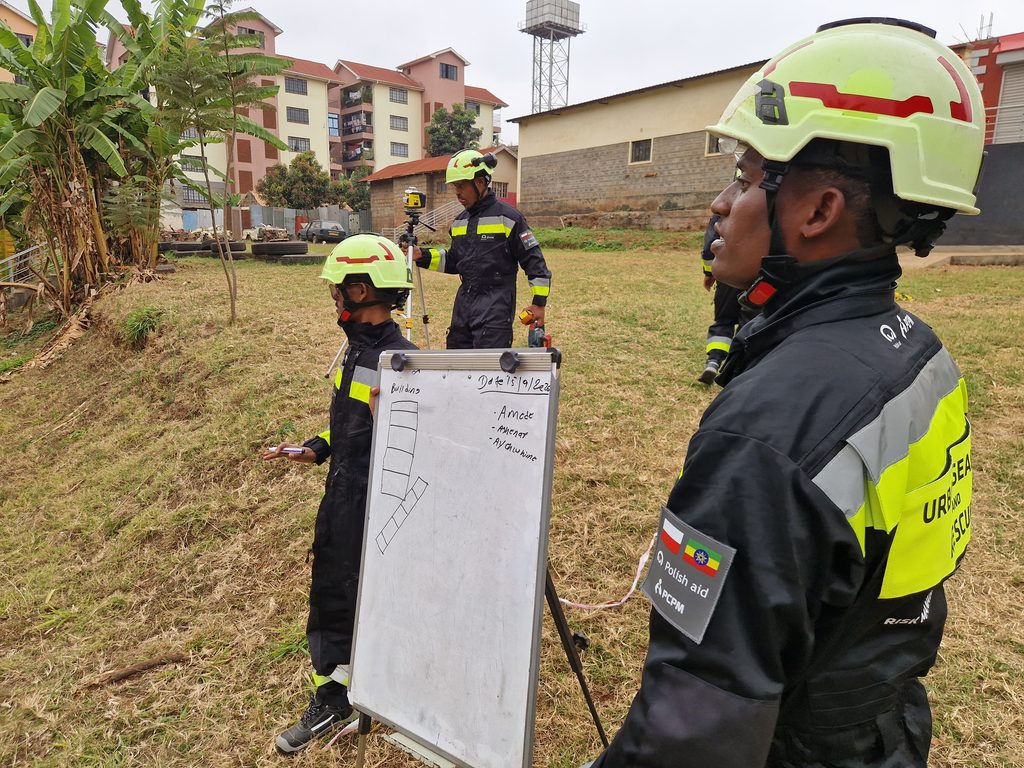
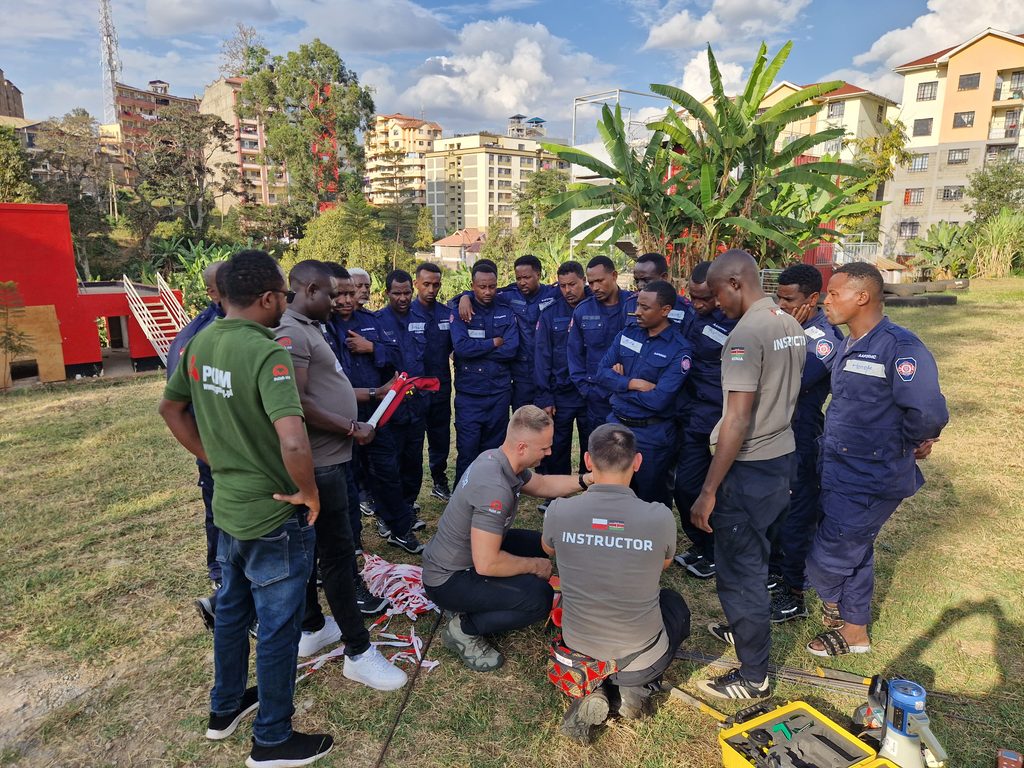
This week, PCPM launched a training program for the Light Urban Search and Rescue (Light USAR) team being established in Addis Ababa. The first training session is taking place at the Fire and Rescue Training Center in Kiambu, Kenya, using a modern training ground designed for USAR teams.
The two-week basic USAR responder training is being delivered by a team of Polish and Kenyan instructors for 18 participants from Addis Ababa.
The team will be equipped with personal protective equipment (coveralls, helmets, flashlights and hearing protection) as well as specialized rescue equipment to support, among other things, search operations, the temporary stabilization of damaged buildings, and the creation of passages and breaches through structural elements to reach people trapped inside.
The program will also include training in first aid in the context of structural disasters for the search and rescue team, as well as training in the use of rope rescue techniques in USAR operations. These sessions will take place at the fire service training center in Addis Ababa, using a purpose-built simulator for fire and technical rescue training.
In this way, Kenya — and the Kiambu Training Center built by PCPM — is becoming a place where not only Kenyan firefighters, but also their Ethiopian counterparts, can receive training. PCPM’s work has strengthened Poland’s position as a leader in rescue and emergency response in East Africa, while the organization itself has become associated with the highest standards of operational professionalism. The “Polish school” goes beyond a simple transfer of knowledge — it is about building systemic resilience across the region. A new approach to saving lives is now spreading from Nairobi, and through certified training centers and qualified personnel, it is helping to permanently transform the safety landscape across this part of the continent.


