

Tragedy in Nairobi: Firefighters Rescue Survivors from the rubble
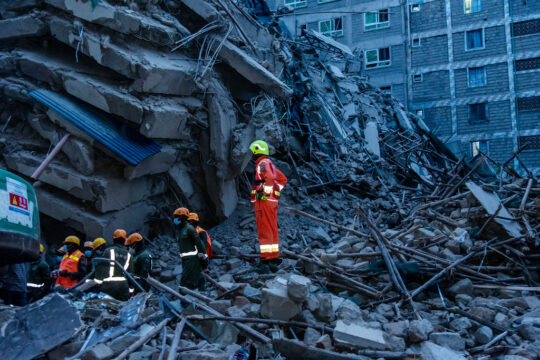
More than 70 people injured, dozens missing. This is the deadliest building collapse in Nairobi this year. What makes the tragedy even worse is that it is not an isolated incident, but another in a series of deadly disasters. Just a few months ago, another fatal collapse occurred in the city.
This is the deadliest building collapse in Nairobi this year, and the latest in a series of such incidents: just a few months ago, another fatal disaster occurred there. In May, two 8-story buildings collapsed, killing four workers.
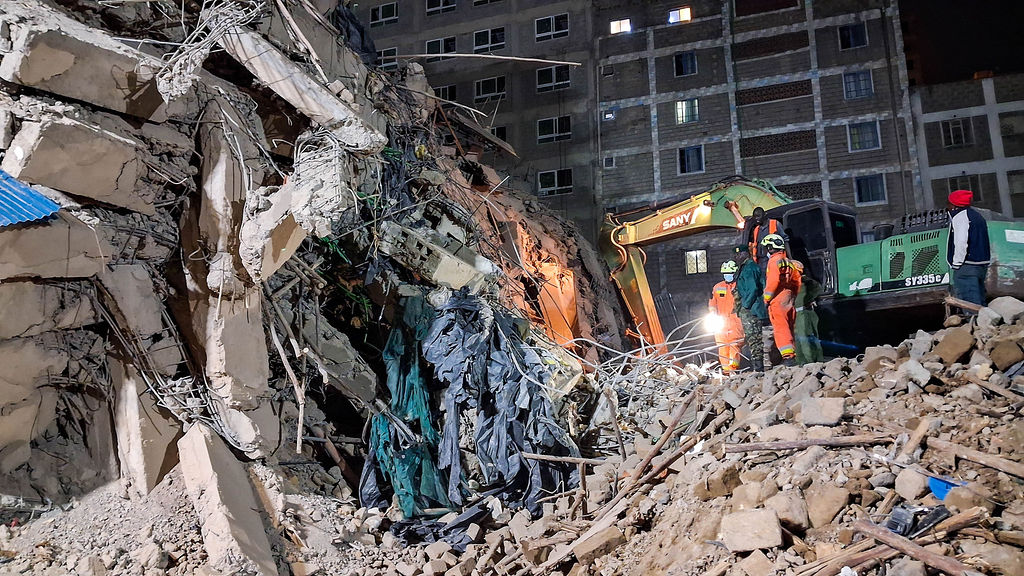
On Friday (23 October), a 15-storey residential building collapsed in the Eastleigh district. Although the building was still under construction, shops were already operating on the ground floor, meaning that many people could have been inside. According to emergency services, more than 70 people were injured, while an unknown number remain trapped beneath the rubble.
“We arrived at the scene as soon as we received the call. Unfortunately, the building collapsed in such a way that the chances of the victims surviving are significantly reduced,” says Gideon Owiti, leader of the USAR team.
Firefighters describe this type of collapse as a “pancake collapse”: the floors fall on top of one another rather than the building tipping over onto its side. Despite these challenging conditions, the rapid response made it possible to pull a survivor from the rubble, followed by another an hour later. According to firefighters, four people had been rescued by the following day, including a pregnant woman. The operation is ongoing.
However, these positive developments are overshadowed by the fact that 30 people are still missing.
The collapse is also the latest in a series of deadly incidents in the city. In May, two eight-storey buildings collapsed, killing four construction workers. Read more about the disaster in Ngong.
Construction Without Oversight
Both emergency services and local authorities have confirmed that the building was constructed without proper oversight.
“Our priority is to save lives,” said Nairobi Governor Johnson Sakaja. “This building did not have an occupancy permit,” he added.
The disaster highlights a much broader problem. According to UN-Habitat, as many as 75% of Nairobi’s residents live in informal settlements that occupy just 5% of the city’s land area. Buildings in these neighbourhoods are often constructed without adequate supervision and using low-quality materials.
Kenyan media and non-governmental organisations have been raising the alarm for years about recurring building collapses. However, reliable data on the scale of the problem remains unavailable, and media coverage tends to focus on individual incidents rather than the wider pattern.
In 2026 alone, nine building collapses have occurred in Nairobi and its surrounding areas — an average of one per month. The Eastleigh incident is the tenth such disaster this year.
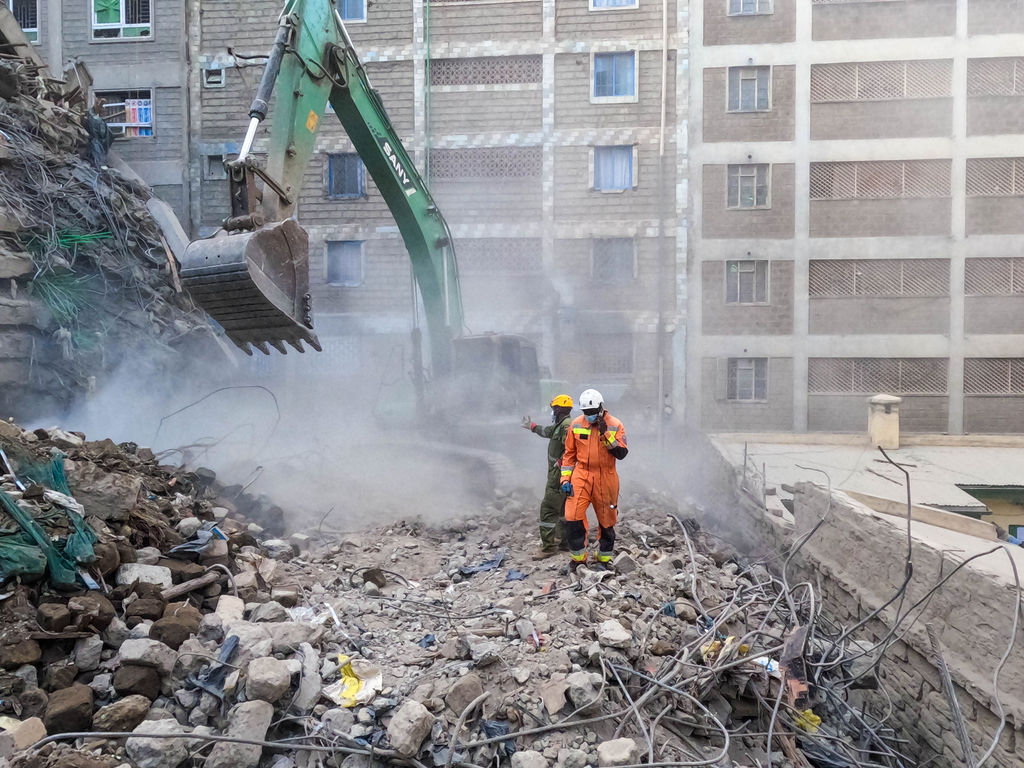
Polish Instructors Supporting Rescuers
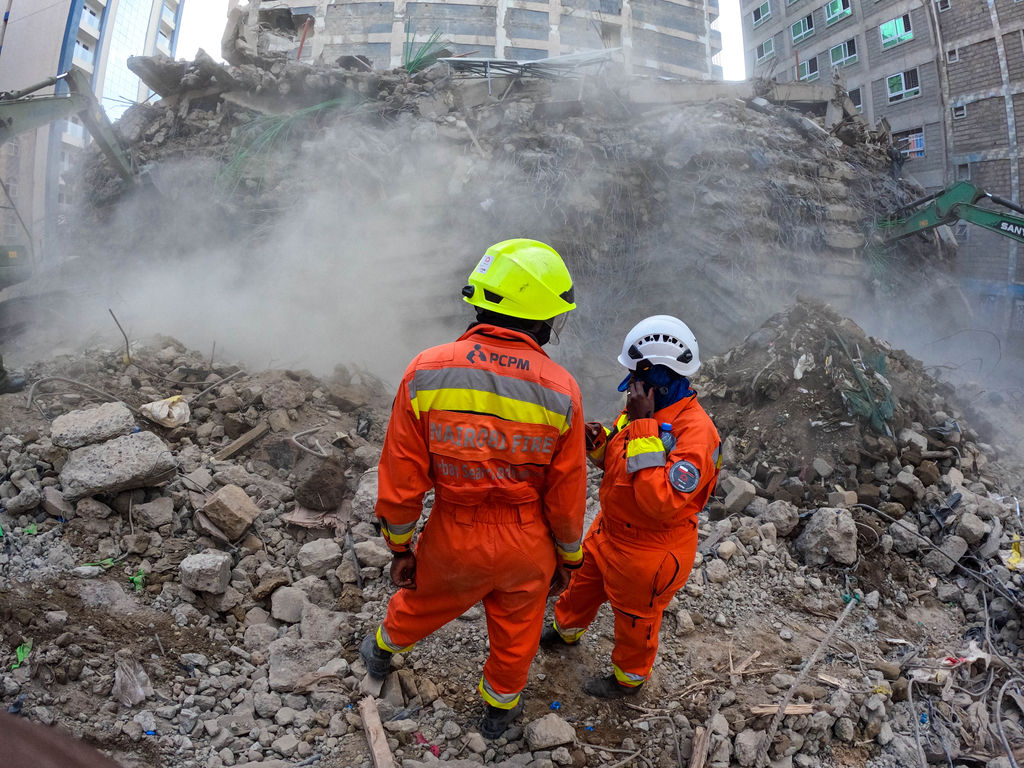
The operation involves the only USAR (Urban Search and Rescue) team of its kind in this part of Africa. The team has been trained at a local training centre by the Polish Center for International Aid (PCPM).
Since 2024, under the Polish Aid programme, PCPM has trained more than 1,200 people – approximately 70% of Kenya’s entire firefighting workforce – and has been helping to establish a specialised USAR team within the fire service.
Before the collapse in Eastleigh, the team had rescued 28 people from collapsed buildings in 2026. Firefighters can now add four more survivors to that list.


